I really liked Thailand. From the friendly locals who strike up easy conversations with you, to the insanely cheap but delicious food (dinner for two, for £2.50!), to the thriving ethnic hilltribes supported by the Thai King’s Royal Project, I was extremely impressed and excited to be there (well – for the most part anyway…).
But one thing irked me that I couldn’t put my finger on until I crossed the border to Laos. Thailand’s tourism industry has been developed and refined so steadily over the last few decades that it now very efficiently caters for western demands – whether its full moon parties for gap year students, Thai massages with happy endings for desperate old men, or trendy Latin-themed bars for hipsters like me. I’m not sure how ‘Thai’ any of those things are – if at all.
To put it another way, Thailand has tourist areas which are now reserved wholly for tourists, and everywhere else is the domain of Thai people. If you were to draw those two areas as a Venn diagram, my experience has been that they’re mutually exclusive. To give a few examples…
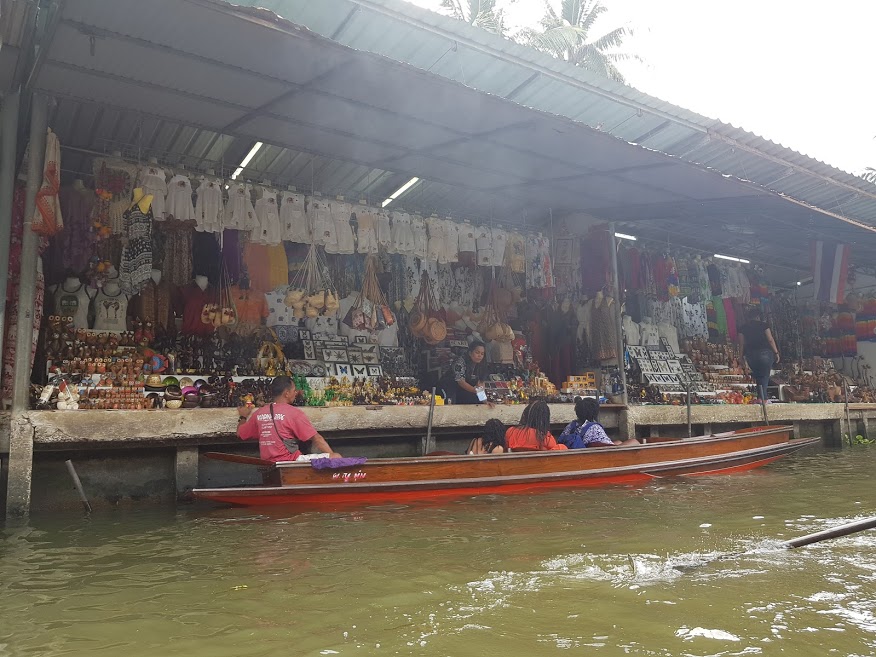
Ten or twenty years ago, I’m sure that the floating market of Kanchanaburi (where you buy goods from shops at the canal-side aboard a boat!) was used by locals to trade fruits, vegetables and other commodities. Not so now. The entire market now caters exclusively to guided tours by the minivan load, and all the market sells is, to put it bluntly, cheap tat.
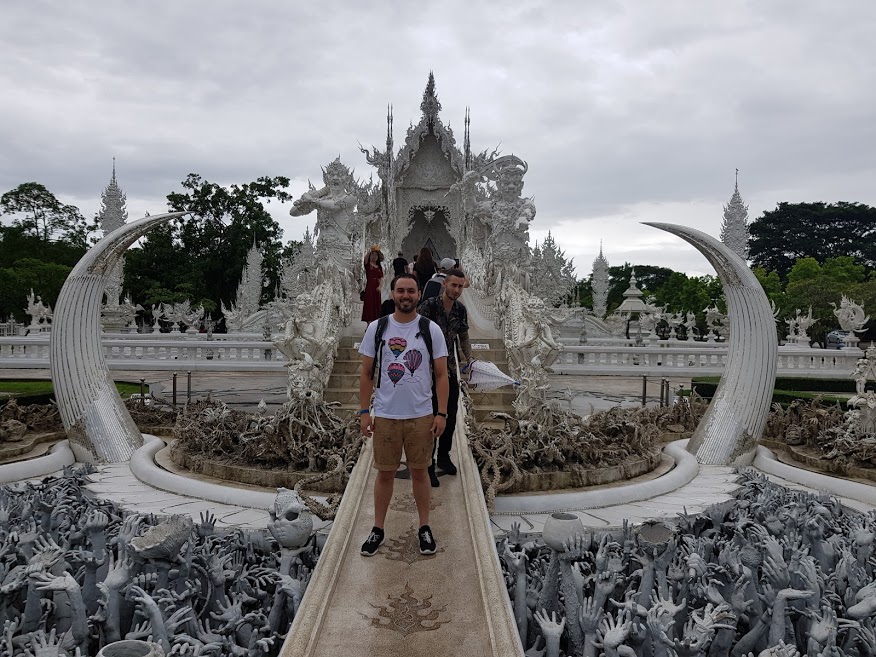
Chaing Rai’s White Temple, despite being a truly visionary work of art laced with political messages, has essentially become a photography conveyor belt – you go in one side and come out the other, and you don’t go back the way you came. Every tourist is struggling to get a photo with as few other tourists in it as possible (the irony is not lost on me). If you’ve ever been there, it’s a bit like the Sistine chapel, which is filled with loud chatter and flash photography, despite the signs banning both. Not much religious worship appears to be going on in either.
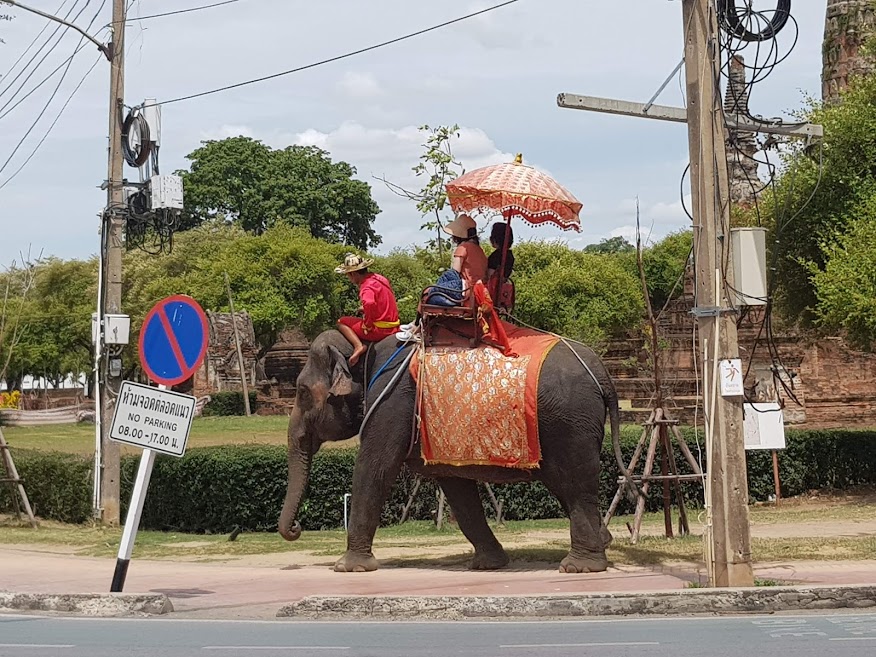
And Ayutthaya, despite being invaluably culturally rich and well-preserved, is now a piece of static history. Its ancient temples are now relics, no longer used for worship, but resigned to guided tours and circled by exhausted elephants being ridden by people who, very foolishly, failed to read my last but one blog post.
Here in Laos, there’s a slightly different dynamic. In Luang Prabang, a popular tourist destination firmly on the backpacker ‘route’ through southeast Asia, there is less of a barrier. Local people and tourists aren’t consigned to two mutually exclusive areas. They use the same transport, visit the same landmarks, and go to the same bars. The result for tourists is that they’re treated to a slightly deeper immersion in Lao culture.
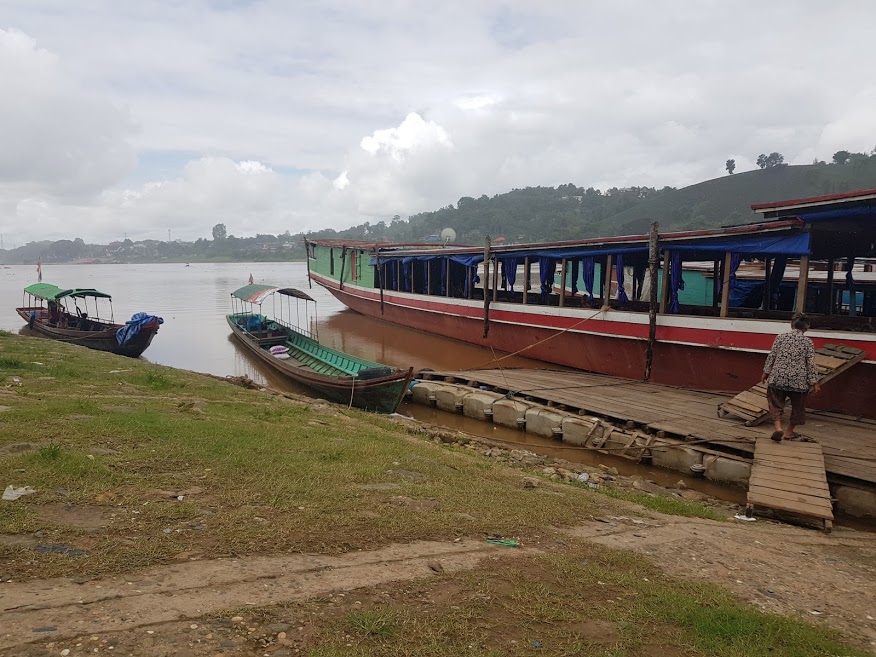
The first sign of this was on the two-day slow boat we took from Huay Xai, sauntering down the massive Mekong river without hurry. Upon boarding, the boat was filled mainly with couples and solo travellers from all over Europe and North America. But at the back of the boat was a smattering of local people that steadily grew as the boat picked up more and more passengers. The ‘slow boat’ lived up to its name as we stopped at least a dozen small villages over the course of the day, some consisting of only a few traditionally built houses, where groups of half-clothed children saw off their parents, uncles and aunts. We even stopped at a few rocky outcrops and river beaches where there was no village in sight, and only one or two locals waiting patiently, often with bags or baskets of goods in tow. Only at one point did anyone onshore try to sell us something – but instead of our backs arching, our hearts melted. The vendors were a group of young Laotian girls (some looked as young as 5!) splashing into the water, thrusting out their homemade bracelets. I ended up pondering about child labour for too long, and missed a golden opportunity to buy one.
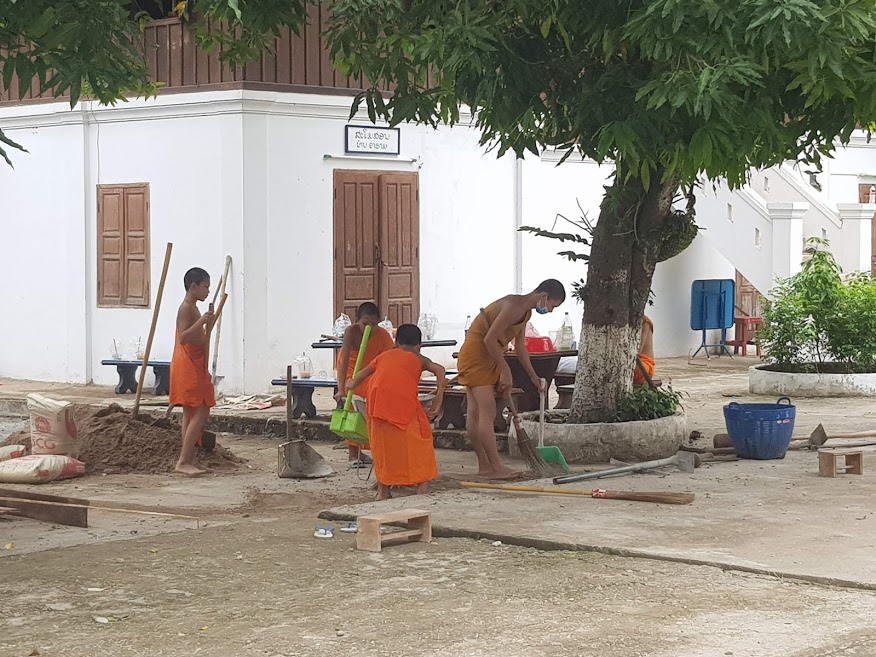
The day after we landed in Luang Prabang, we visited the town’s oldest and most central temple, Wat Vissounnarath. There were of course, tourists like ourselves taking photos, and even some market stalls taking advantage of the regular footfall. However, we were pleasantly surprised to see a group of young monk novices sweeping, performing construction work and pushing each other around in wheelbarrows, all within the temple grounds. Quite clearly, this temple wasn’t just a static piece of history condemned to tourist-only use.
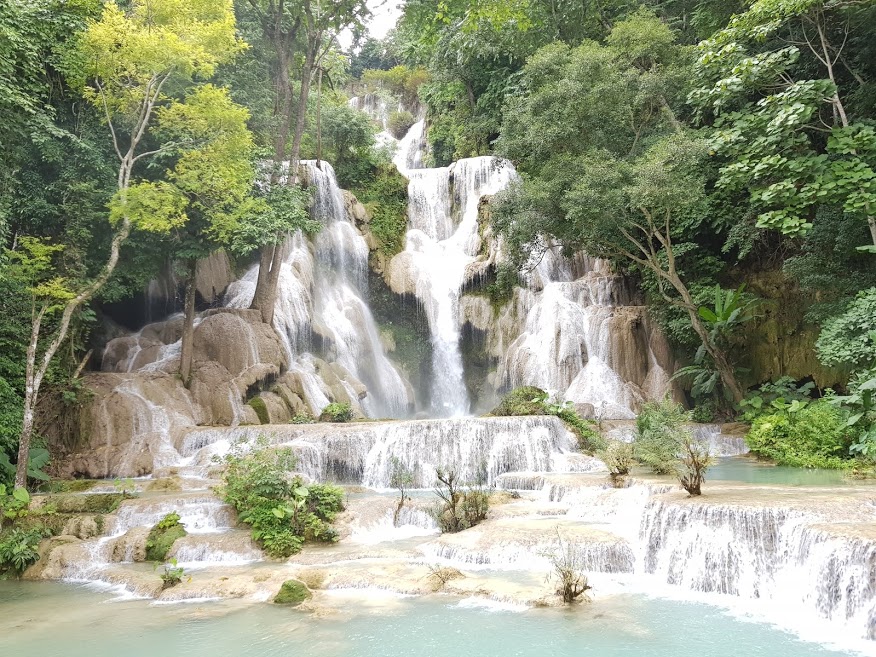
The next day we went to the magical Kuang Si waterfall. It’s the absolute must-see attraction of Luang Prabang – a 60 metre high wall of cascading water which runs into a series of smaller waterfalls and pools below, perfect for bathing. It’s possibly the most instagrammable location I’ve ever been to, from the stone steps where water cascades down over your feet, to the bathing pool at the summit, where a rope and branch swing hovers inches over the water’s surface. It was full of tourists, this time western and Chinese in equal measure. But the bathing pools, especially the lower ones, are also used by local Lao people. It’s a kind of local swimming bath, where parents take their children to splash, dive and generally tire themselves out.
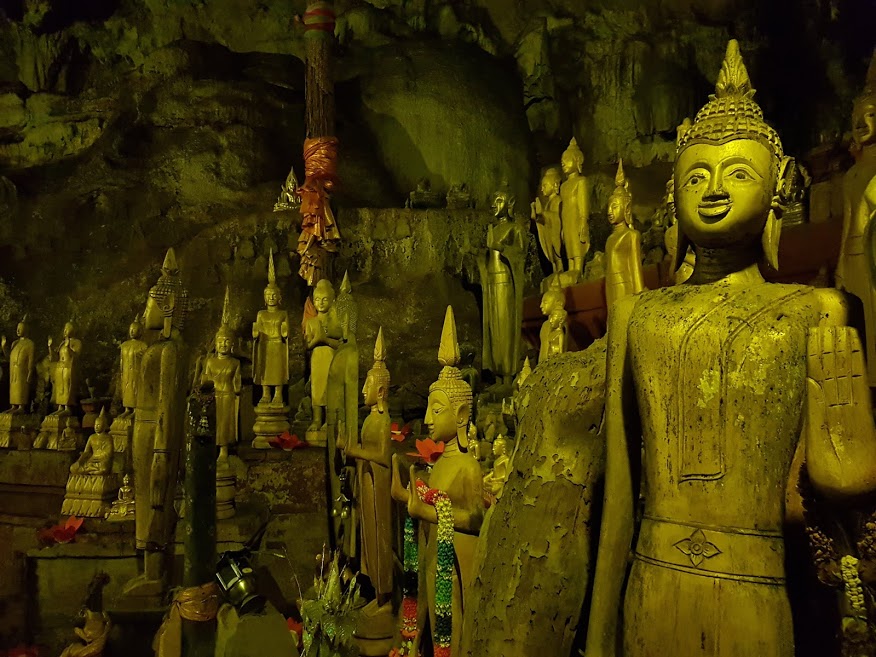
Our third day in Luang Prabang, we visited the Pak Ou caves. The caves are home to more than 3,000 buddha statues of all sizes, all in varying stages of disrepair. Lao people, being so thoroughly devoted to buddha, have over centuries transported and placed their broken and worn-out statues here rather than destroy them. In between the groups of guided tours, when it’s quiet, the cave’s spiritual history settles heavily around you, quelling any impulse to misbehave. With a bit of time to yourself, you notice not just the myriad of shapes, poses and missing parts of the statues, but also the recent offerings of incense, flowers, food and water. After a bit of research, I also found out that on Laos New Year, thousands of pilgrims descend on the cave to carefully wash the statues in a religious ceremony.
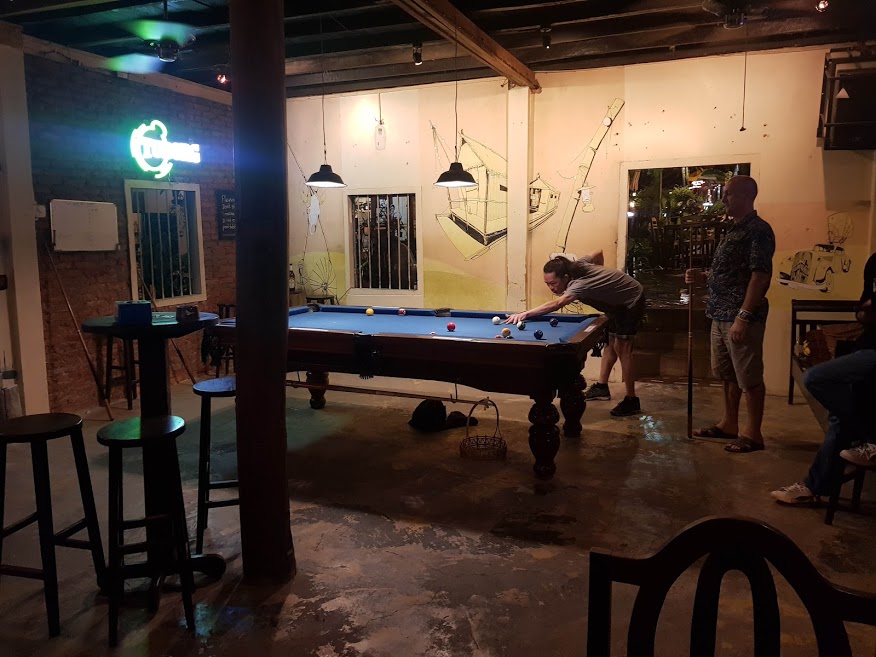
Later that day, we visited our favourite bar in Luang Prabang, lured in once again by a happy hour that yielded two beers for £1.20. After finding out from a friendly Caucasian man that the only way to play at the pool table I had been eyeing up for the last hour was to put my name down on the whiteboard, I also found out that it was winner-stays-on. So instead of continuing my long-running rivalry with Alice, my opponent was instead, a long-haired Laotian called Vini – who also turned out to be really friendly, and very funny. By the end of the night, there were equal numbers of Laotians and westerners clustered around the same pool table, all equally eager to build up their win-streak.
Even as we left Luang Prabang on the 10 hour ‘VIP’ bus to Laos’ capital, Vientiane, we experienced the same as we had on the slow boat – Laotians from villages being picked up and dropped off at villages further down the road. And this time, among the contingent completing the whole length of the journey, us tourists were in the clear minority.
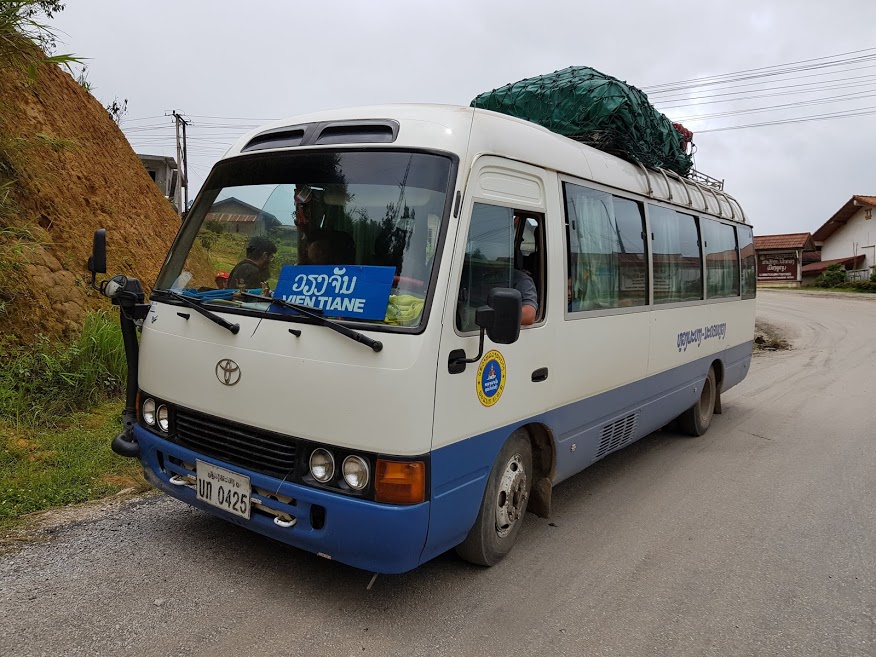
Now, I’m not saying that I hate other tourists – I am one after all. Neither am I saying that places with less tourists are by default better destinations. But when you’re surrounded by more local people, you get a far better feel for the country you’re a visitor in. By noticing that Lao people barely ever point, I’ve read up and discovered that pointing is in fact rude in Lao culture (even ‘thumbs up’ / ‘thumbs down’ don’t seem to have the expected meaning here!). After having my bare feet pointed at by a Laotian on my long bus ride, I found out that displaying your feet, and especially the soles of your feet, is considered rude. By seeing a group of old women kneel and bow for monks as they entered a restaurant, we learned that its customary to stop and bow to monks as they pass.
It’s these little details that teach you more about a country’s culture and how different they can be, even compared to their neighbouring countries. And its only possible when tourists have enough opportunities to interact with locals (and vice-versa) in everyday situations – I’m calling it a local-tourist equilibrium, if that’s not too pretentious. In Luang Prabang, in August during the rainy season – it’s there, and it’s made our stay all the more enlightening and enjoyable.
Of course, I can’t speak for the locals and what they make of having so many tourists around. Maybe they’re also carefully observing our barbaric western ways, or maybe we’re just an annoyance to them. I hope that they’d be pleased to know that we’ve taken an active interest in their culture and customs. And I hope that unlike Thailand, tourists won’t be excluded from everyday Laos life for a long time yet.


 The Burnout Blog
nice
LikeLike
Informative, witty and a pleasure to read. Someone sign this man up as a travel writer!
LikeLike