Lockdown Loco

After 8 months of travelling around 8 countries, we had come to a brief stop in Auckland – to work, earn money and relax in our own flat, rather than hopping from guesthouse to guesthouse every week. As May approached, we were preparing to finish our jobs at our camper van rental company and take advantage of its main perk – getting to hire a camper for free, and go on a 3 week tour of the north and south islands of NZ.

Then coronavirus happened. Within a space of 48 hours, we went from having jobs, exciting weekend excursions and an imminent travel plan to being jobless, trapped in a tiny flat and having our travel plans crushed (at least for the time being). Not ideal.

Just like everyone else around the world, we’ve since been trying to amuse ourselves at home. But after exhausting the usual pattern of reading, podcasts, Netflix, cooking and of course the most exciting part of the day – the daily walk – I decided we needed to get a bit more inventive. Since then, we’ve been attempting to do one creative or new activity per day.

Here are some of the more interesting results…

1.      The Treasure Hunt

This is probably the one I’m most proud of. Auckland is full of monuments, public parks, historical walks and remarkable buildings. Walking around it one day, I remembered a certain murder-mystery themed treasure hunt I once did in Northampton, and decided to emulate it.

Basically, this consisted of walking round Auckland, making notes of points of interest and then making up 10 clues – that required a mix of observation and on-the-fly research to solve – which led to a series of 10 locations. I even added in 4 bonus clues that spelt a mystery phrase.

I’m not sure what was more exciting – banging my rusty brain cells together enough to figure out what the clues should be (which took hours) or watching Alice follow them through to the end. But best of all, it turned what would otherwise be a 2 hour slog of a walk into at least a mildly engaging (perhaps even fun-filled) quest.
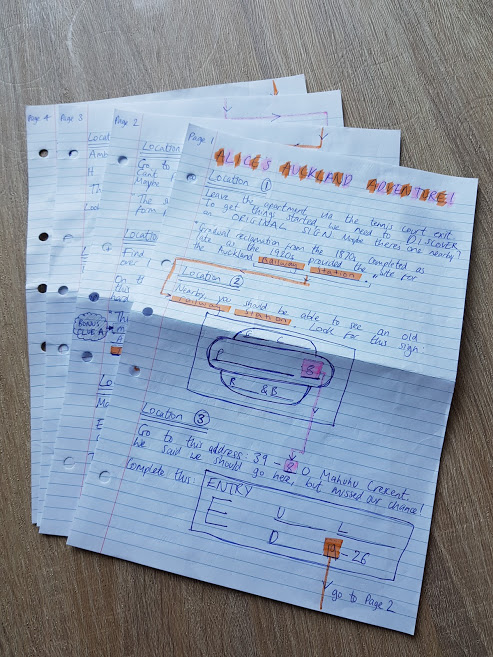
Basically, each clue would lead to a word or number at the next location, that you’d need to find the next location… and so on.

2.      Origami (by candlelight)

I always loved doing Origami as a kid, and one of the good things about being in a relationship is that you have someone to share all those old, forgotten interests with – and revive them. We started off with a staple of origami – the ubiquitous paper crane – which turned out to be a challenging but rewarding first model for a novice. Now we have something else to decorate our windowsill with. If I can find the instructions, frogs and koalas are next on the list…
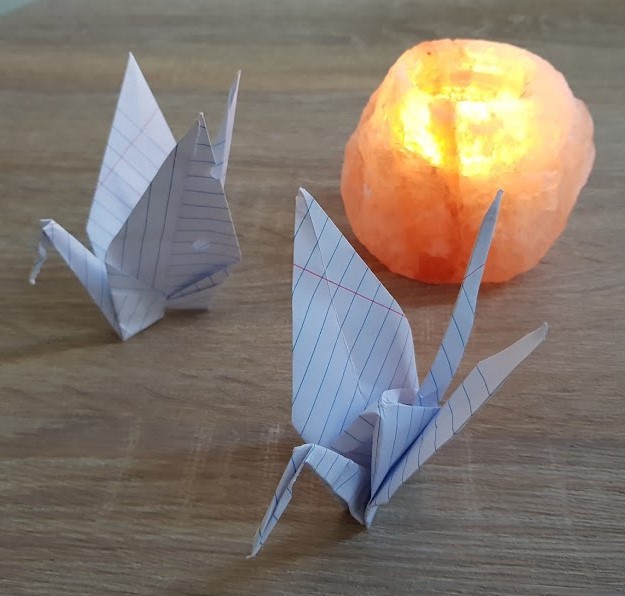
Having to use lined, hole-punched paper was a slight annoyance. Make sure to buy good quality, coloured (preferably square) paper if you try this.

3.      Craft Bingo

Craft Bingo – i.e. make your own Bingo card – has been a tradition of a certain friendship group of mine for a while now. Usually Craft Bingo is reserved for big social occasions (like weddings) and the entries on the Bingo cards provide even more incentive for the universally-recognised team sport of people-watching (e.g. “Disastrous Drink Spill” might be one of the entries on the bingo card to cross off).

But since lockdown has recently turned everyone’s local park into a veritable circus of amateur yoga, kung fu and shamanic rituals, it was time to create: Craft Bingo – Lockdown Daily Walk Edition. I have actually seen all of the entries on the Bingo card on different days – but I’m yet to get a line, diagonal or 4 corners on the same walk. Let me know if you get BINGO. There’s a special prize.
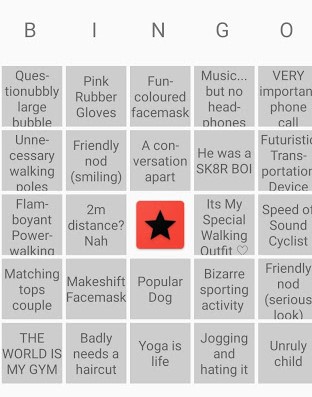
Some of the entries sound obscure, but all I can say is, you’ll know when you see one. Example: THE WORLD IS MY GYM might be a guy doing chin-ups from a tree branch.

4.      Drawing

I can’t take credit for thinking up this idea – that impetus came from Alice – all I did was buy the pink unicorn-themed sketchbook (it was the only one left, I swear!). If you haven’t tried it already, drawing is a great way to pass the time – it’s challenging, demands concentration and it feels good to be proud of your completed composition (no matter how far from professional-looking it might be). Drawing is a learned skill, so anyone can be good at it with enough practice. Here’s a picture I drew of Alice.
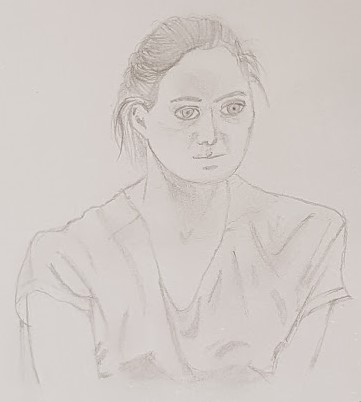
Alice asked me to caption this with the caveat that she doesn’t always look this tired.

5.      Salsa steps

I have done a couple of salsa classes back in my uni days – but its been so long that I couldn’t remember a single step. That turned out to be a good thing, as Alice and I started off on the same footing (bewildered, unstable footing). Having learned some basic steps from one of the many YouTube tutorials out there, we thought we were getting good – until we tried doing the same steps in real time, to the music. When it comes to salsa, your footwork needs to be fast. If you prefer your exercise to involve learning a skill as opposed to gruelling PE-style exercises however – then I’d very much recommend getting stuck in.
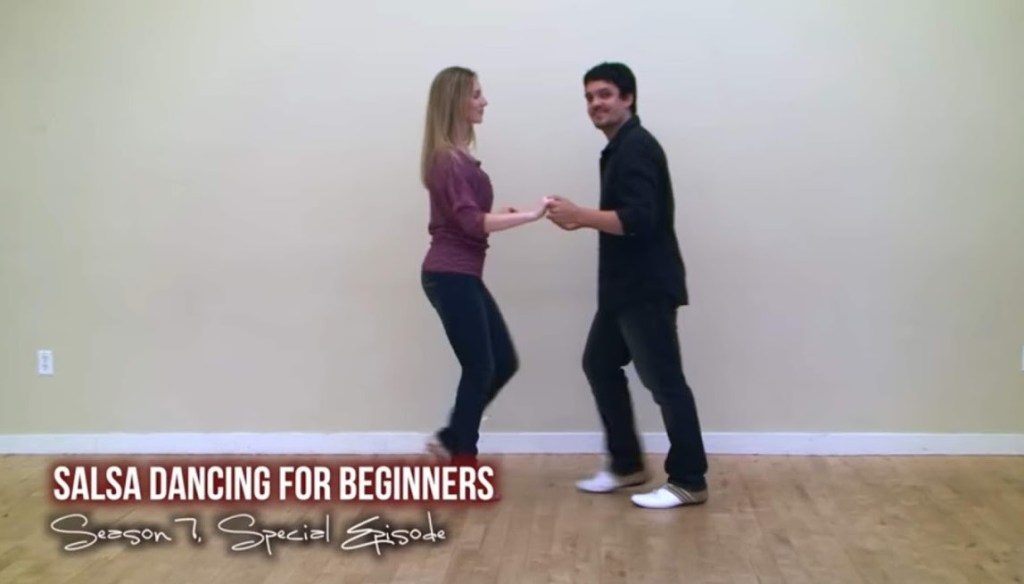
That’s not Alice or me in the picture – just our salsa-loving dopplegangers. Link to the video tutorial: https://www.youtube.com/watch?v=aVtWSZOttC0

6.      Mark’s Bar

Pubs, bars and clubs are all shut right now – and sadly, it looks like they will be for a long time yet. Not content with that, I decided to take matters into my own hands…

Turns out this is all you need to make a bar in your own living room:

  • A bar (the desk)
  • A cocktail shaker (Alice’s water bottle)
  • A bouncer (me)
  • A chef (me)
  • A mixologist (me)
  • A patron (Alice)
  • A stylistic revamp (fairy lights and a cardboard sign saying “Mark’s Bar”)
  • A dancefloor (just turn the lights on and off really quick)
  • Lots of leftover alcohol (itself)

To get into Mark’s Bar, you do need proper ID and smart shoes (no matter how good looking you are) so Alice did get turned away a couple of times by the bouncer. After speaking to the chef, she bought the sharing platter for two (greedy, I know!) and settled down to a few cocktails (and by a few, I mean at least five).

The rest is history. Very drunk history.
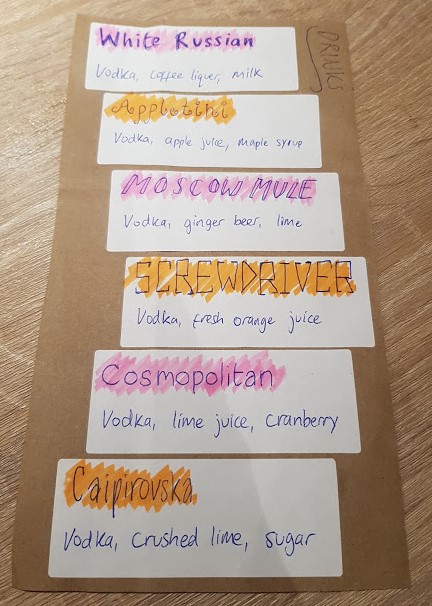
Here’s the drinks menu. In addition to vodka we also obtained some rum, and I added a few more options…

7.      Scrapbooking

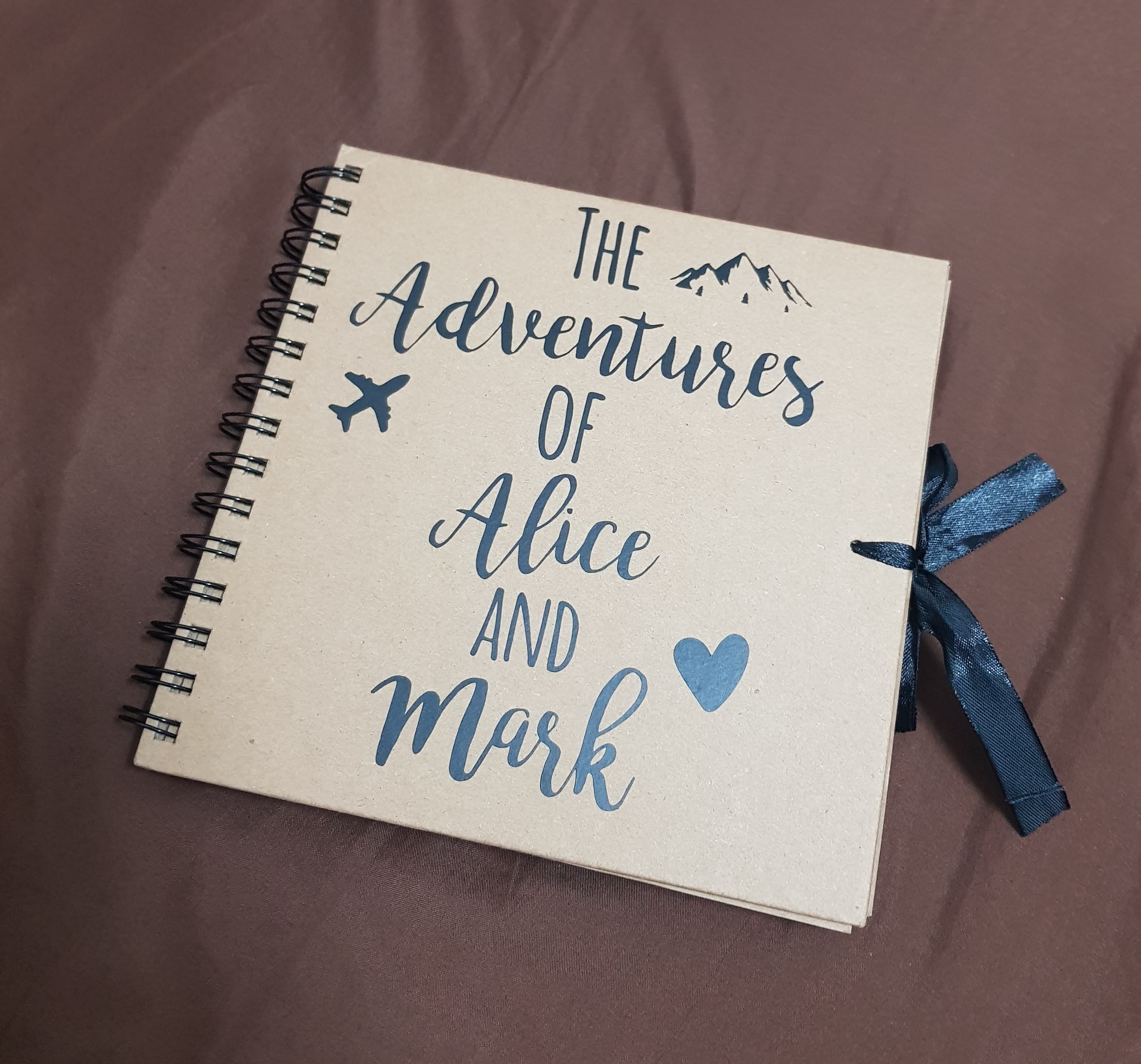
Our little scrapbook has been with us since we started travelling, so this isn’t a new thing – but lockdown has been a great time to finally get it up to date. As we’ve journeyed around Asia, Australia and more recently, Auckland, we’ve been collecting the brochures, maps and tickets from the places we’ve visited. After that, all you’ve got to do is cut them out and stick them in. The only hard part is annotating it – this takes absolutely ages!

The nice thing about scrapbooking is that the act of making it shakes your memory-tree enough so that the forgotten memories drop right out of it. When we look back at the book now, the pictures and notes are secondary – the real decorations are remembering what happened each day. Like the time I lost my flip flop down a waterfall. Or when I beat Alice at mini golf. Good times.
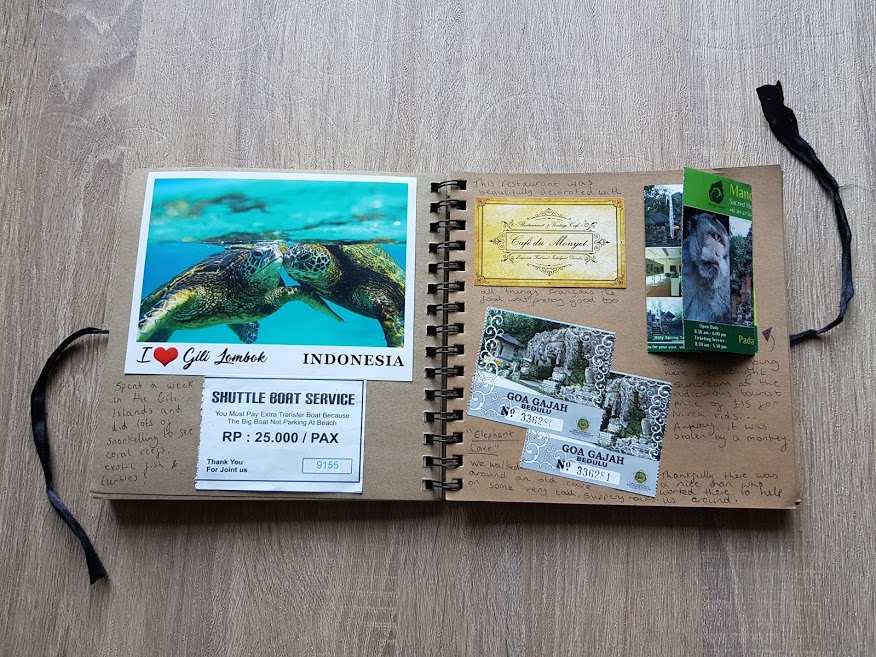
Looking at this page reminds me reminds me of baby turtles, chocolate milkshakes and searing sunshine.

8.      Afternoon Tea

If you’ve been furloughed and you enjoy eating cake, this is a brilliantly time-consuming yet rewarding activity to while away some time during lockdown. The only problem is finding flour. My way round this when the supermarket’s flour shelves were empty was to visit the health foods section and buy a 1kg bag of hand-milled white spelt flour… for £5.00. Not ideal, but at least I got some.

Three hours of baking and sandwich making later, we had platters of chicken sandwiches, smoked salmon sandwiches, banana bread, cupcakes and scones. We then spent an hour whipping single cream into something thick enough to spread on the scones, because it’s been illegal to consume scones without cream since 1825.

Top tip: Don’t forget the Prosecco. We certainly didn’t!
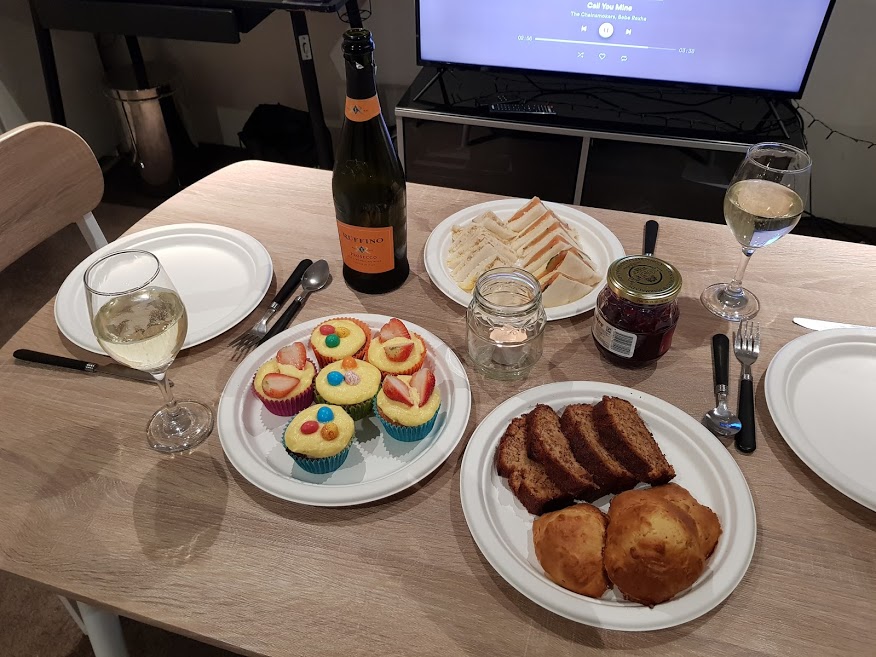
Raspberry jam for the scones, obviously. Scandalously, the mini eggs contained peanuts, which almost finished me off before I finished them off.

9.      Fort Building

If you think blanket forts are just for children… then you’re right. I am a 13 stone, 31 year old child.

Some trial and error tips – you’ll need a long central pole to hold up the roof, and a large flat bedsheet is easier to use than a fitted-sheet or blanket. No fort is complete without a secret compartment for snacks, so make sure you factor that into the design process from the start. If you’ve made your own bar recently, then you can recycle the fairy lights to provide indoor mood-lighting.

Some recommended activities inside your fort: read your kindle, play card games and eat chocolate (preferably Easter eggs). After the sun sets, all forts automatically receive a temporary alcohol licence, so grab yourself a fort beer.
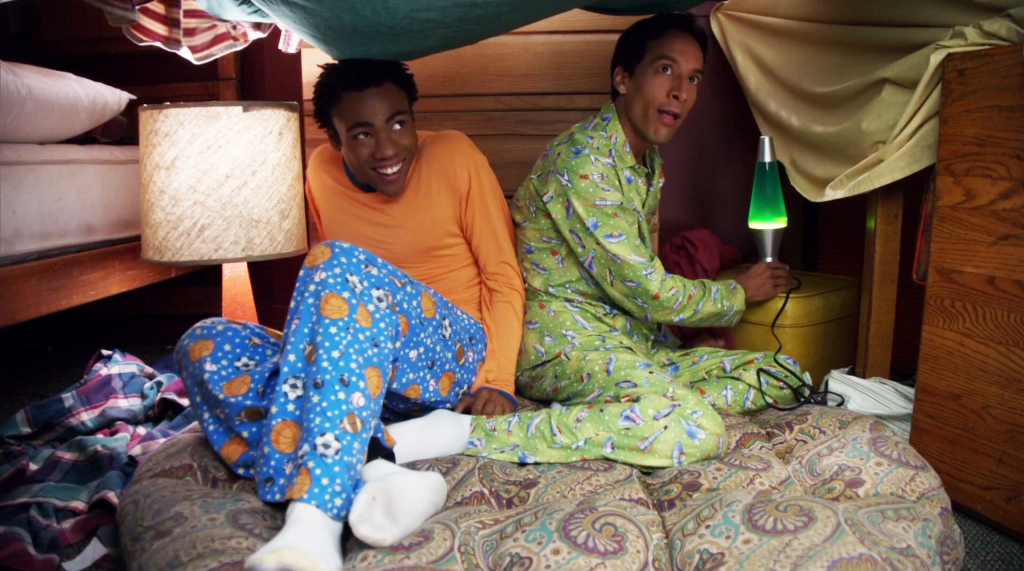
Unfortunately I didn’t take a photo of our fort – so here is Troy and Abed’s exemplary specimen from the TV show Community. If you haven’t watched it yet, its back on Netflix right now. Troy and Abed in the MORN-ING!

10. Haircut havoc

Just like everyone else stumbling around the supermarket unsure of what day of the week it is, my hair was starting look like a bush that had been dragged backwards through a hedge. Although I don’t agree with the American anti-lockdown protestors who made the news recently, I do have some sympathy for the one guy’s “WE NEED HAIRCUTS” sign.

Enter: Alice. Having no hairdressing experience whatsoever, it was always going to be a risk. But using nothing but my beard trimmer, some kitchen scissors and multiple trips to the bathroom mirror, she did eventually give me the best (not to mention the cheapest) undercut of my life.

The only bad thing was the amount of hair in the flat afterwards. Hair on the carpet. Hair in the kitchen. Hair in the bathroom. Hair on my head, but not attached to it. Hair everywhere.
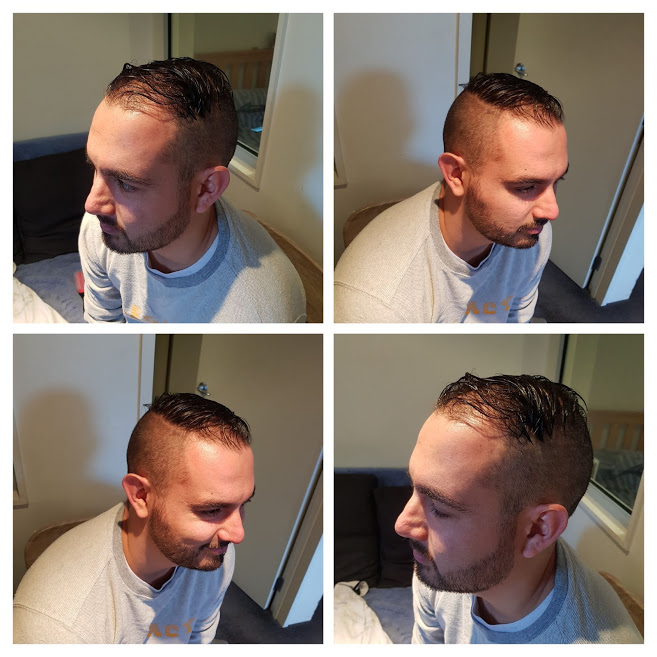
We did eventually notice and chop off the rogue wisp at the back. There was nothing we could do about my impending baldness.

BONUS

If you’ve read this far, then here’s a bonus. I also dabbled in using photoshop (well actually its poor but effective cousin, Paint.net) for a couple of days. I can’t say I’m very good at it.

On a completely unrelated note, here is a picture of the rare “Koalice” – a creature native to Auckland that spends 14 hours a day sleeping and 10 hours a day being a cheeky bastard.

The Koalice subsists exclusively on a diet of yoghurt and rosé.

If you’d like to donate to the Society for the Preservation of Cute Koalices (SPOCK), then 100% of all proceeds will go directly towards (baby-sized) Ted Baker dresses.
28 days in Bali – the best, worst and weirdest moments

Bali had always been on our ‘to go’ list – but we hadn’t planned to go there until after New Zealand. But with our time in my Uncle’s house in Australia coming to an end, and my NZ Working Holiday Visa still in bureaucratic limbo, we needed somewhere to go.

“Why don’t you go to Bali?” was my Uncle Tom’s suggestion. It was cheap to fly to from Australia, and even cheaper to live there whilst we waited for my Visa to get approved – or rejected.

And thus began our 28 day tour of Bali. With so much time there, we left virtually no stone unturned, travelling from Denpasar to Padang Bai, to the Gili Islands, to Ubud, to Bedegul, to Lovina, to Permuteran, and finally to Kuta and Uluwatu.

Many more things than I could possibly blog about happened in those 28 days – so here are the highlights, the lowlights, and the downright strange-lights.

The Best

1. Snorkelling with Turtles on Gili Meno

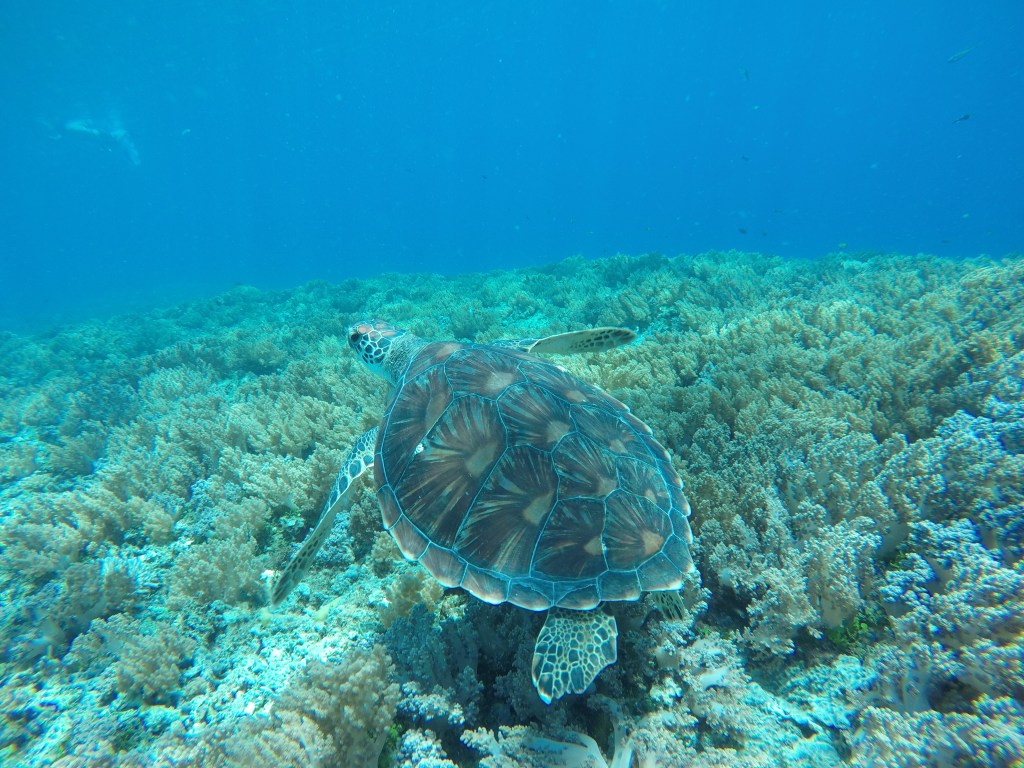
The Gili islands of Trawangan, Meno and Air are about as close to the perfect concept of an island paradise as you can get – white sands, clear water and coconut trees abound. Trawangan is for partying youngsters, Meno is for honeymooning couples and Air is a nice mix between the two extremes. And on Gili Meno is a wonderful little building, rebuilt after the devastating hurricane of 2018, which houses and feeds hundreds of tiny black creatures in shallow pools: a turtle sanctuary – funded purely by donations – which collects turtle eggs from the beach and releases them back into the big blue aged 8 months. The results are remarkable. On a morning of blistering sun and blue sky we dived from a boat into ‘turtle point’ – and swam with no less than six different turtles, their shells as big as shields, close enough to see their disgruntled faces as we awoke them from their slumber. Despite rising sea temperatures laying waste to the coral around the islands, we also managed to see more types of tropical fish than anywhere else we’ve snorkelled (including a very shocked-looking eel).

I can’t take credit for this photo, as I can’t free dive. Our snorkelling guide could though – and he was happy to borrow my GoPro for a few close-ups.

2. Jumping into a waterfall pool at Aling-Aling falls, Lovina

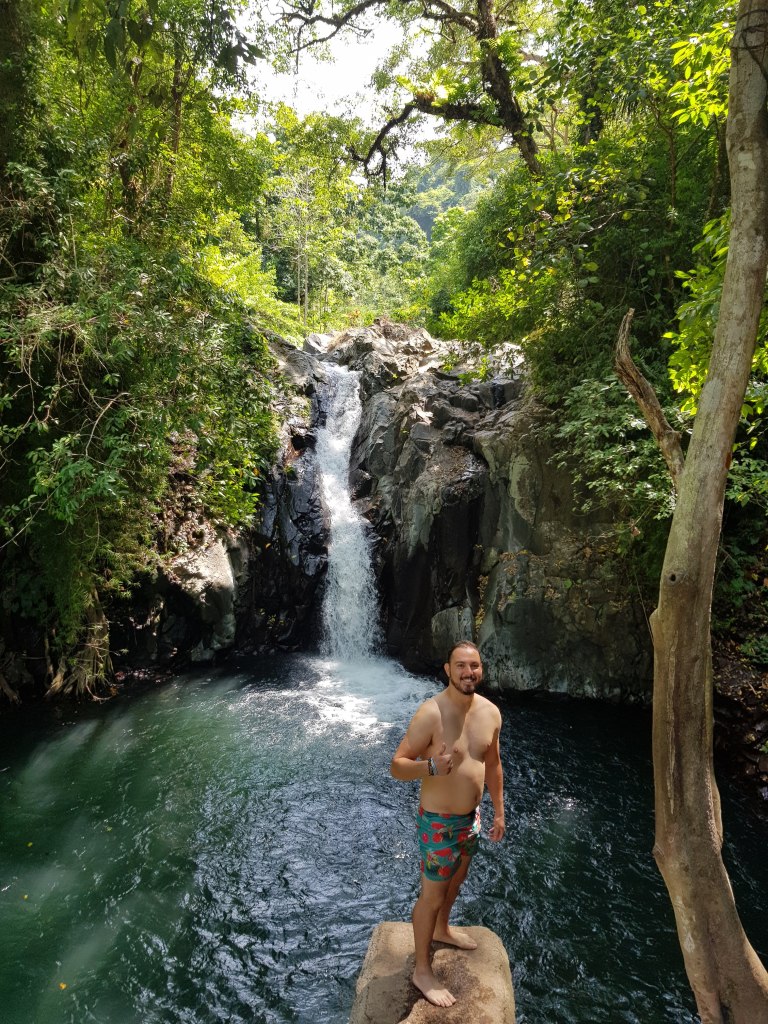
Although I found the magnetically mystic Sekumpul waterfall to be more impressive, the waterfalls at Aling-Aling near Lovina were the place we had the most fun. The mandatory tour-guide was well worth it – pointing out where we could swim, taking photos and most importantly, telling us where the safe places to jump were. Alice and I aren’t exactly the most thrill-seeking couple to visit Bali – and as we looked over the 5m jump into the first waterfall pool (the ‘baby jump’ according to our guide), the looks on both of our faces said it all: it looks really high! But with some deep breaths and a bit of encouragement from the book of Nike proverbs (“Just do it!”), we both jumped in. After taking the plunge, the 5+ seconds you spend underwater feels as long as a leap year. But the adrenaline rush after you surface will make you want to jump again and again – which I did. I didn’t try the 10m or 15m jumps that day – but looking back, I’ll be keen to give them a go when I see one next.    

This was one of the minor waterfallls. Aling Aling itself is much bigger, and swimming isn’t allowed in its pool.

3. Feeding wild deer on Menjangan Island

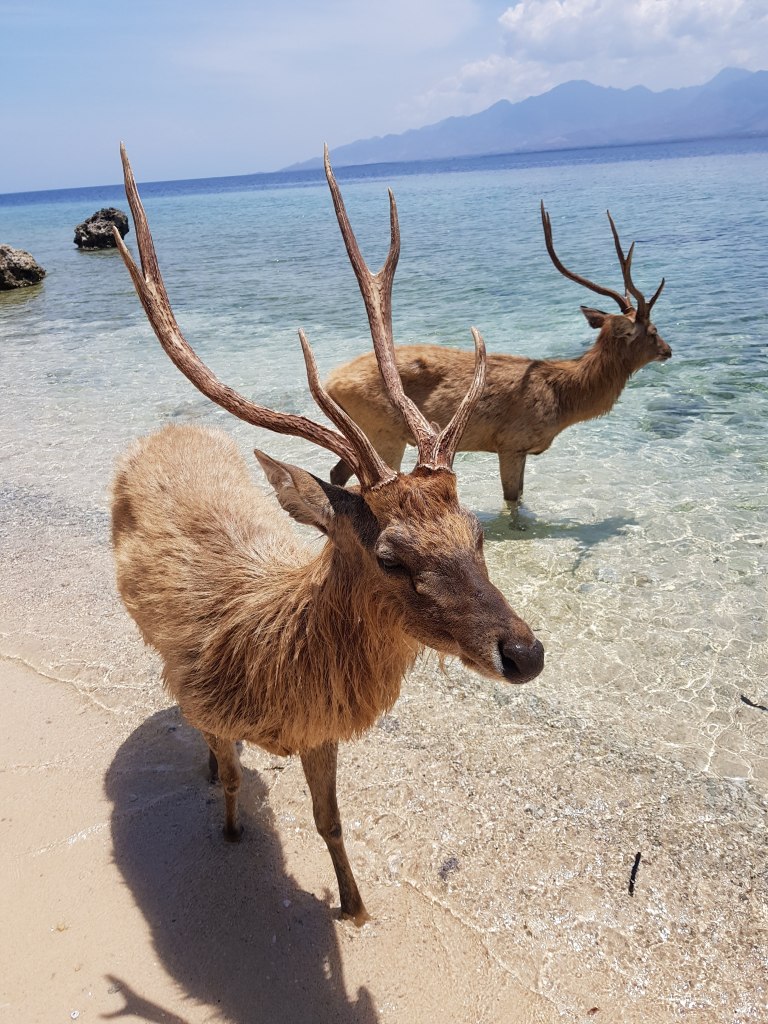
Menjangan island is a protected wildlife reserve just off the north-western tip of Bali – a place where most Kuta-loving Ozzie holidaymakers rarely go. As advertised, the snorkelling there really is ‘the best in Bali’ – even better than the Gili islands. Much of the coral is alive and well, and schools of colourful fish congregate in the steep underwater cliff-drops. As well as dozens of huge blue starfish, Alice’s keen eyes also spotted the rare and venomous stonefish camouflaged in the reef. (As I write this blog, I’ve just found out that the stonefish is literally the most venomous fish in the world and its spines can be fatal to humans – so apparently, this was also a near-death experience). But there was one animal that stole the show – the island’s native species of deer, bathing on the shore as our boat dropped anchor. Rather than bolt at the sight of humans, these huge deer seemed content to amble around us as we took photo after photo. And when we approached them slowly, head-on, with a bottle of water in hand – they gladly accepted our offering of fresh mineral water. I wouldn’t want to challenge them to a drinking contest – they downed a 500ml bottle in under 5 seconds.

Now those are some very majestic antlers….

4. Chilling at the Buddhist temple and hot springs in Banjar

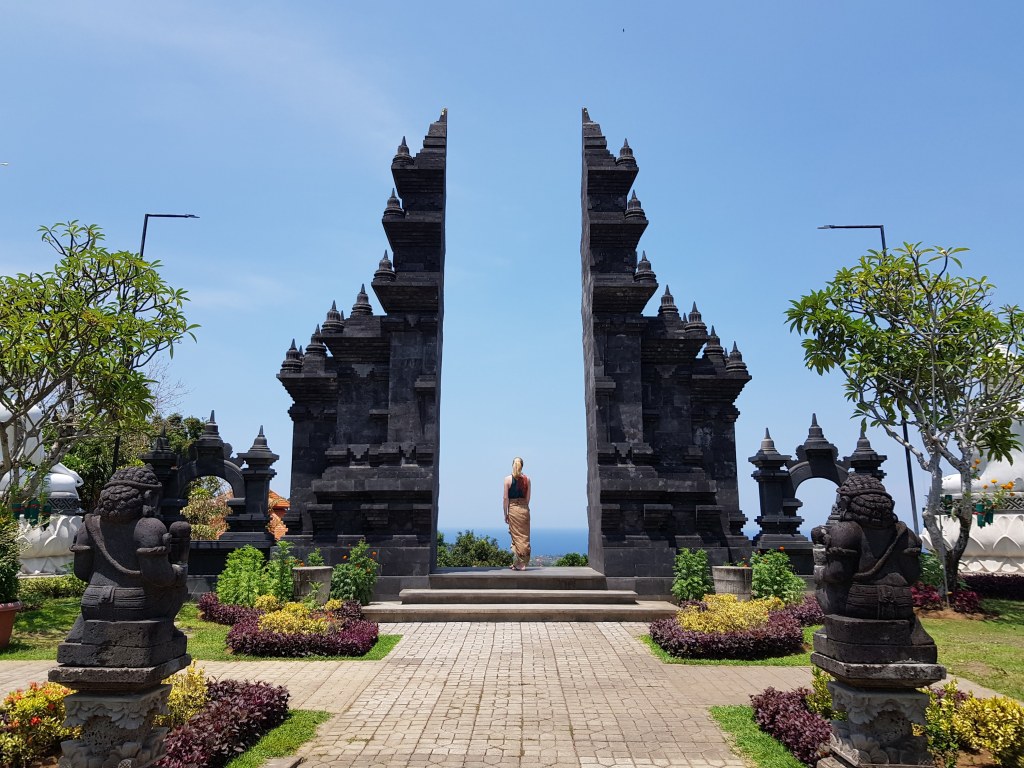
Alice and I have seen a lot of temples – including visiting ten in one day, in Chiang Mai. Brahmavihara-Arama temple in Banjar – a Buddhist temple on a hilltop overlooking the sea, once visited by the Dalai Lama – has got to be among the best. The panoramic views are complemented by the sounds of a wonderfully melodic wind-chime, which improvises to the sway of a mountain breeze that blows cool water from sprinklers across its lush gardens. With Bali’s high-season having ended a couple of months ago, the gardens and the temple itself were uncrowded and tranquil. To round off a day of slow-walking and quiet thought, we also went for a dip in the nearby Air Panas Banjar hot spring. Here, we got to wash ourselves with warm mountain spring water gushing straight from a series of stone-carved dragons, and swim in a relaxed little pool with precious few other tourists. Sounds idyllic, doesn’t it? I’m not going to lie – it 100% was.

Even looking at this photo makes me feel calmer. It’s like taking valium through your eyes.

5. Surfing and swimming on Balangan Beach, Uluwatu

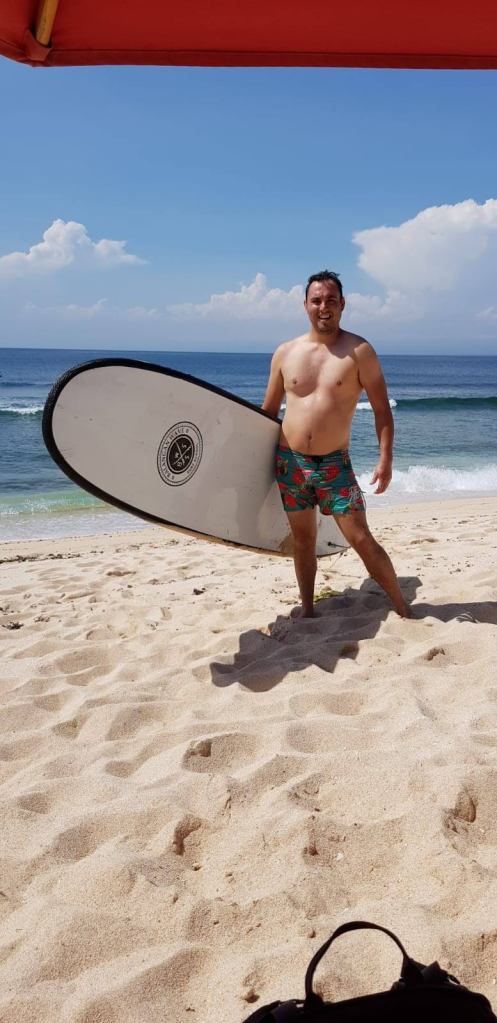
On our last full day in Bali, we wondered whether we should pay top dollar for a spot at an exclusive beach club, attracted by promises of infinity pools, beachside sunbeds and premium cocktails. But why pay over the odds when you can rent a pair of sun-loungers on the beach from a local warung, buy a fresh young coconut for £1, rent a surfboard for £2.50 and swim for free? We chose the latter, and didn’t regret it. By the end of the day I had just about managed to stand up on a surfboard, we were tipsy on 2-4-1 cocktails and Alice had gone for a sunset swim in the bar’s pool. Money well spent; money well saved – and a fitting goodbye to Bali.

The waves at Balangan were perfect for beginners – intermittent enough to paddle out without getting walloped every five seconds, and just the right size to coast slowly to shore without getting tumbled. Not that I managed that at any point – surfing is HARD.

The Worst

1. Three days of diarrhoea on Gili Meno

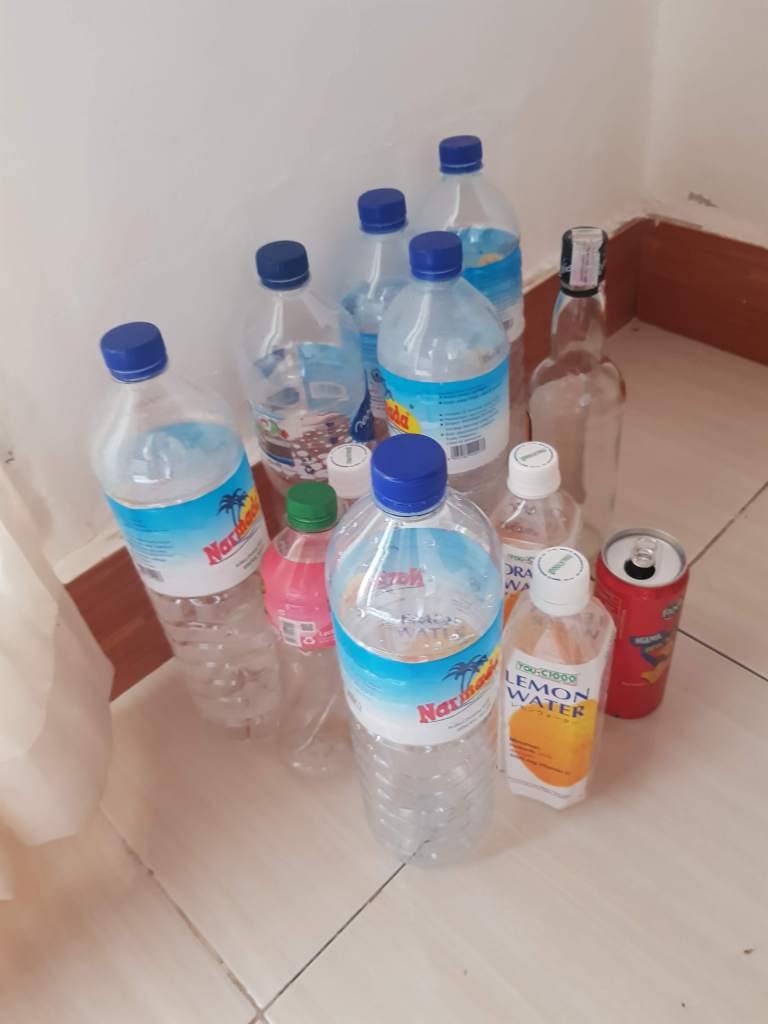
I won’t go into all the dripping details here – but I will forewarn you of the dangers of staying on a remote island getaway like the Gili islands. We’ve had the tummy-tantrums three times so far – and two of these have been on islands. I’ve deduced that there’s probably one good reason for this: the powercuts. Separated from the mainland, small islands often have their own independent power supply, which are prone to cutting-out – in our experience, at least once a day. And in the end, it’s not the long hours of candlelit evenings that will annoy you. When the lights go out, so do the refrigerators – and so do your chances of eating fresh food. It was only after I chomped down my third ice-cream of the week that I figured out that my coconut and white chocolate Magnum had probably thawed and been refrozen three times before I ate it. You might be lucky, but we weren’t. The multitude of empty bottles of mineral water and isotonic orange squash filling up the corner of our bedroom were testimony to that.

This was about half of the bottles we accumulated. I’m now an expert bidet user.

2. Legend of the Monkey Thief – Part I (Ubud)

In Ubud’s famous sacred monkey forest, there are over 900 monkeys split into 7 different groups, eating, sleeping and having turf wars in a largely natural environment. We saw monkeys in trees, in temples, on statues, signposts and banisters – eating, sleeping, climbing, grooming, baring their teeth at each other, carrying their young and even having sex. They are the world’s cutest and most fascinating creatures.

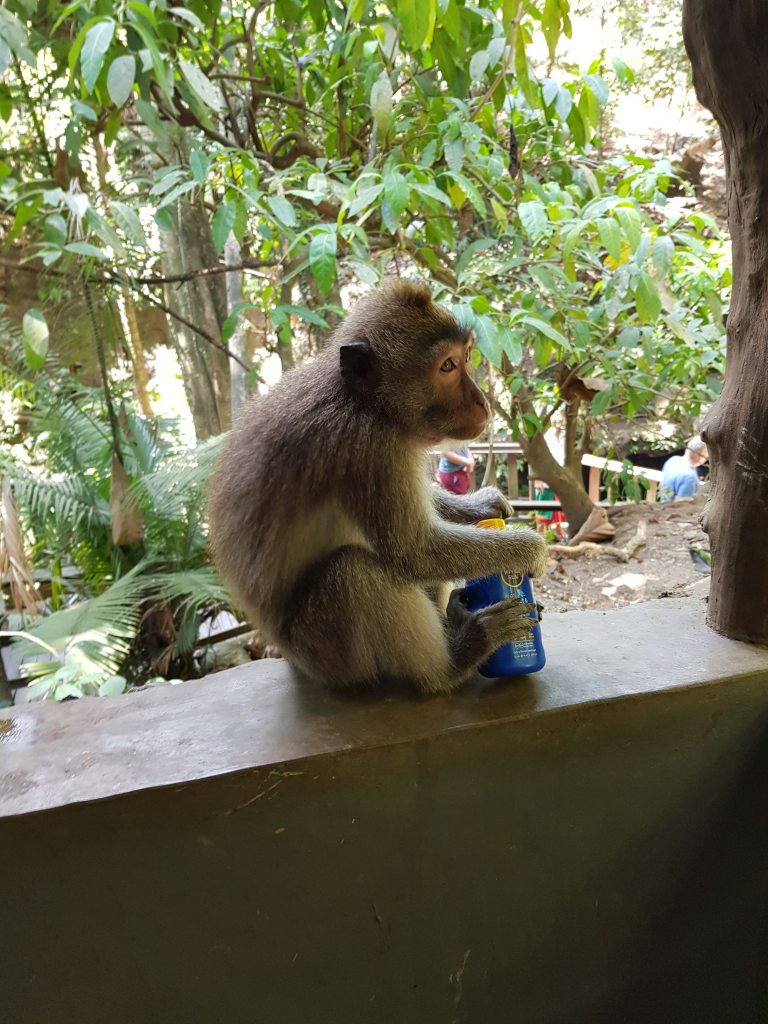
Until you put down your suncream for all of five seconds and it gets swiped, that is. We wouldn’t be that bitter, if it wasn’t for the fact that suncream in Bali is a product used solely by tourists – and is therefore horrendously overpriced. After one of the fang-toothed little critters grasped our little bottle of Nivea Kids SPF50, which cost more than £10, we were powerless to get it back. Without any peanuts to distract it with, and with Alice holding me back, I eventually let the little rogue go. Probably for the best, given the size of its fangs and the fact that macaques often carry the Herpes B virus.

My friend Steve consoled me by pointing out that this little thief almost certainly tried to eat the suncream and was probably violently ill as a result.

3. Spider slaying in Bedegul

The northern town of Bedegul has amazing things in and around it – a temple that appears to float on the lake, a 157-hectare botanical garden, and Sekumpul waterfall only one hour’s drive away. But Bedegul itself we found to be a bit of a dive – the mounds of rubbish and the over-eager market hawkers weren’t the best welcome we’ve ever had. After settling for a musty room in a homestay that just about met our minimum requirements, we found a visitor in the room we should’ve seen coming. I’m not particularly scared of spiders, but I was scared of this one – it was around half the size of my handspan, with a body big enough you could see its face. Alice is scared of spiders, so I’ll leave you to imagine what her reaction was. Not being one to kill wildlife frivolously though, I gave the spider a few hours to vacate our room before a certain girlfriend of mine, who shall remain nameless, insisted that it be removed. After flicking it off the wall with a makeshift sword (a mosquito net pole) and flicking it out the door with a makeshift shield (a plastic folder), I thought I had thoroughly exiled it. But when it crawled back through the crack between the doorframe, there was only one course of action left. I’ve only used my hiking boots a handful of times on this holiday, and each time I’ve had to wash them using a bidet afterwards. This was no exception.

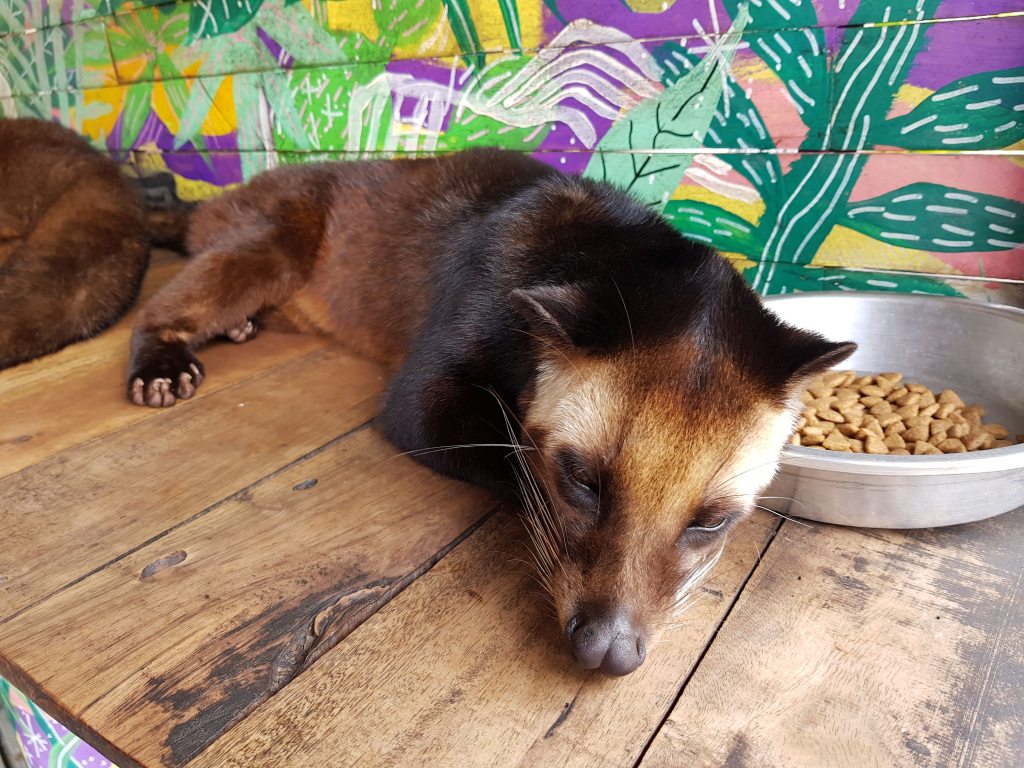
In my haste to destroy said spider, I forgot to take a photo of it. So instead, here’s a picture of the Luwak we petted in an Ubud coffee shop. This cute little guy poos out coffee beans which are then made into the world-famous Luwak coffee, aka “Catpoocino.”

4. Choppy waters on the way to Gili Trawangan

Just two days after landing in Bali, we went straight to the Gili islands, taking a boat from Padang Bai. Faces smug with excitement, we sat aboard the open-top deck of a yacht-sized boat, eager to soak up the sights and the sun. The first thirty minutes were great, until our not-so-smug faces were pelted with so much sea-spray that we tucked our tails between our legs and relocated downstairs. Unfortunately, that was when the real fun started. Alice has been on many a cruise, and it takes a lot to make her seasick – but even her vision was starting to sway with the relentless lurching of the boat. As a young girl threw up her lunch beside us, my face went white, then green, as rice and egg tumbled around inside me. I just about managed to hold onto my nasi goreng, but not without ingesting a firm dread of ever getting on another boat. The silver lining is that I’ve heard it can be much, much worse – a friend did the same journey and reported that around half the passengers vomited, and that the floors were awash with bile and seawater. Yuck.

No matter how big the boat, there’s always a wave that’s bigger.

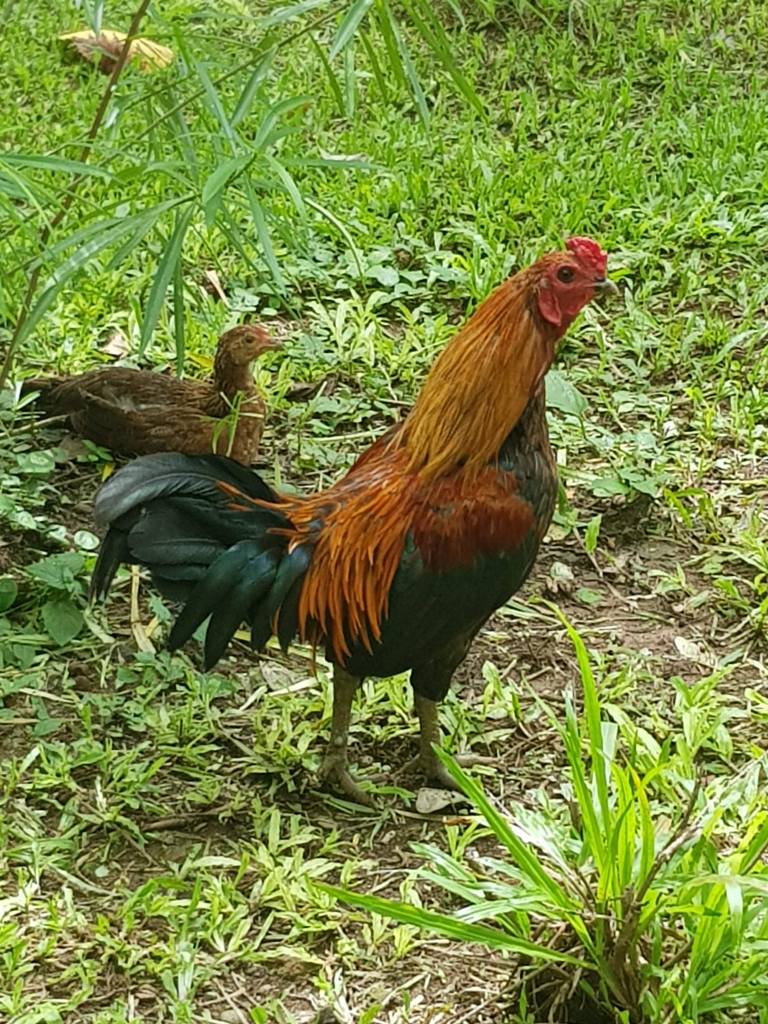
5. Things that go woof in the night

The question “did you sleep well?” is often perfunctory and thankfully, usually has a brief answer. But if you ever go to Bali, please be prepared for that not to be the case. Many natives keep farm animals in and around their home – and this includes roosters. Almost every homestay, hostel or hotel you inhabit will have at least one cockerel nearby, keen to tell you that its now 4am, 5am, 6am and indeed any other AM on the clockface. If that wasn’t enough, Bali is home to an abundance of wild dogs which will not only keep you up at night with relentless howling, but will also bark very aggressively at you as you walk through their territory, which can be more than a bit nerve-wracking even to a seasoned dog-lover. On top of all that, Indonesia is of course a Muslim country, and if you stay anywhere near a mosque, remember that you are very likely to be woken up by the Fajr call-to-prayer at true dawn (around 4-5am where we were). Be prepared to listen to some very detailed answers to the aforementioned question.

What a complete and utter cock.

The Weirdest

1. A strange new tradition: Pre-wedding photos

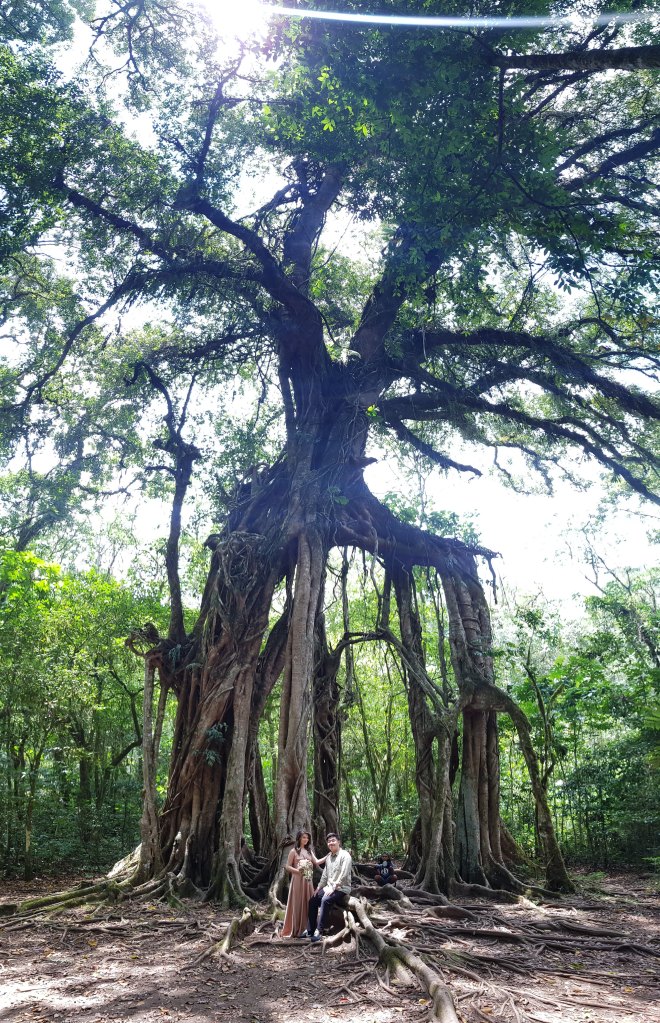
Hang around in picturesque places in Asia long enough, and you’re bound to spot an intriguing scene – a young couple, dressed in clothes similar to what a bridge and groom might wear on their wedding day, having some photos taken by a photographer. What you’ve stumbled onto isn’t the photoshoot for a nearby wedding-in-progress – it’s actually a pre-wedding photoshoot. This is where engaged couples (usually Asian) travel around to exotic locations (often all over the world) and take sumptuous photos and videos of themselves in their wedding attire, part of their wedding attire or just some fancy wedding-esque clothes. Often, the photos and videos are compiled into a presentation that will be shown at their wedding, designed to wow the crowd. We’ve seen a fair amount of pre-wedding photoshoots, which usually involve the engaged couple hogging a location’s best photo-spot for an inordinate length of time. In the botanical gardens in Bedegul, we found one set of pre-wedding photos which really took the biscuit. Located under a giant fig tree believed to be hundreds of years old – one of the garden’s main attractions – the happy couple had drafted more than just the one photographer. A full retinue of 7 was in attendance – including 3 photographers, 2 videographers, a make-up artist and I kid you not – a director. We sat down on a log and waited out the series of elaborate poses that followed. Even the log got bored.

You can see why this tree is such a photo-magnet, can’t you?

2. Legend of the Monkey Thief Part II (Uluwatu temple)

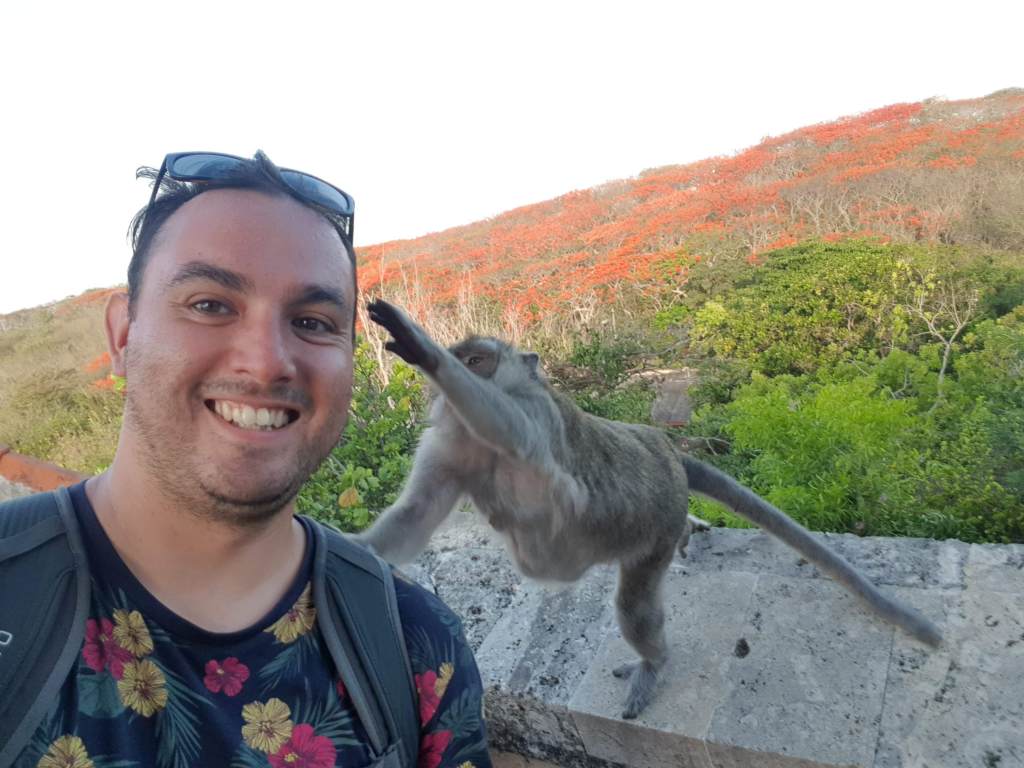
After getting our suncream stolen in Ubud, you’d think I would’ve learned my lesson about thieving macaques by now, wouldn’t you? Or maybe not – this is me after all. Anyway, on our trip to Uluwatu temple, we came across dozens more of our kleptomaniac friends (apparently being a temple guardian is a popular vocation if you’re a monkey). This time we were careful not to put any of our belongings down beside us – we kept everything inside my bag. It was only as I leaned over for another monkey selfie that I realised my mistake, too late – the sunglasses on top of my head. As well as giving me one of the most memorable action shots of my amateur photography career, this little blunder also made me a minor celebrity for the next five minutes, as tourists gathered round to watch a pregnant female macaque nibble on my tortoise-shell shades and bare her teeth at anyone who tried to get them back. A tourist offered me some chewing gum (to tempt the monkey away) and another told me to threaten it with a stick. Thankfully I didn’t have to resort to either option, as an elderly staff member came to my rescue by throwing a bag of tasty rambutans at my assailant. Moments later I had my somewhat chewed-up sunglasses back in my possession. What a hero – he deserved far more than the 5,000 Rupiyah tip I managed to scrounge from my wallet.

I wasn’t smiling so much after the photo, although it could have been worse. Around thirty minutes later we saw a guy get his designer prescription glasses stolen. Thankfully he got them back too.

3. Perplexing proposals on Kuta beach

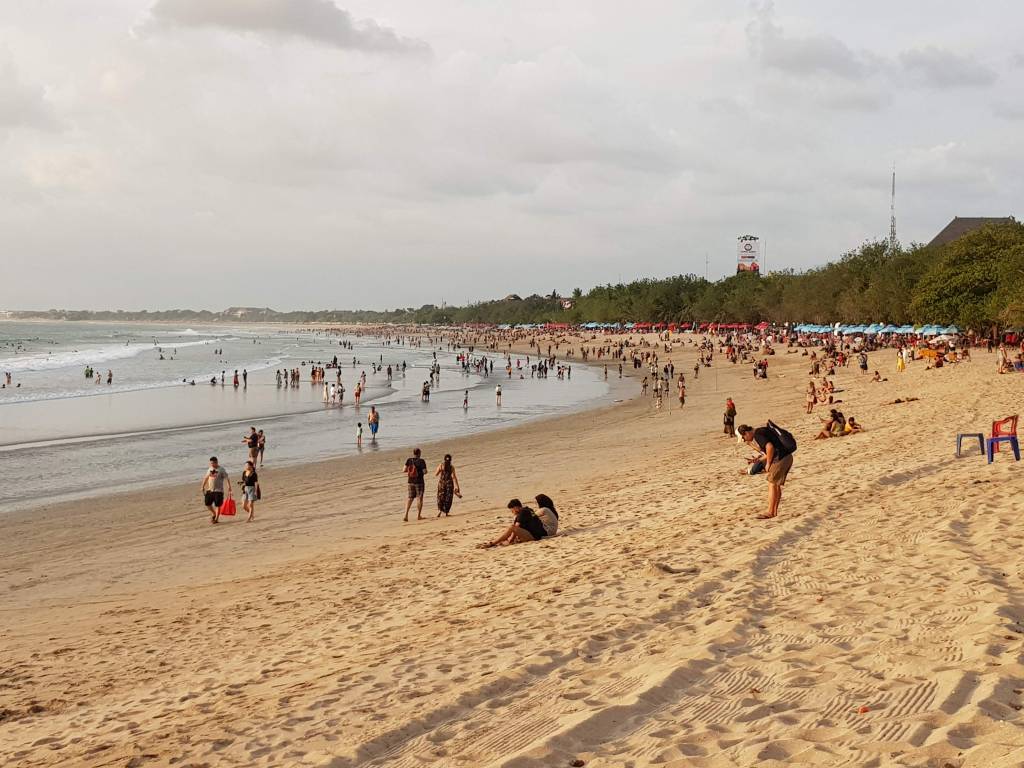
The advice my aunt gave me about Bali was this: “You’ll land in Kuta – so get out of there as quickly as possible!” Around ten years ago I might have enjoyed Kuta’s Ibiza-style nightlife, but these days I was glad to take heed of my aunt’s warning. One afternoon on Kuta beach was enough. During the space of time it takes to drink one beer, we had been offered sarongs, bracelets, ice-cream (three times), manicures, hair-braiding, Henna tattoos, the chance to wear a snake and either (I’m not sure which) the opportunity to buy a bow-and-arrow or shoot one. And the same again for a blowgun, accompanied by a demonstration of a blowdart being shot into the sand. If only I had said ‘yes’ to all the above, I’d now be a tattooed, braided, bow-wielding snake-charmer with immaculate nails. So in retrospect, the joke’s on me for not seizing the day.

Look at the sheer number of people in the background. And this wasn’t even high season.

The magic rock

Three weeks ago, we left behind southeast Asia and landed in Sydney, for what I’ve been calling ‘Phase 2’ of our trip. After taking only 49 days to get around Thailand, Laos, Vietnam, Cambodia and Singapore, you might think that we would be taking it easy for while.

But not so. The reason we had been zipping around Asia so fast is that we had to be in Sydney for a particular date – September 13th. It was the day when we would meet Steve and Bekha – some friends of mine who had been travelling around Asia and Australia for around a year before us. Before going home to the UK, they had masterminded a two-week long road trip from Sydney to Brisbane and back again, with myself, Alice and two of their other friends who were flying in for a 2-week holiday – one of whom was my long-time friend Paul.

As well as being super-organised, lovely folk, Steve and Bekha are also annoyingly photogenic.

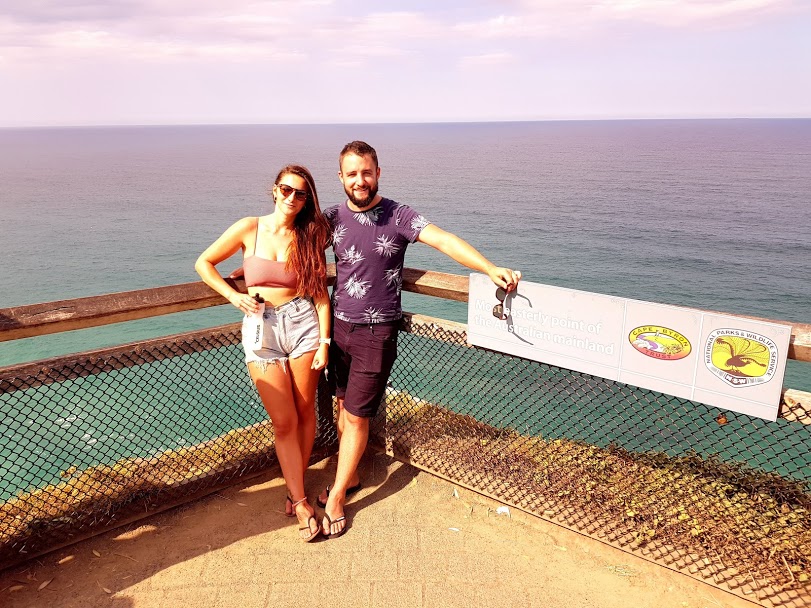
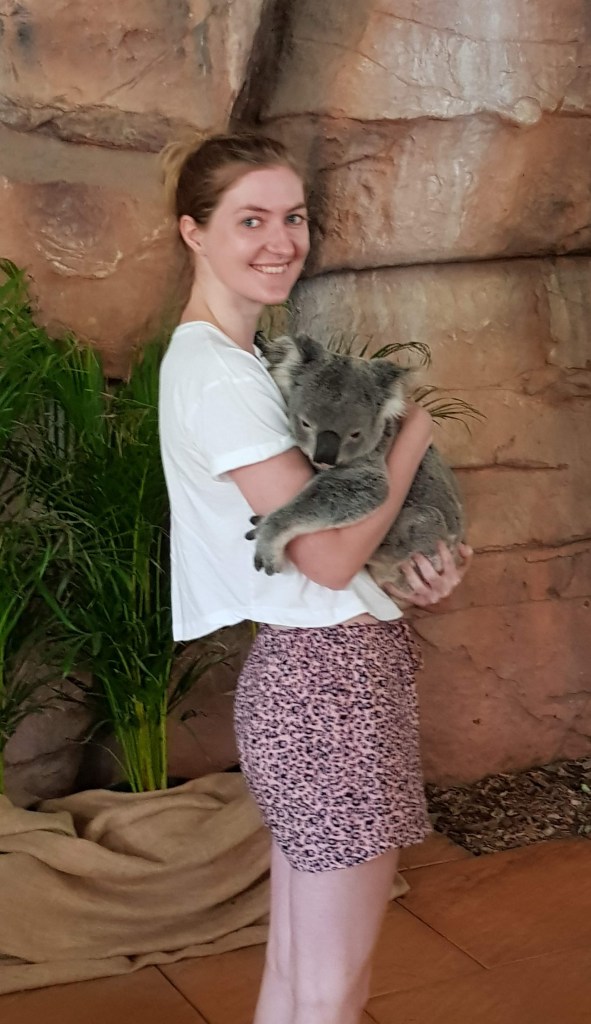
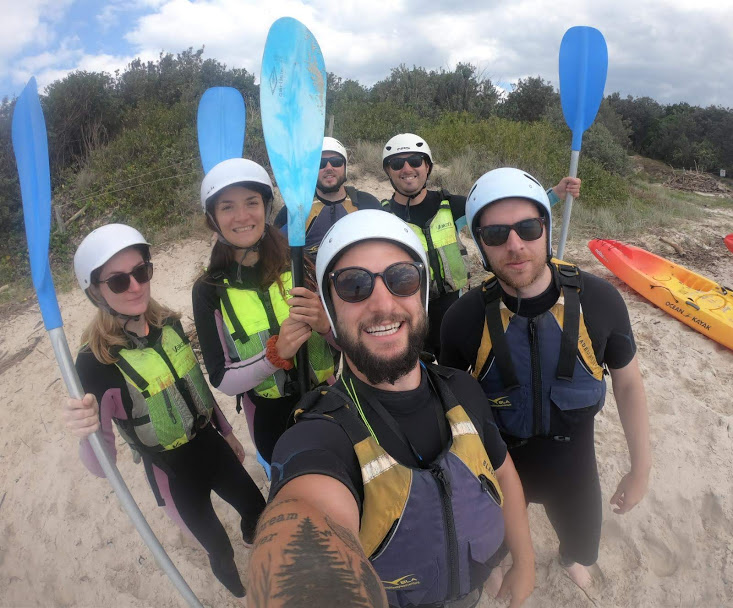
You can drive from Sydney to Brisbane in around 11 hours without stops – it’s around 937km. But we had a long list of things to do on the way. Body boarding on Valla beach. Mini-golfing at the Big Banana. Kayaking with dolphins and whales in Byron Bay. Visiting Australia zoo, where Alice cuddled a koala. Dipping our feet in a public swimming pool right in the centre of Brisbane. A wine, beer, cider and spirits tasting tour in Hunter Valley. And three nights at a villa on Bondi beach.

According to the Australia zoo handler, the Koalas only pose for photos for up to an hour a day, with at least one day off a week.

Those two weeks were so intense they left my head spinning. One day we’d visit the beach in the morning, drive five hours, book a hotel for the next day, go out for dinner and then drink just enough that I’d feel it in the morning. Far from contributing to the organisation, I found myself barrelling along in a dreamworld of sun-bathed highways, night-time beach excursions, hipster junk food, Air BnBs with balconies, coastal walks and more bottles of wine than I care to remember. And all the while Steve and Bekha, using their well-practised organisation skills and seemingly infinite energy, conducted the whole journey like the Duffer Brothers directing the season finale of Stranger Things.

Kayaking on Byron Bay. We ended up only a few feet from a pair of dolphins, and only slightly further away from a baby whale.

It was awesome. Steve and Bekha aren’t travel agents, but they may as well have been. Steve even drove us around the distilleries of Hunter Valley so we could drink, even though it meant he couldn’t. It was so fast-paced I could barely keep up. More than once a day I found myself asking where we’d be tomorrow, as I struggled to remember whether Nambucca Heads was south of Byron Bay, or the other way round. But they looked after everything, from the walking routes to the restaurants to the grocery shopping trips.

And then, suddenly, it all ended. Steve and Bekha’s year long adventure came to an end. We said our goodbyes. Steve and Bekha took the long flight halfway around the world back to England and back to reality.

For us, it was time to take a train instead. After one connection and two pleasant hours later, we found ourselves, as planned, at my Uncle and Aunt’s house, in the sleepy town of Mittagong in New South Wales. It was time for Part B of Phase 2. Time to relax.

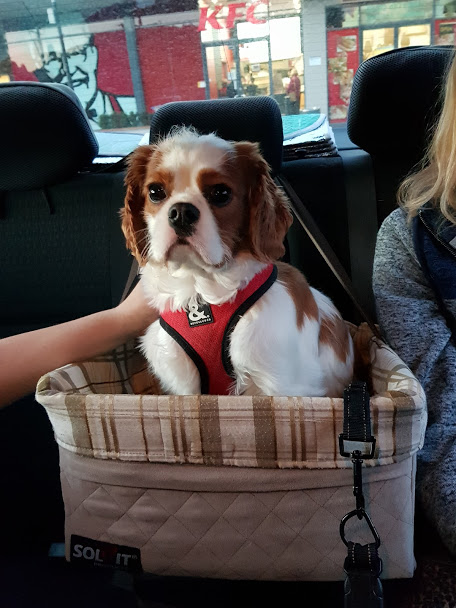
For the first three days, we were exhausted. 60+ days of jetsetting had taken their toll. We slept through our alarms, made ourselves brunch and cuddled my cousin’s beautiful dog (a King Charles Cavalier called Lucky). The most responsible thing we managed to do was our washing. My Uncle and Aunt fed us like royalty, and even gave us a whole downstairs flat to ourselves. It was idyllic. It was like taking a hot bath after being at a week-long festival.

This little dog is the biggest attention seeker in the history of Australia. The thing is, he’s so cute that he gets it.

After a week, we had ramped up our daily routine to include the mundane suburban activities we had actually started to miss – cooking, gardening, hoovering. We walked the dog, went shopping, and filled in our scrapbook. I even applied for a tax rebate. We went from being wandering nomads to house-proud home-makers in a span of a few days. It was like pushing the reset button.

But after a week of being in the same house for 23 hours a day, boredom set in. The kind of itch at the back of your skull that tells you that whilst you’ve thoroughly enjoyed being a well-fed, sleepy little animal for a while, it’s probably best for you not to carry on. The idea that you should probably get out of the house before you start losing key life skills like the ability to talk to strangers or shower before noon.

And so we googled some local attractions, and set off to see a local waterfall aptly named the ‘sixty-foot fall.’ Being in Mittagong, it was only 45 minutes’ walk away from where we lived. Australia – at least outside of the cities – is great like that. Wherever you drive, there are signs saying things like ‘Crystal Mountain 50km’ or ‘The Big Potato 8km’.

We learned our lesson and put on suncream in the blazing Australia sun. Even in wintertime.

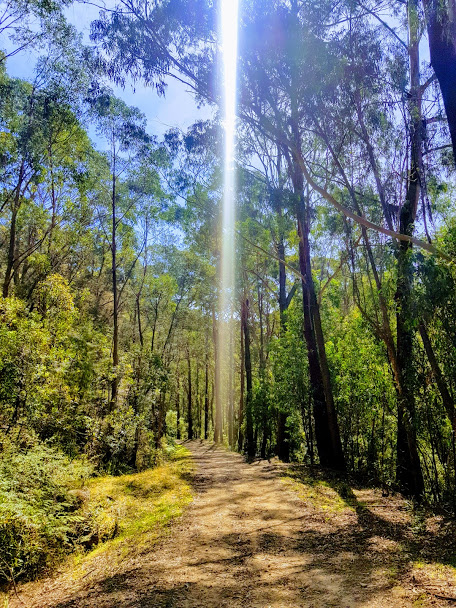
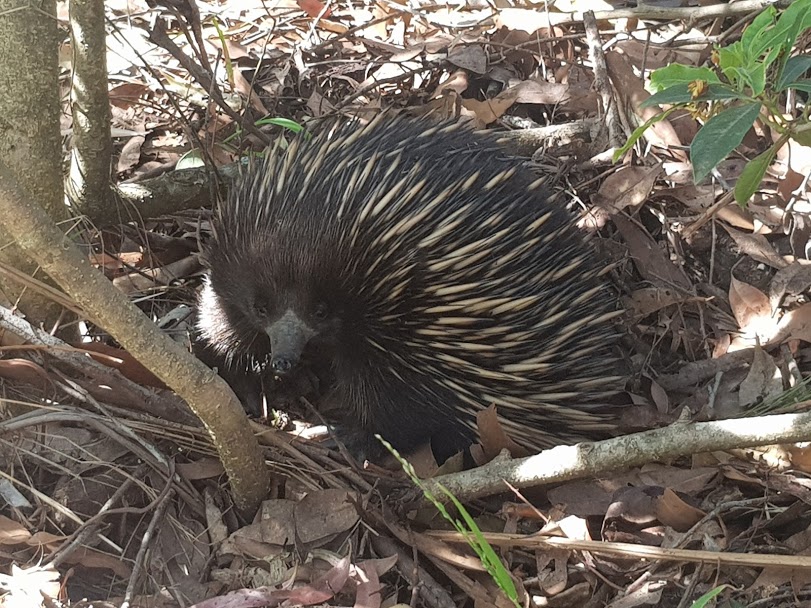
The walk was along a track named the ‘Fire Trail.’ An easy walk through the dried out Australian forest towards Mount Alexandra, made slightly harder by our worn-out, tread-less trainers. As we walked further away from our comfy home, slipping down pebbled paths and catching our legwear in the brush – we were once again out of our comfort zone. Not too long into our walk, we even saw a wild echidna burying its head in the sand as it waited for me to stop taking photos of it.

Echidnas – basically giant hedgehogs. Like so many things in Australia, its about four times the size of its UK equivalent.

The only annoying thing was, we couldn’t find the waterfall. But given that this was our first proper adventure in seven days, we didn’t let that stop us from having a good time. In fact, we managed to find something better.

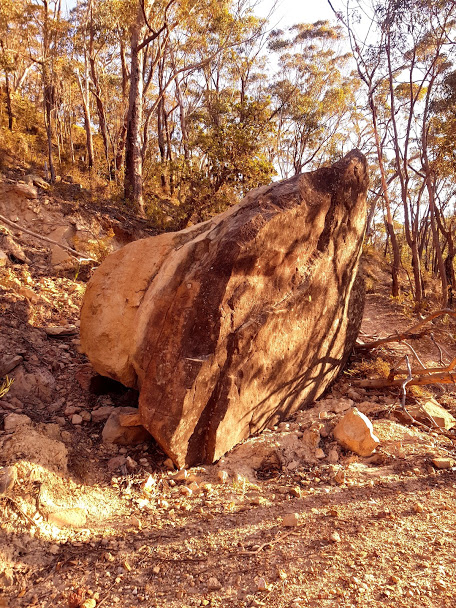
Along the fire trail, we came across this.

Just a rock, right?

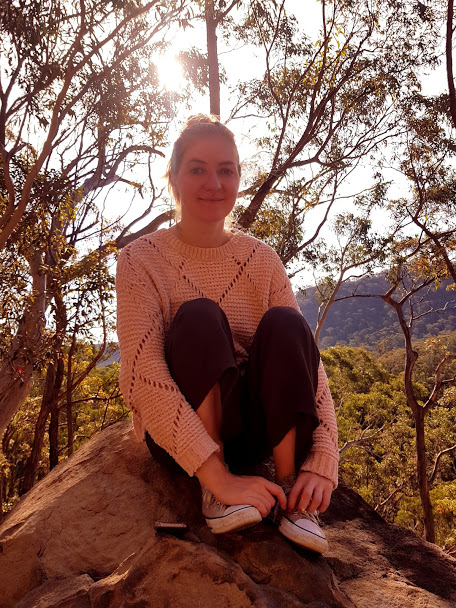
We had brought picnic food, and we needed somewhere to eat it. Unfortunately the fire trail didn’t yield any picnic tables, so the large flat top face of this boulder was the closest thing to a table we could find. So I scrambled up, hauled up Alice, and set our bags down. Nestled our bums into comfortable sitting positions.

And then the real adventure began.

We unpacked our food. Crunched into an apple each. Cut vintage English cheese on plastic plates. Spread chilli jam and homemade piccalilli on crackers. We popped open the crisps. For dessert – profiteroles. For second dessert – two slices of the Victoria sponge cake I had baked the day before. And then we popped open the prosecco, and cheers’d them in coloured cups.

We lazed around, stretching our backs, swapping seats. Took it in turns to take photos of each other. Played word games on our phones. Took a quiz of capital cities, which we had been talking about doing for weeks without getting round to it.

Whether Alice is cuter than Lucky is still an open question.

We talked. About travelling, about our relationship, about life. Watched the sun descend slowly through the trees. We cuddled. Cuddled sitting down, cuddled side by side, cuddled lying down. We listened to cockatoos squawk loudly; caught them flying overhead.

We finished the prosecco. We scratched our names into the rockface, in a big cheesy loveheart. We wondered if we could stay there forever.

And in a way, we did. There will always be a part of us sitting on that rock, hoping that the sun would never fall.

And that was it. We ambled towards home, got picked up by my Aunt, and went to bed after a freshly cooked dinner.

Sometimes the littlest adventures turn out to be the best. If you’re ready for one, then even a flat-topped rock can become an adventure playground.

The incredible journey

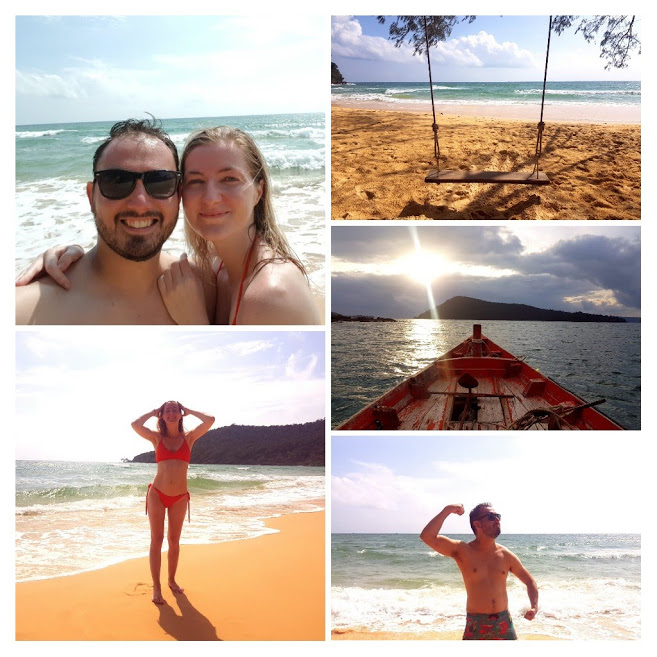
After around 35 days flying, bussing and boating our way around 10 major places in Thailand, Laos, Vietnam and Cambodia, Alice and I realised how much travelling we had packed into such a short space of time (probably too much). Although the adventure so far had been incredibly stimulating, it had also been head-spinningly intense. Being both mentally and physically exhausted, eventually we decided that travelling had been pretty hard work, and that it was only natural to want to take a break from it all. And before realising just how self-indulgent the concept was, we had it booked – a 4 day holiday from travelling, to the quiet island of Koh Rong Samloem, in Cambodia.

It was supposed to be an idyllic disconnection from social media, a stress-flattening coast along the ripples of tranquillity. All we wanted was to lie down on a quiet island beach for a few days, listen to music, read our kindles, go swimming and drink copious amounts of beer.

And the day we arrived, we found what seemed like the perfect opportunity to fulfil all our clichéd yet precious desires – the existence of Clearwater Bay, a deserted beach one-hour’s trek from the already quiet M’pay pier. If we made the journey along another beach and through a small jungle hiking trail, we would, we were told, be treated to a vast expanse of beach unspoiled by tourism, which we would have to share with only with one or two other visitors.

So, the next morning, we set off – bags full with snacks, headphones, kindles and even a borrowed snorkel – buoyant with excitement and expectation. We walked out of the village springing our way lightly over the sand. If only we knew what was coming…

And so begins my sorry tale:

There And Back Again: The Incredible Journey of Alice and Mark

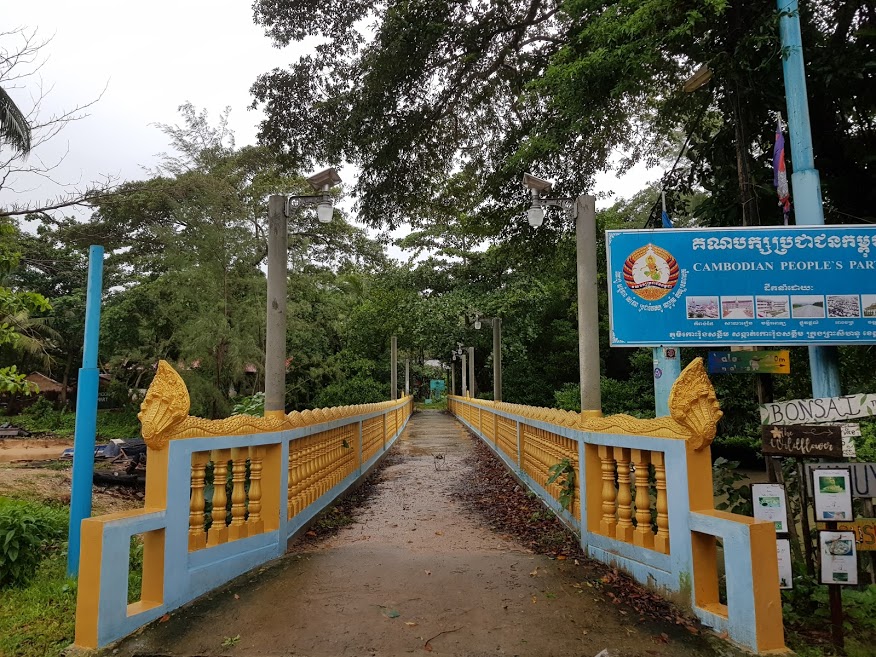
As we left the village, we walked over a metal and wood bridge with two dragons for railings, painted blue and gold. ‘This bridge looks nice!’ we thought, ‘If the rest of the bridges are like this, this shouldn’t be too hard.’ We had been told the hike would take about an hour, mostly along the beach, but with around ten minutes of uphill climb through the jungle, where ‘the Chinese’ had cut a path. We’re not big hikers, and we’re both embarrassingly unfit right now, but at the outset, it didn’t seem like it would be much of a challenge.

Note the seven-headed Nagas adorning each balustrade, which are a common feature of bridges in southeast Asia.

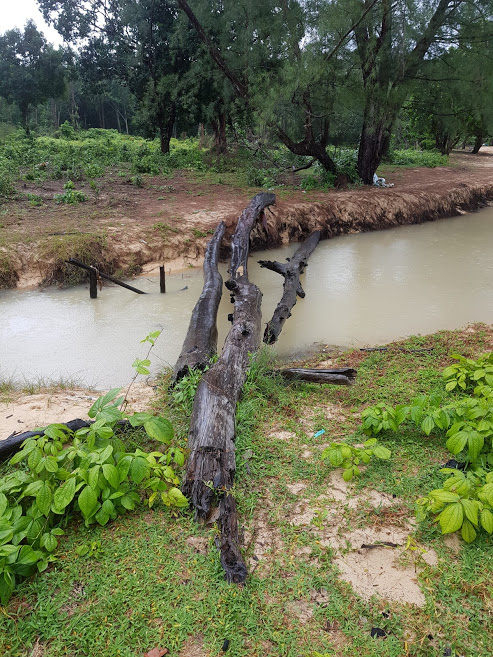
Probably the first clue that the hike might not be as easy as we expected was the series of three log bridges we had to cross. During the light sprinkle of rain we had been getting, they felt as slippy as they looked, and I was glad to be wearing my hiking boots. Suffice to say I didn’t ninja warrior my way across them at high speed – I edged along very slowly, knowing that if I fell in the water, my phone would be kaput within seconds. Alice chose not to wear hiking boots, so she just took off her converse and walked along the shoreline.

My preferred method was to put one foot on each of the two biggest logs and edge slowly forward, clenching my bum cheeks in fear.

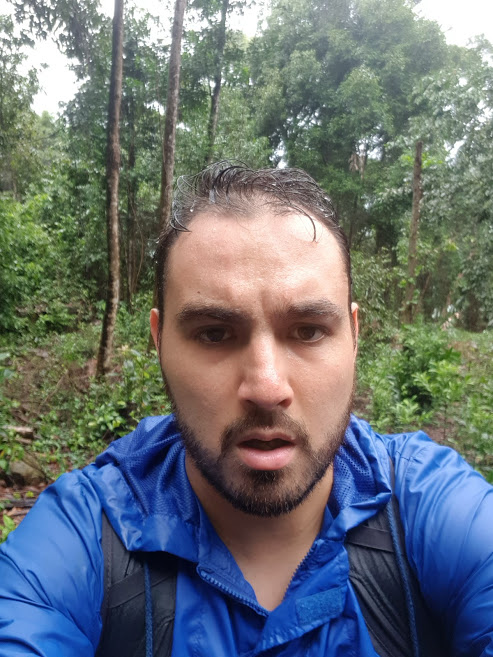
Having successfully navigated the log bridges with all the grace of an anxious walrus, I started enjoying the serene, if overcast, view of the island’s coastline. And as that happened, the light sprinkle of rain that had been keeping us cool suddenly turned into something else altogether. Within seconds, sheets of rain were falling from a grey sky where giant clouds raced overhead, dumping a whole sky of water on us. We found some shelter underneath a tree branch as thick as a trunk, but it wasn’t enough to stop our faces, arms, shoulders, bags and feet getting absolutely drenched. It was only 25 minutes in, and we already looked a sorry state.

After the clouds passed…  we had a decision to make. Should we go back now, in case this happens again? It looked quite likely it would rain again at some point later. But we had been lucky with the rain a few times so far – even when rain had been forecast at 80%, we didn’t get a drop of it when we went over the Hai Van pass a few days ago. The thought of going back now irked us. What if the sun came out and we missed our only opportunity to visit a deserted island beach paradise? We looked at each other. The worst of it was probably over, right? And so… we forged on.

Even the shoulder straps of my backpack were sodden.

Bizarrely, the next obstacle we faced was a construction site, where (we presumed) some new guesthouses were being built. After asking around, we found out that some signs telling us that ‘clearwater bay not this way’ were bogus, and that we were indeed headed in the right direction. The only problem was that a massive digger had ploughed its way down the beach so many times that it had enormous, semi-permanent grooves in the sand which were impossible to cross without wading through them. Our only option was to walk further out towards the sea, and run across the sand in between waves. I thought I had timed it perfectly, until I put my feet in a trench that was a lot deeper than it looked, and felt a whole litre of water pouring into my hiking boots. Three days later, and my boots still haven’t dried out.

You can see here that the trench is a lot deeper where the water is darker.

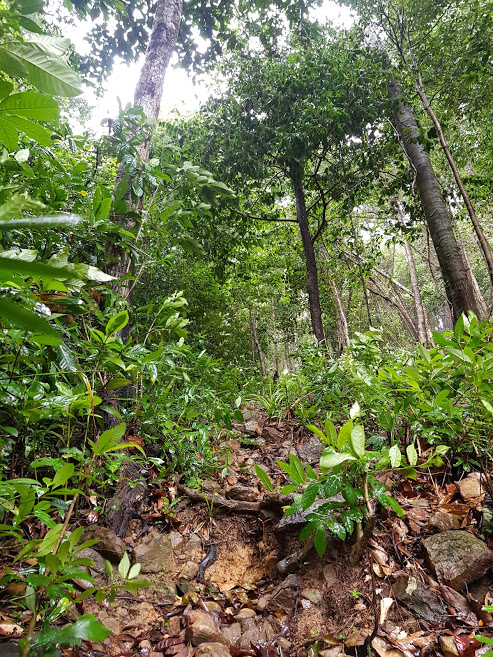
So, up to now, you’ve probably been thinking why on earth I chose to wear hiking boots when I could have walked through the shallow sea. Fair enough. But then we arrived at the edge of the beach, which gave way to impassable coastal rocks. Here, we had no choice but to use a rope to pull ourselves up from the beach onto a narrow entrance into the jungle. After a bit of flustered scrambling, we looked around for the path that would cut off the tip of the island – apparently one had been cut here. But all we could see were a load of slimy rocks, dense foliage and tangled tree roots. Then we squinted a bit harder, and realised that the rocks and tree roots were the path. As it wound its way up the shallow end of the mountain, we had to stop twice to figure out which way the path actually went, since it looked so similar to well… the rest of the jungle.

Playing ‘Where’s the path?’ is bit like playing a high stakes version of ‘Where’s Wally?’

On the way down the other side of the mountain, it started to rain again, and we quickened our pace as we realised we were about to get caught in another downpour. Thankfully the path was much wider, probably thanks to another enormous digger we saw along the way. Despite the weather, it was hard at work raking huge trenches in the ground perpendicular to the path, and we had to literally jump across the digger’s wide tracks to get across (either that, or get our shoes filled with sludge).

You really don’t want to put your foot in that trench. I did it somewhere else a few days later, and almost had a sandal sucked in.

So, after an hour and a half of being beaten by the weather, thinking we were lost, and huffing and puffing far more than we should have been, we saw the pier. And next to it, the beach.

I breathed a great sigh of vindicated relief. The rumours of (almost) unspoiled beauty turned out to be true. It was a beautiful sight.

And then, as if on cue, the heavens opened once again, and instead of running into the sea, we ran straight down the pier into the safety of a little hut on stilts.

The next hour and a half weren’t spent sunbathing on the beach, or listening to music, or even reading our kindles. As rain was blown sideways into the unwalled hut where we had taken shelter, we moved around to dodge it, snatching moments to eat our pringles and butter biscuits. The sea turned grey-black as a mammoth black cloud rolled overhead, hammering the corrugated iron roof.

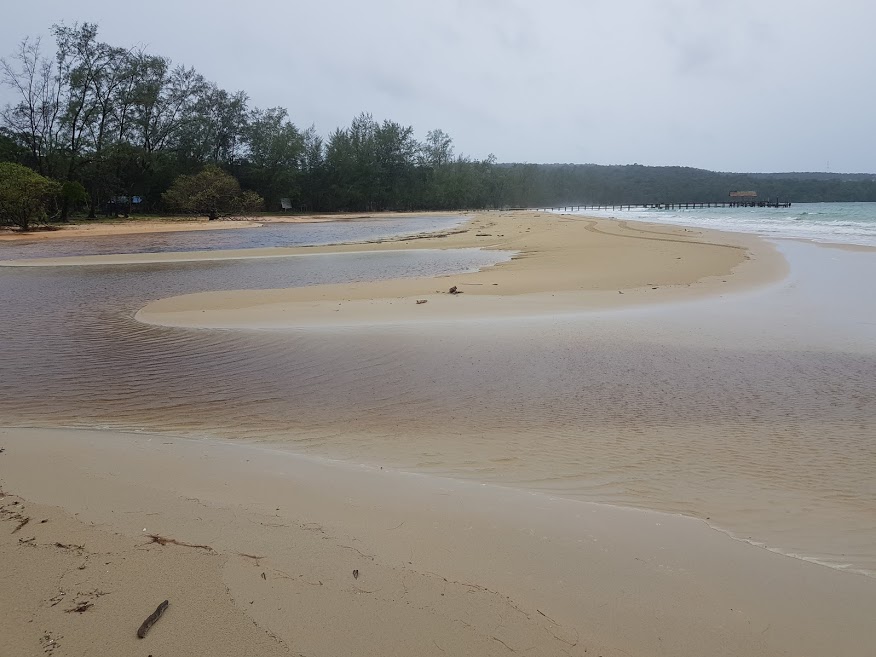
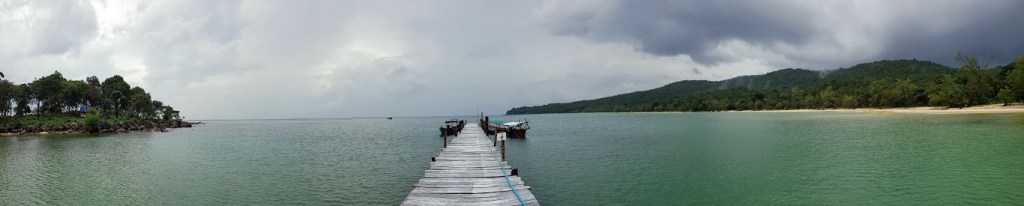
The only silver lining was that in a ten-minute break without rain, I managed to take the only photo of the day that didn’t require me to wipe water off my phone screen before and after.

The technical term for a panorama of a pier is a piernorama. Also, don’t believe everything I say.

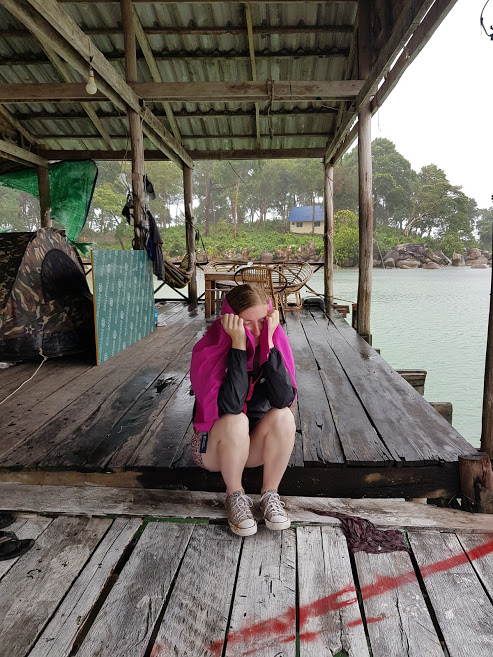
I used the remaining time to wring out my socks, give up on putting my soaked tshirt back on, and settle for putting my raincoat straight over my rain covered torso. At this point my towel was so damp I wondered if it was making me more wet when I rubbed myself with it. Alice sat down and put her towel over her head like a pink-clad nun.

If there’s one picture that best sums up how we felt, it’s this.

By around 4pm, we were cold, dejected and miserable to the point that I think we actually became slightly delirious, and started finding it all quite funny. But as time ticked away, we knew that the failing light was going to leave us stranded on the pier overnight if we didn’t leave soon. And so we left behind our desolate, beautiful beach having never laid down on it.

The journey back involved all of the same obstacles, but this time, the rain was heavier, the descent was slippier and the beach trenches were wider and deeper. Alice cut her leg on a spiny branch, which we washed with stinging seawater. My boots got filled with water again. We were heavy footed and tired.

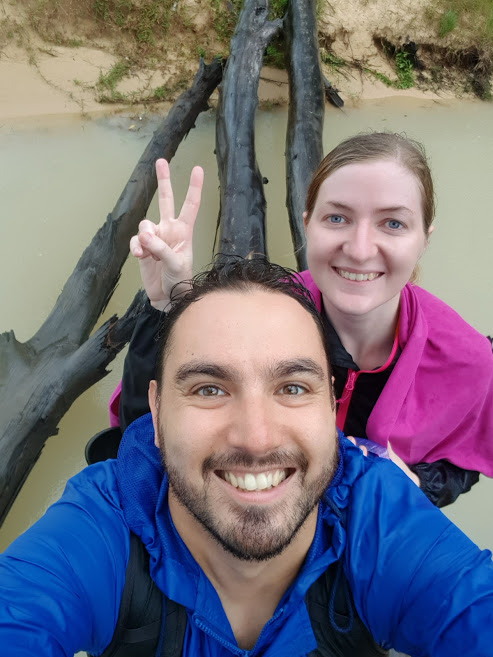
But we did at least manage to get a few selfies on the bridge. I’m not sure why we look so happy in these photos, because we absolutely weren’t. It must be all the smiling practice that comes with taking around 200+ photos per day so far.

The victory V felt appropriate, given what we had accomplished.

In the end, we didn’t have the idyllic relaxation and reset time we wanted. We didn’t get to take stunning beach photos, bury eachother in the sand or learn how to snorkel. But on reflection, we did get something else.

According to the TV show Rick & Morty, an adventure is something that you can get so wrong that you might die. I’m not sure we were close to dying at any point, but we were very much on the verge of getting lost, stranded or catching hypothermia. Hopefully that qualifies the journey as a real adventure. It certainly felt like one.

And thankfully, our trip to Koh Rong Samloem didn’t end there. Two days later, the angry rainclouds disappated. Under a blue sky, we took a boat trip to Saracen Bay, and walked an easy 1.5km to Lazy Beach down a wide, shady, sandy road. And we got exactly what we wanted.

Lazy beach was ranked 21 in National Geographic’s top beaches in the world. Since it was the off season, we were lucky enough to have it pretty much all to ourselves. We only had to share it with one other swimmer, and a dog that fell asleep in my shadow.

Why your next two week holiday should be to Da Nang

Way back before we went travelling, we read about a place called Da Nang – Vietnam’s third largest city (behind Ho Chi Minh and Hanoi). Just from flicking through a couple of travel guides, we thought there was so much to do there that we should make it one of the longer stops on our 49-day tour through southeast Asia.

We initially planned to spend five days there. In the end, we extended our stay to eight days – and we still felt like we had missed out on some of the amazing experiences that Da Nang and its neighbouring towns had to offer.

On reflection, it’s the perfect place to go for two straight weeks (maybe more) – and you won’t be bored for a single day. Whether you’re going travelling or taking your annual long holiday from work, and regardless of whether you’re single, in a relationship or have a whole family to take with you, Da Nang is the ideal destination.

Let’s get into why!

It’s home to the Hai Van Pass

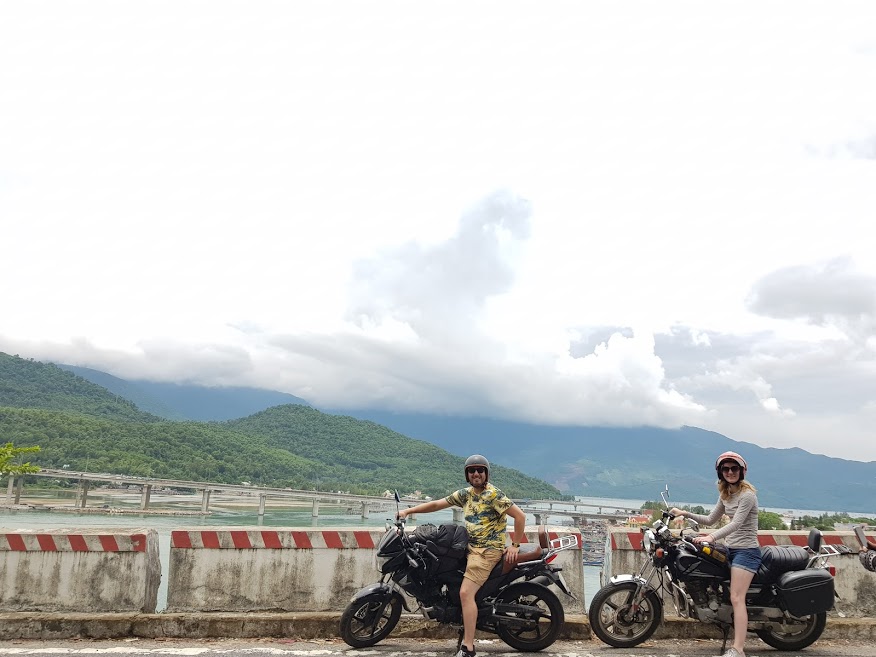
Those who have seen the Top Gear special where Clarkson & Co ride scooters over the incredibly picturesque Hai Van pass will need no introduction. For those who haven’t, the Hai Van pass is the middle stretch of a 120km journey between Hoi An and Hue, along which you’ll ride past the beautiful and historic Marble Mountains, the breathtaking and incredibly long My Khe beach, 500m altitude coastal mountains that almost touch the clouds, and the unbelievably serene Lang Co beach. Long straight roads are punctuated by scooter-congested Vietnamese traffic, steep climbs and hairpin bends, keeping the adrenaline high at every turn.

Note that we didn’t drive these motorbikes ourselves – but our drivers were kind enough to let us pose with them so that we felt cool.

The golden bridge at Ba Na hills

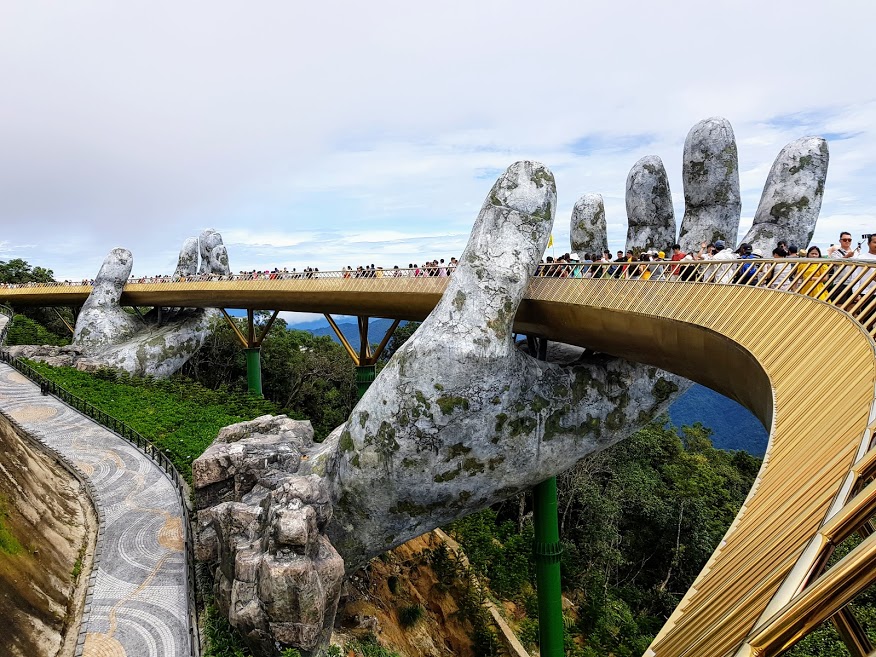
Essentially Vietnam’s answer to Disneyworld, the Ba Na hills (owned by Sunworld corporation) are a majestic sight to behold, and are designed to be adult adventure playground and child fantasy park in equal measure. Once you’ve ascended the awe-inspiring, fifteen minute, 5km cable car ride (the longest in the world), you’ll arrive at Ba Na’s primary asset – the golden bridge, held up by giant, moss-covered hands, overlooking a landscape that includes Da Nang city, My Khe beach, and Son Tra mountain. If that wasn’t enough, the hills are also home to 9 differently themed gardens, a 100m wine cellar tunnel dug into the mountain, a funicular railway, a French-themed village, a giant buddha statue, a mountain-top tea-house, a beer plaza and of course, a kid’s fun park. The pictures you’ll get will be good enough to break Instagram – but only if you’re tough enough to elbow all the other photo-mad tourists out of the way long enough to get a picture.

If you think the view of the bridge itself is amazing, you should see the view from the bridge.

The beaches are some of the best in the world

Where to start.

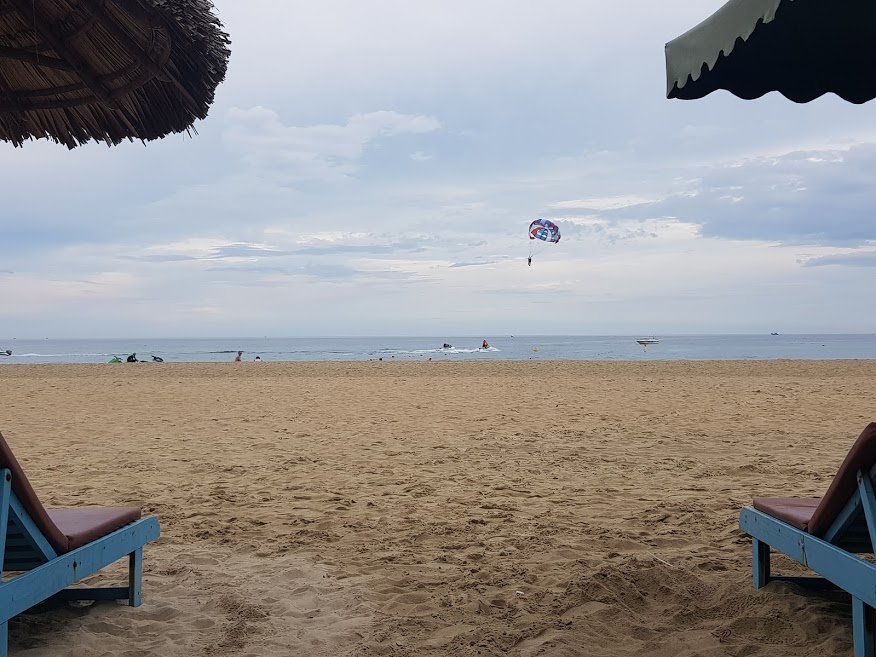
Da Nang’s local beach, My Khe, is 9km long. If you’re prepared to walk or get dropped off only 1-2km from its busiest area, you’ll almost certainly be treated to a stretch of sand that feels almost private. Many sun loungers are free if you buy a coconut or a beer. You can order fresh seafood from restaurants that back onto the beach itself. The sand is soft and clean, and the ocean is shallow enough that you can wade out for a good 50m and only be up to your shoulders. And if you get bored, you can try parasailing or rent a jetski.

And that’s just the start when it comes to beaches. Along the Hai Van pass, you’ll be able to stop at Lang Co beach, which is incredibly unspoilt and tranquil. In Hoi An, Ang Ban beach was voted in CNN’s top 100 beaches in the world. And if you just want to mix it up, you can get to Non Nuoc beach which is only around 20 minutes away – and was voted in the top 25 Asian beaches in TripAdvisor’s 2017 Traveller’s Choice Awards.

Once you’ve gone parasailing, you can watch other people from the safety of your sun lounger.

It has a bridge in the shape of a dragon that breathes fire

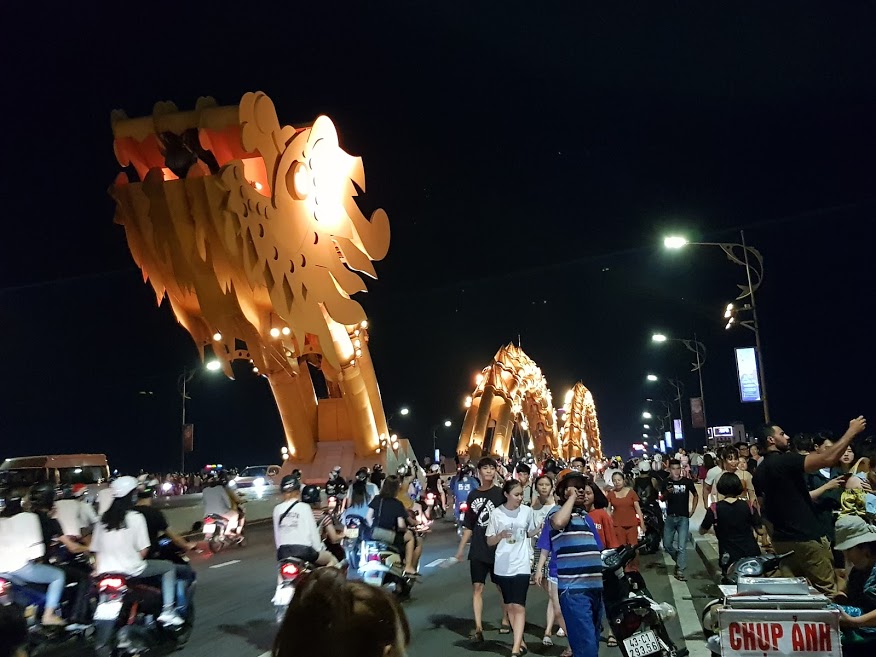
The Dragon Bridge in Da Nang is not only a triumph of architectural and engineering creativity, it’s also a heart-warming throwback to childhood that will capture yours (and your children’s) imaginations. Just to be clear here – yes, it’s a huge, huge bridge in the shape of a dragon. But at 9pm on Saturdays and Sundays, all traffic going across it is stopped, and it becomes more than just a bridge shaped like a dragon, and starts behaving in a very un-bridgelike manner. Underneath its head, thousands of excited onlookers suddenly break out into sweat as massive, searing-hot jets of flame shoot from its mouth, and are then drenched by a huge deluge of water cannoned from the same orifice. It’s an event of fairy-tale proportions made even more special by the atmosphere on the bridge as so many people of diverse backgrounds come together to witness a dragon come alive.

If you stand this close during the fire/water show, be prepared to get very hot, then very wet.

Hoi An, Hue, and My Son are all nearby

Da Nang city has everything you need – huge shopping malls, traditional Vietnamese markets, high calibre hotels and restaurants. But probably Da Nang’s biggest asset is its location – in close proximity to the small, historic town of Hoi an, the ancient temples of My Son and the royal mausoleums of Hue.

Hoi An is famous for, among other things, having over 400 tailors where you can get measured for a custom made suit or dress for a fraction of the price it might cost you back home, a thriving art scene, a charming ancient town centre, a top-notch night market and the best banh mi in Vietnam (according to the late chef, Anthony Bourdain). As it’s only a one-hour bus ride from Da Nang, it’s almost impossible not to visit if you go to Da Nang, and provides a quieter, more chilled-out and more culturally established alternative to Da Nang’s fast pace.

In between all the beaches, bridges and tailor-made suits, it’s also healthy to get a good dose of history, both ancient and modern. Da Nang’s Zone 5 Military Museum has a great deal of Vietnam’s modern history covered – its three floors catalogue the Vietnam war and resistance of French colonialism. But for ancient history, the My Son sanctuary, a UNESCO world heritage protected site, constructed between the 4th and 13th centuries, is only 40km from Hoi An. Within south east Asia, My Son’s temples are only exceeded in beauty by Ayutthaya in Thailand and Siem Reap in Cambodia.

And north of Da Nang, at the other end of the Hai Van pass, is Hue. This city embodies another fascinating period in Vietnamese history, encompassing the vast 19th century citadel that was the capital of the Nguyen dynasty, and the ostentatious tombs of its emperors. And 20km outside of Hue is the ghost city of An Bang, where hundreds of incredibly ornate (not to mention expensive) modern tombs have been built to honour the ancestors of the local residents.

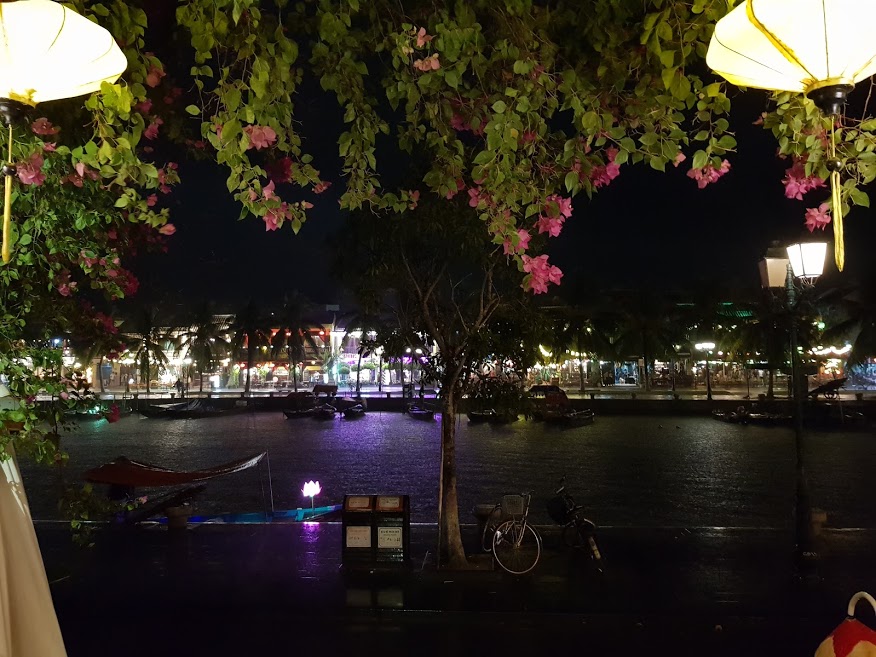
Hoi An’s night market is located on a small island accessible via the Bridge of Lights. There are lanterns everywhere!

Vietnamese food and drink

Those who have been to Vietnam probably won’t need much convincing that Vietnamese food is incredibly delicious! It’s generally simpler and less spicy than Thai food, which makes it far less daunting to try even for the fussier eater. If you go to Da Nang or anywhere in Vietnam, then you won’t regret trying these – and this is just scratching the surface…

  • Pho (noodle soup) – especially beef
  • Banh Mi – baguettes filled with pork, herbs, spices and sauce, and incredibly cheap (around 60p each off the street – perfect for lunch!)
  • Banh Cuon – steamed rice rolls
  • White Rose dumplings – a Hoi An speciality

Suggested Itinerary

This is an itinerary I’ve dreamt up recently based our own eight day stay. I’ve not tested it out – so be sure to do plenty of research as you normally would before booking anything! We didn’t actually make it to Cham island, My Son or Hue, so the information in these sections comes from research rather than first-hand experience.

Day 1 – Fly to Da Nang

The flight should only need one connection, at Hanoi. Da Nang has its own airport which is only a few minutes’ drive from the city centre. If you’re flying from the UK, then with the time difference (you’ll be losing time) the journey will probably take almost a full 24 hours.

Day 2 – Relax at My Khe beach

After the slight jetlag, you’ll probably want to spend a day relaxing – so My Khe beach will be perfect. Just bring your swimwear, a towel, some sunscreen (even if it’s cloudy) and a kindle or some headphones. There are multiple places where you can go parasailing for a reasonable price, although the time spent up in the air is quite short. Grab a sunlounger and after you’ve sipped your coconut dry, ask for it to be split in half. Before you have time to get scared of the middle-aged Vietnamese woman so expertly wielding a machete, you’ll have two halves of a coconut and a spoon to dig out the fresh, delicious, healthy coconut meat.

If you flew on a Saturday, then this day would also be perfect for seeing the Dragon Bridge show, which is only at 9pm on Saturdays and Sundays.

Day 3 – Explore the Marble Mountains

You can easily get the number 1 bus (Da Nang – Hoi An) to the Marble Mountains, which are around 45 minutes from Da Nang – live timetables should be on Google Maps. There are five mountains that make up the Marble Mountains – but the biggest and most attractive by far is Water Mountain. My advice is to pay the small fee to catch the lift tower to the top, as you’ll be doing plenty of climbing when you’re up there in order to reach its various different peaks. When you buy a ticket, don’t forget to buy a map too – some careful planning at the start will mean you won’t miss its numerous caves and pagodas, all of which are worth seeing.

Day 4 – Walk along the golden bridge at Ba Na Hills

You can easily arrange for morning pick up and an afternoon drop off with a shuttle bus service such as Da Nang Green Travel. There’s no need to hire a tour guide here, as the Ba Na hills is primarily a modern fantasy park rather than a historical monument, and you’ll want the flexibility to decide for yourself how long to stay in each area. When you get there, my advice is to see the golden bridge in the afternoon, after the morning rush of photo-junkies. Just be warned that the Ba Na hills attract tourists from just about every culture, and every single diverse definition of what constitutes ‘rude’ and ‘polite’ behaviour can be observed here. Basically, try not to get too frustrated by other people barging in and through your perfectly aligned photo – and be prepared to wait patiently for other people to finish taking theirs. If you have young children, consider splashing out for one night’s accommodation in the resort – then spend one day visiting the gardens and French Village, and one day queuing for rides in the fantasy park (skip out the museum day in that case!).

Day 5 – Visit the Fifth Military Zone Museum and/or the Cham Museum

At the Fifth Military Zone Museum, walk around outside marvelling at all the impressive military vehicles whilst you contemplate how many lives were taken away using them. Inside, the museum’s arrangement is a bit peculiar as it flits between ancient history, the Vietnam war and resistance of French colonialism – however, if you persistently read the broken-English captions of each photo and exhibit, you’ll effortlessly absorb a dose of Vietnamese patriotism as you realise just how many invasions that this fearless country has repelled.

At the Cham Museum, you can see almost 300 terracotta and stone works sculptures ranging from the 7th to the 15th centuries, carved by the indigenous Cham people, heavily influenced by Hinduism. This is the largest exhibition of Cham sculpture in the world.

Day 6 – Take a speedboat tour of Cham island

Cham Island is home to such incredible marine life that it has UNESCO biosphere reserve status. And after a conservation project running from 2015-2017 where more than 2,700 groups of coral species were planted, its coral reefs are now thriving. You’ll be able to book a one-day speedboat tour to the island, its beaches and satellite islands – most include snorkelling, so you can see the reefs!

Day 7 – Explore Hoi An ancient town

Upon arrival in Hoi An, if you want a custom-tailored suit or dress, go straight away into the centre and browse through a few tailor shops before making a decision about which one to go with (don’t feel trapped into using the first place you go to!). Once you’ve done that, grab the world’s supposedly best Banh Mi at Banh Mi Phuong, visit the Japanese Bridge, get a coffee in Reaching Out Tea House (run by local deaf people) and for dinner, taste some iconic White Rose dumplings at the White Rose restaurant. Once it hits 7pm, cross the bridge of lights to visit the night market, and top up your stomach with some amazing street food, including rolled ice cream.

Day 8 – Get twirled around in a basket boat

For extra points, rent some bicycles from your guesthouse (usually its free or very cheap!) and cycle through the rice paddies on some excellent paved bike paths to reach the riverside (around 5-6km). Basket boat tours through the Nipa palms are relatively cheap, and are incredibly relaxing and pretty (as long as the weather holds up). At some point, you should get an opportunity to see one of only five professional boat-dancers undertake a gravity defying dance – make sure your boat captain gets you a close-up view!

Day 9 – Be in awe of the ancient temples at My Son

My Son is around an hour away from Hoi An, so you’ll need to organise a tour or transport in advance. The entry fee of around £6 includes entry to the temple complex as well as a museum, which is incredibly good value.

Day 10 – Relax at An Bang beach

Once again, rent some cheap bicycles and enjoy the quiet Hoi An countryside on your way to the beach. Get your coconut split open after you drink it – it’s a two-part experience!

Day 11 – Motorbike along the Hai Van Pass to Hue

Motorvina were the cheapest tour operator we could find, and their service (from the booking desk and the riders themselves) was excellent. However, they don’t carry insurance, so make sure your travel insurance covers you for this activity. If you’ve ridden a motorbike or scooter before, you should be fine to follow one of the bike professionals through the hectic traffic and round the tight uphill bends. If you haven’t, tour operators might be able to accommodate you as motorbike passengers only (they did for me and Alice). If you have a family or are in a group, consider getting an open-top jeep (which is more expensive than bikes) or a car (which is less expensive than bikes). Lastly, you’ll already have explored the Marble Mountains if you’ve followed the above itinerary, so you can ask to skip this section out and spend more time at the beach, or spend time exploring the Hell Cave in the Marble Mountains if you missed it first time around.

Day 12 – Explore Hue’s Imperial Citadel and Tombs

On your first day in Hue, you’ll probably want to visit the Imperial Citadel, and the Tombs of Tu Duc, Minh Mang and Khai Dinh. If you have time, you’ll also want to walk along the perfume river and visit the Thien Mu Pagoda.

Day 13 – Wander the Ghost City of An Bang

Getting to this ornate graveyard previously proved to be a bit tricky, but now organised tours operate to take you to the area in a car or SUV (although they seem a little bit pricey). If you’re alone or in a couple, consider hiring a scooter to reduce the cost.

Also you may want to travel back to Da Nang in the afternoon and stay overnight there, due to its proximity to the airport, depending on if you have an early flight the next day.

Day 14 – Fly home

If you just want to do a 12 day holiday so that you have a couple of days to chill out at home before going back to work, you could skip out Hue (in that case, you should take the Hai Van pass ‘loop’ tour which takes you back to Hoi An).

Some things to note in Vietnam:

  • Vietnamese traffic is some of the worst in the world – in my opinion far worse than Thailand, Laos or Cambodia. The sheer amount of scooters whizzing around means that you might think it’s impossible to cross the street, at first glance. Just wait for a small gap and have faith that those scooter drivers will drive right around you. If you have kids, hang on to them, or better yet, carry them.
  • If you’re white, you are likely to get more than a few lingering looks from curious locals. This is more common in the poorer parts of Da Nang rather than Hoi An, which is very naturalised towards tourists.
  • Transactions in Vietnamese Dong contain a lot of zeroes, even for small purchases, so watch you are handing over the right note – make sure you are handing over 10,000 not 100,000, for instance. As soon as you get cash out, you’ll almost certainly be a millionaire!
  • If you’ve heard that Vietnamese people are incredibly polite or charming, then that may well have been true for the person who told you that, but don’t expect anything out of the ordinary. Our stay in Vietnam included dealing with a great variety of people, some of whom were incredibly nice, and some who weren’t – it’s no different to anywhere else in the world (which is not a bad thing).
  • Download Grab. Whilst riding in a tuk tuk is fun, Grab taxis are far better value, safer and will get you to the right place.

The most bombed country in the world

Our last stop in Laos was its capital, Vientiane (remember that for your next pub quiz!). The Patuxay monument, Laos’ answer to the Arc de Triomphe, offered fantastic views of the rest of the city. The Ban Anou night market had mouth-wateringly spiced street food. The Ho Phra Kaew museum had beautifully tended gardens and the Sisaket museum boasted an awe-inspiring collection of tiny buddha statues set into innumerable niches in its walls.

But there was one place in Vientiane that stood out among the usual collection of monuments, night markets and temples common to all southeast Asian cities: the COPE centre.

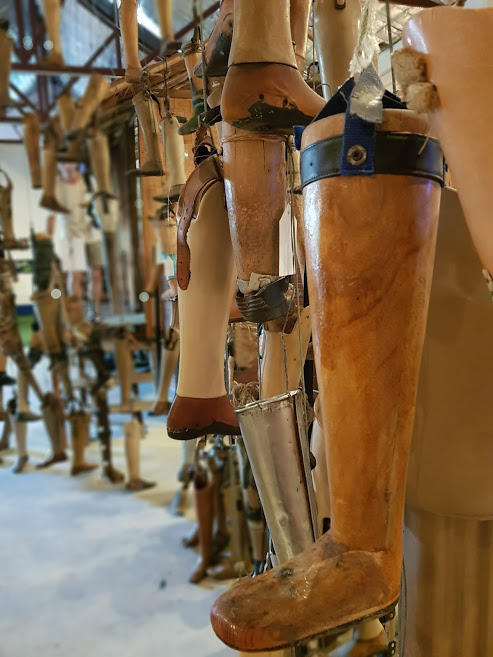
The COPE centre is not just a museum about Laos’ horrifying modern history, but also a rehabilitation centre for survivors of explosions from Unexploded Ordnance (UXOs) and other people with mobility related disabilities. To put this more simply, the COPE centre arranges surgery, makes prosthetic limbs and gives physiotherapy to Laotians who have been blown up by unexploded bombs or involved in road traffic accidents. I hope I’m not exaggerating by saying that fewer more worthwhile causes exist.

There are old prosthetic limbs from different eras scattered throughout the COPE centre – a triumphant monument to the number of new prosthetics they’ve provided.

If you’re wondering why so many people in Laos suffer injuries from UXOs and why there is such a need for the COPE centre’s services, then let me give you the facts and figures that are well-known in Laos, but relatively unknown elsewhere:

  • From 1965 to 1973 (during the Vietnam war), the US dropped over 2 million tonnes of ordnance on Laos in 580,000 bombing missions
  • That’s the equivalent of 1 planeload of bombs dropped every 8 minutes, 24 hours a day, for 9 years
  • This means that more bombs have been dropped on Laos than on all countries during World War II, and makes Laos the most heavily bombed country per capita in history
  • More than 270 million cluster bomblets (known as “bombies”) were dropped during the bombing campaign
  • Between 10-30% of bomblets did not explode on impact (estimated at 80 million), meaning that huge parts of the Lao countryside are still littered with UXOs that remain as deadly today as they were when they were dropped.

Unexploded bomblets don’t normally explode when trodden on, but can be triggered by farmers working the earth with tools, children digging them up and playing with them, or even the heat from a nearby cooking fire. Due to the value of their metal components, some poorer Lao people also resort to collecting them with cheap metal detectors, risking everything in an economy where opportunities are scarce. Since 1964, around 50,000 people in Laos have been killed or injured by UXOs. Even today, around 40 people are killed or injured by UXOs each year.

Source: http://copelaos.org/what-is-happening/unexploded-ordnance/ending-the-threat-of-cluster-bombs-and-uxo/

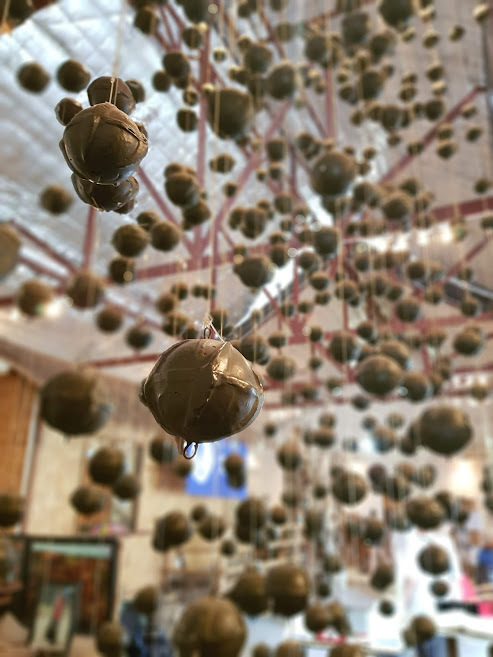
The entrance to the COPE centre displays dozens of model bombies hung from wires, as if they were falling from the sky. The sheer amount on display hints at the magnitude of the problem.

If you’re wondering why Lao people are still exposed to the risks of UXOs, the films, stories and testimonies available at the COPE centre make it abundantly clear that most Lao people don’t have any other option. Most rural Laotians face an impossible choice between farming their nearby land and exposing themselves to the risk of UXOs, or not being able to feed their families. When a bombie is found by a villager, it sends waves of paralyzing anxiety throughout the village, as they know that the likelihood of finding more is very high. Lao UXO clearance teams are not close to meeting the demand to clear UXO-contaminated areas, and less than 1% of undetonated UXOs have been destroyed.*

The personal stories arising from this ongoing humanitarian crisis are nothing short of heart-wrenching. A farmer whose hands, feet, stomach and eyes were mutilated when a cooking fire in his own home set off a bombie beneath the earth, left unable to work and barely able to watch over his children. A man who fashioned his own makeshift wooden leg which he used for 36 years before it was replaced with an advanced prosthetic by COPE. Eye-witness accounts of survivors who watched their friends and neighbours blown to pieces during the bombing so many years ago. Each story has been honestly and delicately captured by the COPE centre in such a way that allows visitors to intimately empathise with UXO victims. At the end of the day, these are people just like us, who are just trying to make a living, except that every day they have to walk through a literal minefield to do so.

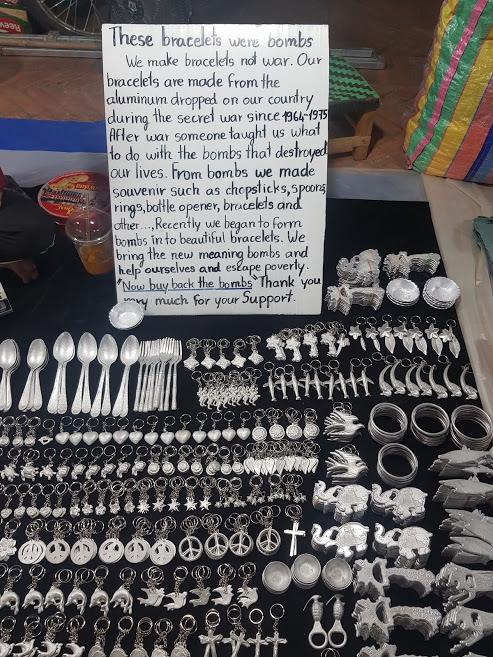
Metal from unearthed bombs is now often used in creative industries throughout Laos. I found this stall and sign at Luang Prabang’s excellent night market.

The COPE centre is keen to point out the socio-economic impact too. Without UXO clear fields, Laotians can’t even put food on the table, let alone start developing the countryside for larger agricultural or industrial projects. Historically, UXOs are almost certainly one of the contributing factors as to why Laos is well behind its neighbours in terms of economic development.

If you have any prior knowledge of the ‘Secret War’** on Laos by the US during which so many cluster munitions were dropped or have ever visited Laos yourself, then you’ll know that the information I’ve provided here captures only a few broad strokes of Laos’ history and the far-reaching impact of this catastrophic campaign. But if you didn’t know any of the above, then I’m glad to be doing my small bit to raise awareness.

*Further research whilst writing this post revealed that the US has contributed an average of $4.9M per year for UXO clearance in Laos (from 1993 to 2016). This might paint the picture that the US is on its way to atonement until you find out that the US spent $13.3M per day (in 2013 dollars) for 9 years bombing Laos. That means that the US has spent less on cleanup in 24 years than it did in 10 days of bombing. Source: http://legaciesofwar.org/about-laos/secret-war-laos/

**I’m no historian, but my understanding from visiting the COPE centre and doing some basic online research is that the US had 3 main reasons for bombing Laos so heavily during the Vietnam war: (1) to disrupt Vietcong supply lines which moved through large areas of northern Laos, (2) to support the Royal Lao Government against the communist Pathet Lao (allies of the Vietcong) during the Laotian Civil War, as part of the US’s policy to contain communism, and (3) because it was too dangerous for US bombers that had not found their targets in Vietnam to land whilst carrying so many explosives. I’m tempted to offer my political opinion on this matter here, but I don’t think it’s the right place.

Luang Prabang: A local-tourist equilibrium

I really liked Thailand. From the friendly locals who strike up easy conversations with you, to the insanely cheap but delicious food (dinner for two, for £2.50!), to the thriving ethnic hilltribes supported by the Thai King’s Royal Project, I was extremely impressed and excited to be there (well – for the most part anyway…).

But one thing irked me that I couldn’t put my finger on until I crossed the border to Laos. Thailand’s tourism industry has been developed and refined so steadily over the last few decades that it now very efficiently caters for western demands – whether its full moon parties for gap year students, Thai massages with happy endings for desperate old men, or trendy Latin-themed bars for hipsters like me. I’m not sure how ‘Thai’ any of those things are – if at all.

To put it another way, Thailand has tourist areas which are now reserved wholly for tourists, and everywhere else is the domain of Thai people. If you were to draw those two areas as a Venn diagram, my experience has been that they’re mutually exclusive. To give a few examples…

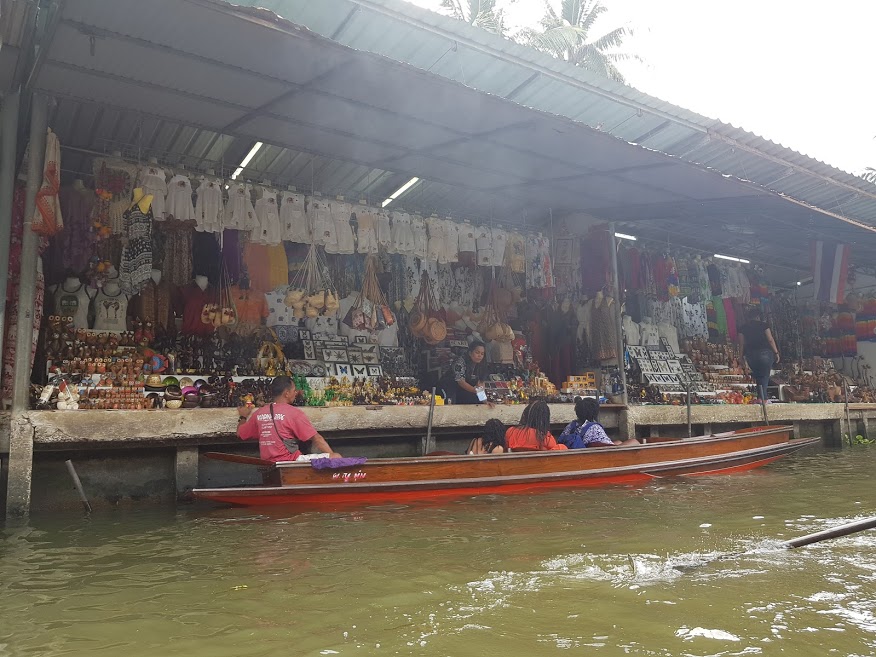
Ten or twenty years ago, I’m sure that the floating market of Kanchanaburi (where you buy goods from shops at the canal-side aboard a boat!) was used by locals to trade fruits, vegetables and other commodities. Not so now. The entire market now caters exclusively to guided tours by the minivan load, and all the market sells is, to put it bluntly, cheap tat.

We didn’t buy anything at the Kanchanaburi floating market, but at Luang Prabang’s night market, we went on a bit of a spending spree.

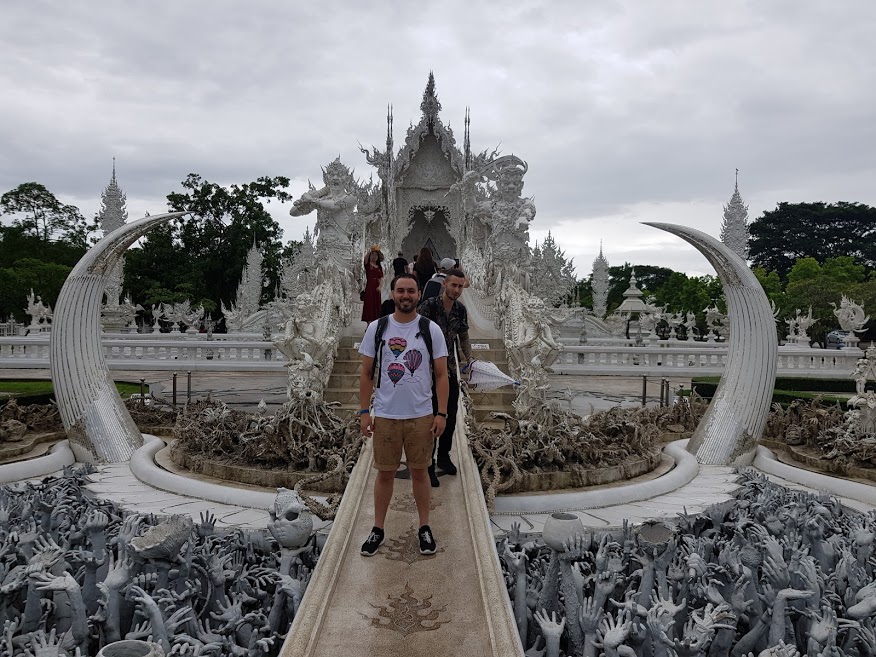
Chaing Rai’s White Temple, despite being a truly visionary work of art laced with political messages, has essentially become a photography conveyor belt – you go in one side and come out the other, and you don’t go back the way you came. Every tourist is struggling to get a photo with as few other tourists in it as possible (the irony is not lost on me). If you’ve ever been there, it’s a bit like the Sistine chapel, which is filled with loud chatter and flash photography, despite the signs banning both. Not much religious worship appears to be going on in either.

The White Temple is stunning – for instance, look at the grasping hands beside the gangway. But look behind me and you can see how congested it was.

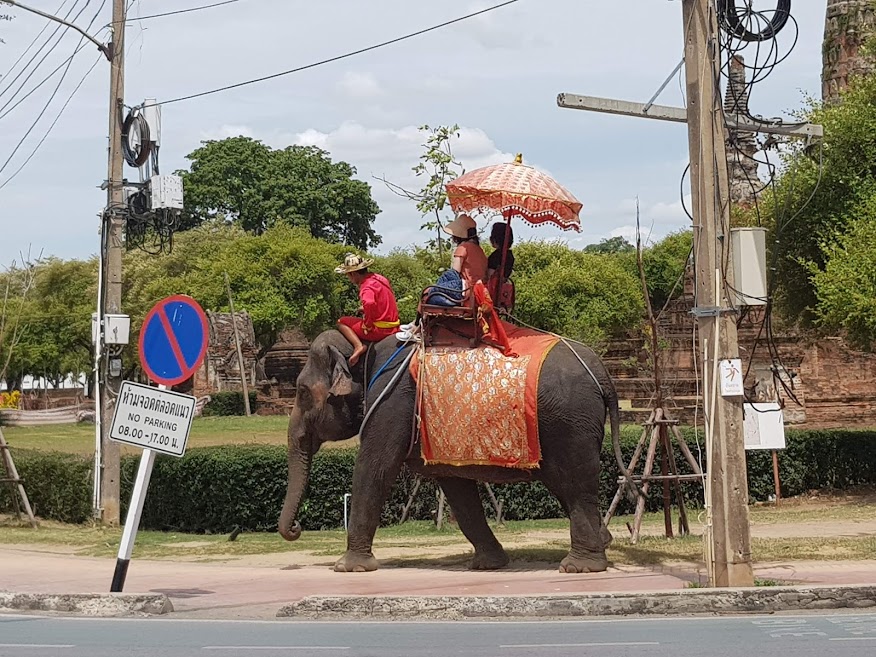
And Ayutthaya, despite being invaluably culturally rich and well-preserved, is now a piece of static history. Its ancient temples are now relics, no longer used for worship, but resigned to guided tours and circled by exhausted elephants being ridden by people who, very foolishly, failed to read my last but one blog post.

It was incredibly hot and humid when we went to Ayutthaya, so much so that it was tiring just to walk around, let alone carry three people on your back.

Here in Laos, there’s a slightly different dynamic. In Luang Prabang, a popular tourist destination firmly on the backpacker ‘route’ through southeast Asia, there is less of a barrier. Local people and tourists aren’t consigned to two mutually exclusive areas. They use the same transport, visit the same landmarks, and go to the same bars. The result for tourists is that they’re treated to a slightly deeper immersion in Lao culture.

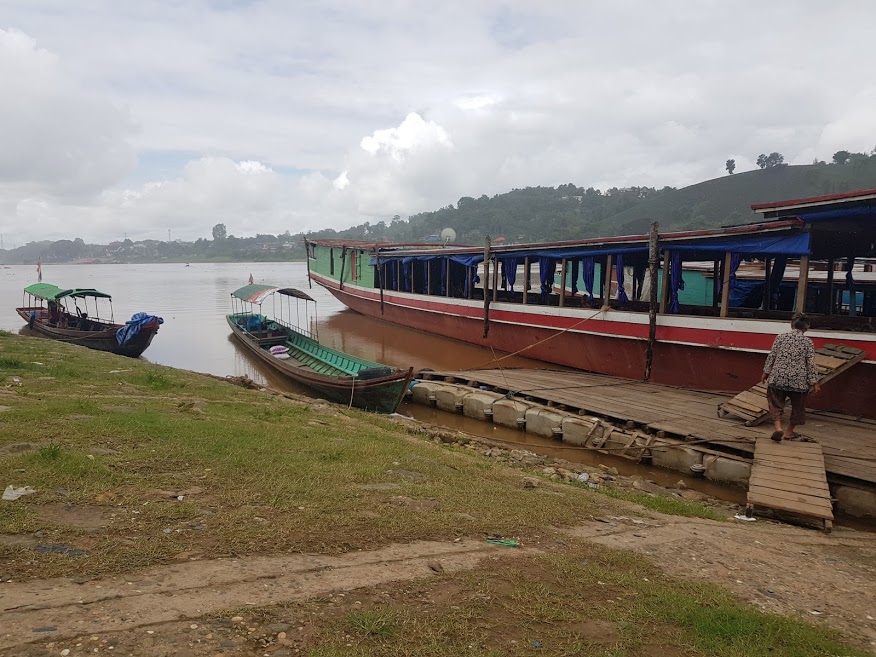
The first sign of this was on the two-day slow boat we took from Huay Xai, sauntering down the massive Mekong river without hurry. Upon boarding, the boat was filled mainly with couples and solo travellers from all over Europe and North America. But at the back of the boat was a smattering of local people that steadily grew as the boat picked up more and more passengers. The ‘slow boat’ lived up to its name as we stopped at least a dozen small villages over the course of the day, some consisting of only a few traditionally built houses, where groups of half-clothed children saw off their parents, uncles and aunts. We even stopped at a few rocky outcrops and river beaches where there was no village in sight, and only one or two locals waiting patiently, often with bags or baskets of goods in tow. Only at one point did anyone onshore try to sell us something – but instead of our backs arching, our hearts melted. The vendors were a group of young Laotian girls (some looked as young as 5!) splashing into the water, thrusting out their homemade bracelets. I ended up pondering about child labour for too long, and missed a golden opportunity to buy one.

The slow boat departs from Huay Xai, stops in Pak Beng overnight, and arrives in Luang Prabang on the evening of the second day.

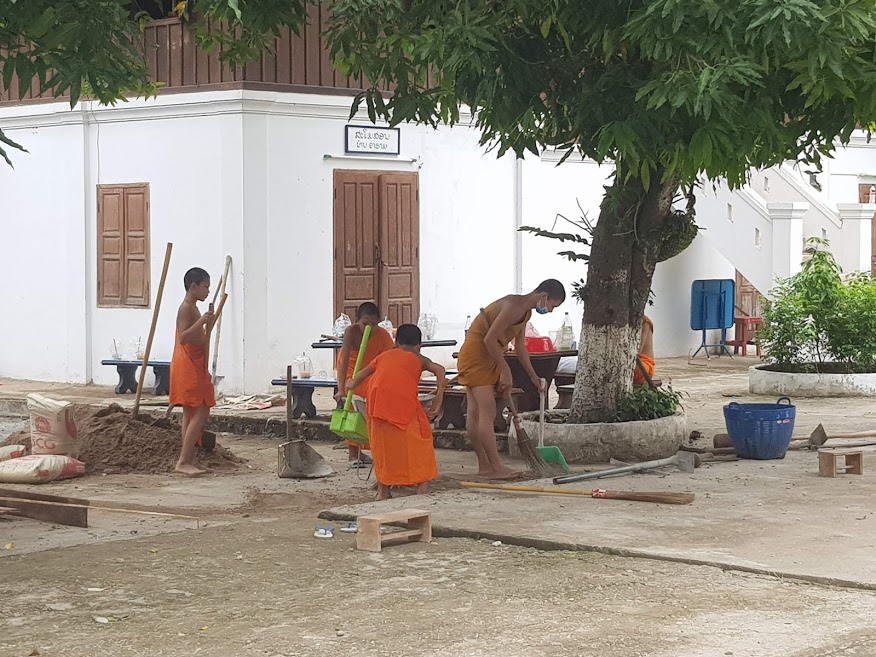
The day after we landed in Luang Prabang, we visited the town’s oldest and most central temple, Wat Vissounnarath. There were of course, tourists like ourselves taking photos, and even some market stalls taking advantage of the regular footfall. However, we were pleasantly surprised to see a group of young monk novices sweeping, performing construction work and pushing each other around in wheelbarrows, all within the temple grounds. Quite clearly, this temple wasn’t just a static piece of history condemned to tourist-only use.

Outside of shot to the left there was a construction work in progress, but I’m not sure what it was.

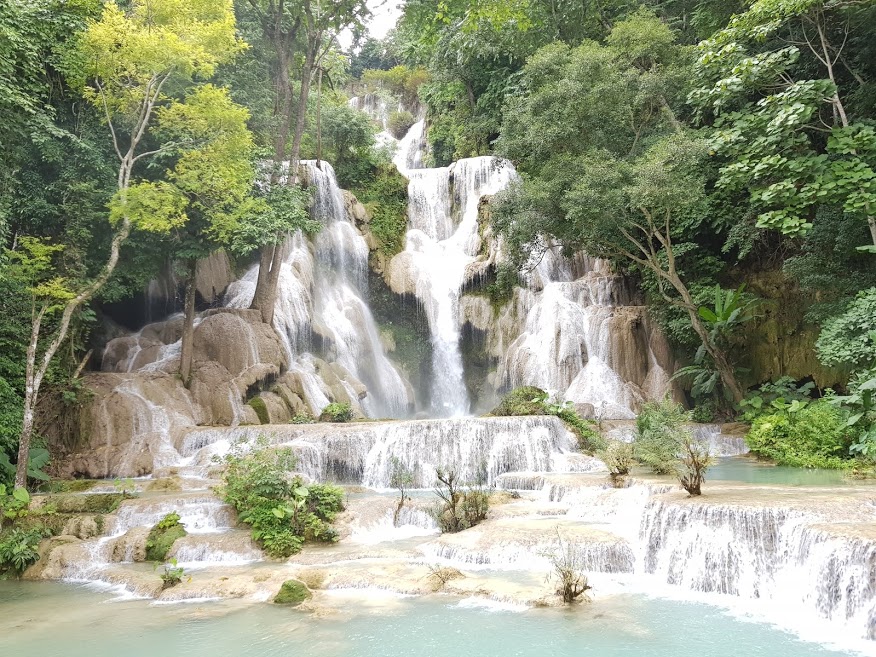
The next day we went to the magical Kuang Si waterfall. It’s the absolute must-see attraction of Luang Prabang – a 60 metre high wall of cascading water which runs into a series of smaller waterfalls and pools below, perfect for bathing. It’s possibly the most instagrammable location I’ve ever been to, from the stone steps where water cascades down over your feet, to the bathing pool at the summit, where a rope and branch swing hovers inches over the water’s surface. It was full of tourists, this time western and Chinese in equal measure. But the bathing pools, especially the lower ones, are also used by local Lao people. It’s a kind of local swimming bath, where parents take their children to splash, dive and generally tire themselves out.

Told you it was instagrammable. And I didn’t lift this picture from a glossy brochure, I took this photo myself. It looks like this pretty much all the time.

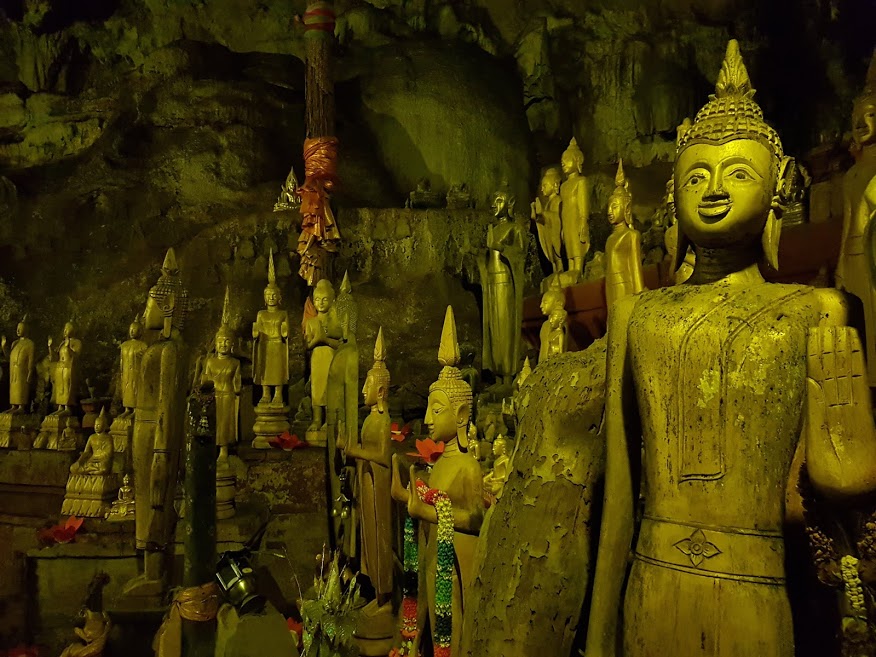
Our third day in Luang Prabang, we visited the Pak Ou caves. The caves are home to more than 3,000 buddha statues of all sizes, all in varying stages of disrepair. Lao people, being so thoroughly devoted to buddha, have over centuries transported and placed their broken and worn-out statues here rather than destroy them. In between the groups of guided tours, when it’s quiet, the cave’s spiritual history settles heavily around you, quelling any impulse to misbehave. With a bit of time to yourself, you notice not just the myriad of shapes, poses and missing parts of the statues, but also the recent offerings of incense, flowers, food and water. After a bit of research, I also found out that on Laos New Year, thousands of pilgrims descend on the cave to carefully wash the statues in a religious ceremony.

This is a small part of the upper cave. The lower cave is much larger, and houses more buddha statues.

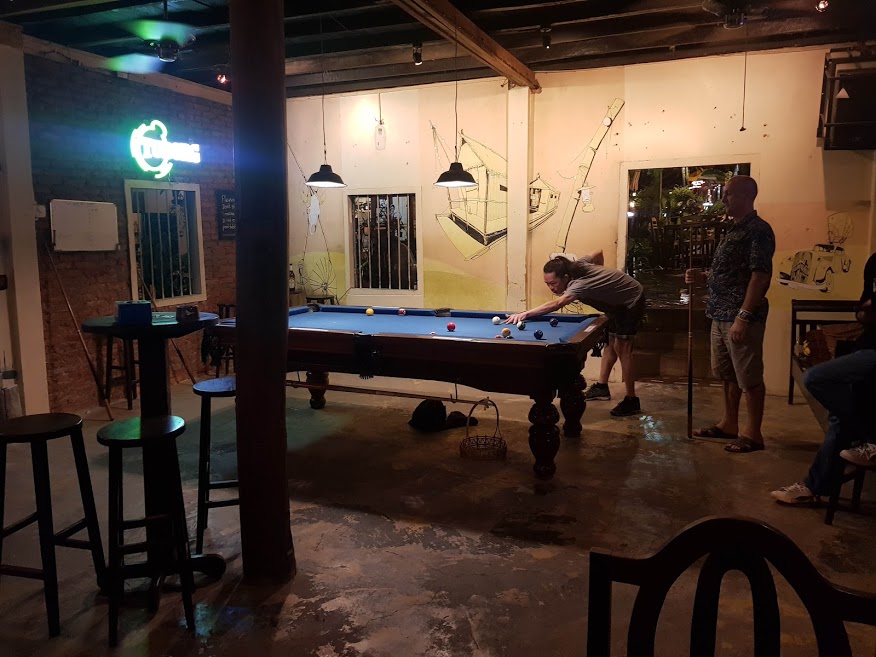
Later that day, we visited our favourite bar in Luang Prabang, lured in once again by a happy hour that yielded two beers for £1.20. After finding out from a friendly Caucasian man that the only way to play at the pool table I had been eyeing up for the last hour was to put my name down on the whiteboard, I also found out that it was winner-stays-on. So instead of continuing my long-running rivalry with Alice, my opponent was instead, a long-haired Laotian called Vini – who also turned out to be really friendly, and very funny. By the end of the night, there were equal numbers of Laotians and westerners clustered around the same pool table, all equally eager to build up their win-streak.

Vini taught us that in Luang Prabang: “If you fart, everyone will know.” Not surprising given than Luang Prabang’s permanent population is only around 50,000.

Even as we left Luang Prabang on the 10 hour ‘VIP’ bus to Laos’ capital, Vientiane, we experienced the same as we had on the slow boat – Laotians from villages being picked up and dropped off at villages further down the road. And this time, among the contingent completing the whole length of the journey, us tourists were in the clear minority.

I’m not sure what was ‘VIP’ about this very small, rattly bus that took 5 hours longer than advertised. But at least the driver drove safely on some very dangerous, bumpy roads.

Now, I’m not saying that I hate other tourists – I am one after all. Neither am I saying that places with less tourists are by default better destinations. But when you’re surrounded by more local people, you get a far better feel for the country you’re a visitor in. By noticing that Lao people barely ever point, I’ve read up and discovered that pointing is in fact rude in Lao culture (even ‘thumbs up’ / ‘thumbs down’ don’t seem to have the expected meaning here!). After having my bare feet pointed at by a Laotian on my long bus ride, I found out that displaying your feet, and especially the soles of your feet, is considered rude. By seeing a group of old women kneel and bow for monks as they entered a restaurant, we learned that its customary to stop and bow to monks as they pass.

It’s these little details that teach you more about a country’s culture and how different they can be, even compared to their neighbouring countries. And its only possible when tourists have enough opportunities to interact with locals (and vice-versa) in everyday situations – I’m calling it a local-tourist equilibrium, if that’s not too pretentious. In Luang Prabang, in August during the rainy season – it’s there, and it’s made our stay all the more enlightening and enjoyable.

Of course, I can’t speak for the locals and what they make of having so many tourists around. Maybe they’re also carefully observing our barbaric western ways, or maybe we’re just an annoyance to them. I hope that they’d be pleased to know that we’ve taken an active interest in their culture and customs. And I hope that unlike Thailand, tourists won’t be excluded from everyday Laos life for a long time yet.

Feet, Deet, Heat and Hostels

It’s been a pretty fun-filled adventure so far. Here’s a list of some of the cool things we’ve done:

  • Taken a tour of the ancient temples of Ayutthaya
  • Scoured the floating market and train market in Kanchanaburi
  • Spent a day strolling around Chiang Mai’s Old City, visiting more temples than we could count
  • Fed and bathed elephants at the Elephant Jungle Sanctuary (see my last blog post here: https://burnoutblog.org/2019/08/03/all-about-elephants/ )
  • Learned to cook Pad Thai, Khao Soi and more at a Thai cooking school
  • Visited two waterfalls and Thailand’s highest point, in the clouds
  • Wandered around four very different night markets
  • Marvelled at the crazy art in Chiang Rai’s White Temple
  • Taken far too many photos of cats in a Cat Café

We’ve only been travelling two weeks, and we did all of that in Thailand (we crossed the border to Laos two days ago).

I could go into a lot more detail, but there’s already a myriad of other blog posts providing really good information about these activities. And you’ve probably already seen umpteen Snapchat stories, Instagram pics and Facebook posts exhibiting exactly how awesome they are (if not, then comment below – I’d be happy to put up some photos in another blog post).

What I’m going to talk about today is the opposite of all that fun stuff. I’m going to talk about all the irritating, tiresome, stomach-churning ailments and annoyances that plague the inexperienced and unsuspecting traveller like me.

Feet

Travelling involves a lot of walking. “Cheers Mark,” you’re about to say, “thanks for providing such heartbreakingly enlightening truths, my intellect has been enriched tenfold by your incredible blog!” But I’m not sure you understand the magnitude when I say ‘a lot.’

You won’t just walk from your hotel to the taxi. You’ll stand for hours in airport queues, shuffle from side-to-side filling out endless visa forms at customs counters, get lost in temple grounds, go round in circles lugging your washing as you try to find an open laundrette, cross bamboo bridges, wade through mud baths and waterfalls, tiptoe around sodden shared hostel bathrooms avoiding the dead cockroaches, and power-walk for busses that are about to leave without you. A lot of it you’ll do with a 70 litre backpack strapped around your shoulders and stomach. And if you go to southeast Asia, you’ll do it in 30+ degree heat and sweltering humidity. For me at least, walking 5 minutes in Thailand is like walking 10 minutes in England.

The trick here, obviously, is to get the right shoes. I splashed out on some £70 hiking boots before I went, which has been a godsend in tricky terrain. Some light, breathable trainers have been enough to accompany me around the city. But the lesson I’ve learned is that flip-flops are a flipping flop when it comes to anything but walking around a bathroom. I’ve had so many near misses trying to walk down muddy ramps and uneven paths that I prefer to go barefoot than use my floppy flips. And unless you’ve worn flappy flops enough to build up some hard skin in between your first and second toes, prepare for some very open sores in that region – sores you don’t want to get exposed to the unclean water in Asia.

Take my advice – get some proper sandals – the more straps they have, the better. As soon as I can find a pair I don’t have to pay tourist-money for, I’m buying them.

To round off this topic, here’s a picture of my foot after wearing crap-flops for too long, cutting them on some rocks in a waterfall, and getting them mildly sunburnt. I apologise in advance.

This was taken when the sores had started to heal over. They looked a lot worse about two days before. Yah.

Deet

“Tuk tuks” said the first person we spoke to in Thailand, “are like mosquitoes. You can find them everywhere.” Until I discovered Grab (the Uber of Asia), I would’ve said tuk tuks are more annoying than mosquitoes. But although neither take no for an answer, at least tuk tuk drivers don’t bite.

I’ve never noticed being bitten by a mosquito, but I certainly have noticed the unsightly bite marks they’ve left on my skin – usually one or two new ones per day. As your body attacks these sites, them become itchier and itchier. And if the bite was a bad one, it can rupture your capillaries, leading to even more unsightly bruises.

Not only did this bite leave a nice big bruise, it also managed to make Alice’s ankle swell up.

There are remedies of course. First, is to fight back, quite literally. I thought mosquitoes would be as fast as flies, and as unpredictable as moths. The opposite is true – they’re actually fairly slow, predictable insects that are pretty easy to clap between your hands or smush against a nearby wall. I was getting into a groove of doing this for a while until I realised: there’s no point. If there’s one mosquito around, then there’s more. Like the endless armies of the horde, they won’t stop coming.

Second, are mosquito nets. These are usually built into windows in Asia – but that won’t stop mosquitoes squeezing through the little (or big…) cracks between the walls. To be extra sure, you’ll need one to put over your bed (make sure to buy an ‘impregnated’ one – apparently after 9 months, it gives birth to a smaller mosquito net that cries a lot). But unless you’re my girlfriend, you probably won’t want to spend all day in bed.

That’s where mosquito bands and sprays come in. Bands are advertised as providing a protective ‘halo’ of mosquito repellent around you for up to 2 weeks – which is essentially true – until you get them wet, and their magic potion of repel-insect is washed away.

Sprays are the only effective method I’ve found to reliably keep mosquitoes away. Whenever I go out, I spray my legs, arms and necks with the stuff, coughing uncontrollably as the foul-tasting gas inevitably gets in my mouth and up my nose.

The thing is, if you add up the layers of sunscreen, bite cream, sweat and deet (the magic ingredient in mosquito spray), it’s like covering your body in oil. As if you’re about to engage in some homoerotic Turkish wrestling. Or a spring roll being deep-fried in a wok of vegetable oil.

Heat

The great thing about holidays is sunshine. The great thing about sunshine is getting a nice nut-brown tan. And whilst I’m allergic to nuts, my girlfriend, being as white as a porcelain plate, is basically allergic to sunlight.

I’m sure you’ve experienced it or at least seen it before, so I won’t go into too much detail. Although it’s the rainy season in Thailand, it didn’t stop Alice being horrendously sunburnt during the one hour of direct sunlight we had during our elephant sanctuary day. And as I found out in California a few years ago, sunburn can getcha even when its cloudy.

Having sunburn is itchy, irritating and painful, and is usually accompanied by at least a smidgeon of dehydration and sunstroke, which is a combination that does wonders for your mood. But probably the worst thing about it is that it can stop you sleeping, especially when it’s on your chest, back and arms – there’s just nowhere to lie where it doesn’t hurt.

Mmmmm…. looks like crispy pork!

Possibly the only good thing about sunburn is that peeling it off is a semi-orgasmic experience. Peeling off the thin layer of red, raw skin is like peeling off a layer of PVA glue, just like you did in art class at Primary school. Just don’t do it all over the floor when your girlfriend is looking straight at you. She’ll get mad.

Hostels

This topic is probably best illustrated using pictures. Here are some prime examples from the latest hostel we stayed at, which shall remain nameless:

You could see very clearly into our room through the crack between our door and the wall. I say crack, but what I really mean is gaping chasm.
The cobbled-togetherness of these door locks is about as stereotypically hostel-esque as it gets. It’s almost quaint. Almost.
Instead of a fixture or a hole, the bolt of this lock slid into some bent nails. Not in itself horrifying, but this was a microcosm of a hostel built wholly on the same design principles.
There was a mushroom growing in the shower. Presumably, it was paying rent, as the staff let it stay there. On the first day I was horrified. By the fourth day I had made friends with it too.

The interesting thing is that hostels are not an essential part of the travelling experience. For a few extra quid per night (with prices starting at around £6 per night for a private double room in the rainy season), you can stay in a hotel, often with air-con, and sometimes with a pool. Hotels and hostels essentially provide difference experiences – hotels will allow you to live in comfort and peace, whilst hostels will allow you to mingle and make friends with the dozens of other backpackers crossing your path that day. But in reality, hostels are only marginally cheaper – and in our experience, far less comfortable!

You should have expected all that!

Don’t worry, I’m not so naïve as to think I’d escape all of the above minor irritations. But I thought it would make a more interesting topic than ‘Look at all the amazing things I’ve done! Isn’t travelling just wonderful?’ And somehow, talking about these things makes me feel ever so slightly better.

ALL ABOUT ELEPHANTS

Time Period: 30th July 2019

This blog post won’t be about my feelings about leaving my job, my thoughts about travelling or important life lessons I should have learned years ago. It’s going to be about elephants. Why? Because ELEPHANTS ARE AWESOME.

Around a month before we flew to Thailand, Alice and I worked out that we were scheduled to be in Chiang Mai for Alice’s birthday. So we looked up the top 10 things to do in Chiang Mai, and there was a clear winner. The Elephant Jungle Sanctuary – a haven for elephants who have been rescued from logging and riding camps, and circuses. Kind of like an elephant retirement home. Cue lots of excited pointing at my laptop screen and smiling from Alice.

As an aside, you probably already know why elephants need to be rescued and cared for. Elephants can only be trained for riding or circus performances using especially brutal ‘taming’ methods. Chaining elephants (often baby elephants) up in a tiny pen where they can’t move, and are not given food or water for days, is the traditional method for breaking an elephant’s spirit (“Phajaan” in Thai) – and that’s just the start. During their confinement, elephants are beaten and wounded with bullhooks wherever the elephant’s skin is thinnest – behind the ears, around the eyes, and also around the feet, trunk and mouth. This kind of abuse gives elephants a lifelong fear of the bullhook, which is often used to maintain control of them during riding and performances. Moreover, riding elephants can leave them with chronic spinal injuries over long periods of time. If you want more detailed information about elephant abuse, you can find it here at: https://www.elephantvoices.org/elephants-in-captivity-7/

This is what a bullhook looks like. I don’t know about you, but I wouldn’t want to get hit with one.

So, back to the elephant sanctuary. The journey there was an adventure in itself – a 90 minute drive from Chiang Mai’s old city, the last 30 minutes of which climbed through jungle-covered mountains. The steep, winding, rocky descent into the sanctuary itself revealed why we were in the back of a 4×4 pickup truck as opposed to an air-conditioned minibus.

On arrival, we were given traditional Karen hilltribe outfits to wear, and a brief history of the sanctuary. It turned out that our driver was also our host – he was extremely proud of the sanctuary and grateful for the camp’s new marketing team. Our host had worked with his herd in a riding camp for 10 years in order to make enough money to feed the herd, and only over the last 6 years in this sanctuary had it been possible to make enough money to feed them without exploiting the elephants for work. He told us that in the past, when they couldn’t make ends meet, he had been forced to set free two of his elephants into the wild. Later, he found them dead – poisoned by pesticides from farm crops. He had learned his lesson the hard way. It was very clear that he genuinely and passionately cared about the animals and was very keen that they shouldn’t be used for work any longer.

After the orientation, we were each given a huge bunch of finger bananas which we were told to peel – it was time to feed the elephants. Going down the slope, the elephants came to meet us when we shouted ‘Bon bon!’ – which meant feeding time. These first 10 minutes of getting used to being in close proximity with such large creatures were probably the most eye-opening of the day. We had been taught that elephants don’t have great eyesight or field of vision – so we needed to keep in front of them, where they could see us. But nothing quite prepares you for a creature weighing up to 5,000+ kg lumbering straight towards you, the image of a tiny banana locked into its alert, black eyes.

“Bon bon!” was also the cue for an elephant to raise its trunk so you can feed directly to its mouth. But most of the time, their trunks did the feeding.

The first thing you learn about elephants when you meet them up close is that they’re very, very hungry, and very, very greedy. And I don’t mean to offend my giant comrades – it’s just a matter of physiology. Elephants need to eat around 10% of their body mass per day (i.e. around 300+ kg PER DAY!), due to the inefficiency of their digestive systems. They aren’t like cows or oxen which spend a long time chewing and processing their food – they barely chew, and pass food very quickly. In the succinct words of a sanctuary worker: “Quick in, quick out!”.

And what that means for tourists is that it’s very easy to feed elephants – either by holding bananas out in front of you for them to grasp with their trunks, or straight into their mouths. The tricky part is to stop them reaching into your pockets with their deft trunks to steal your unpeeled yellow treasure. Whilst they’re happily munching away, its easy to stand near their heads and stroke their incredibly thick, hairy, rough skin – or sneak in a much-coveted photo op.

A whole bunch of bananas doesn’t get anywhere near to the 300 kg mark though. Our next job was to fetch huge sheathes of corn down from the hillside and arrange them in an enormous pile. The elephants quickly set to work stripping leaves and whole cobs, gripping and twisting the thick stems with their powerful trunks and shovelling in impossibly huge mouthfuls. At this point, some elephants were quick to drag away their own personal piles of corn, using their bodies to protect their impromptu stash from their compatriots. All’s fair in love and corn.

We each carried a bundle of corn down – but that wasn’t nearly enough to feed all 6 elephants!

After a very tasty home-cooked lunch, we visited the elephants of a nearby camp – in fact, the Elephant Jungle Sanctuary in Chiang Mai is home to more than 100 elephants, which are split into herds of around 6 – so there are a multitude of camps in one place. The camp next door had two baby elephants (nicknamed Beyonce and Rihanna!) which unfortunately remained surrounded by a mob of excited young girls for the rest of the afternoon – probably the most predictable part of the day.

Beyonce and Rihanna. They could stand under my umbrella, but would probably prefer to get wet.

The next hour we spent making – believe it or not – ‘elephant medicine’. Using the biggest mortar and pestle I’ve ever seen, we pounded a concoction of iodized salt, raw rice (still in its husk), tamarind, finger bananas and cooked rice into a thick paste, and then rolled it into snow-ball sized spheres with our hands. These small balls are, we learned, extremely helpful for making elephants pass their food easier, and for protecting their throat and digestive system from damage by the rough fibres of the unchewed corn they swallow. They’re even more important for elderly elephants – or, as the sign said, ‘geriatric’ elephants! When we brought the medicine balls to our gigantic new friends, some of them pretty much charged us in excitement and anticipation – it turns out elephants take their medicine better than most humans. Don’t worry, no-one was crushed – and our host made sure that all the elephants got their fair share of medicine – not just the first ones to the party.

And just when we thought it couldn’t get any better, it did. It was bath time for the elephants. First, a thick coat of mud to keep the mosquitoes and ticks off their skin and keep them protected from the sun – and secondly, a water bath underneath a small waterfall. Here we were given large tubs to splash water all over the elephants – and each other – to our heart’s content. And just to show how in tune this sanctuary is with the insta-generation, there was even a photographer present, just so you wouldn’t need to get your phone wet.

I’m not sure this needs saying – but just to be clear, standing in a waterfall and splashing elephants with water is exactly as fun as it sounds. Maybe it was my imagination, but I could have sworn I saw them smile as they were being bathed.

Just before we went home, there was a final opportunity to get some photos as the elephants fed on another meal of corn sheathes – but most people felt content to stand there watching, still marvelling at their size, beauty or maybe the sheer amount of food they could eat. Apparently, elephants spend between 12-18 hours eating per day, and only sleep for around 3 hours per night, to maximize feeding time. Told you they were greedy! And before you get there, Alice has already drawn the obvious comparison between me and elephants in this regard, so don’t bother saying it again…

If you keep inside an elephant’s field of vision, it’s far less likely to kick you. And you don’t want to get kicked by an elephant.

To learn more about the Elephant Jungle Sanctuary, visit: https://elephantjunglesanctuary.com/ or see some great photos or videos on their facebook page at https://www.facebook.com/elephantjunglesanctuary/. The Elephant Jungle Sanctuary has centres in Chiang Mai, Phuket, Pattaya and Samui.

Mistakes, missteps, misanthropy

Time Period: 25-28th July 2019

Just before we went travelling, my girlfriend’s auntie got us the most fantastic gift – a personalised scrapbook. It’s made from recycled paper, is tied with a black ribbon, and best of all, it has the words “The Adventures of Alice and Mark” on the front.

When you think about what an adventure is, you probably think of going on a journey, seeing incredible sights, doing things for the first time, or being far from home. Adventures are supposed to be fun, exciting, fast-paced.

It’s easy to forget that adventures also usually include a lot of things going wrong. It’s tempting to think that bad things won’t happen to you on your adventure. Bad luck is just a matter of perception, right?

The day we got off the plane, we were accosted by a smartly dressed train driver. Without asking for anything in return, he told us what kind of tuk tuk prices to negotiate, which SIM card to buy and recommended us to visit a nearby travel agency to book a day trip before the school holidays started.

Having negotiated a tuk tuk, we were delighted to immerse ourselves in the sights, sounds and fragrances of Bangkok as the open air blasted our faces and our driver revved his engine like a 60’s greaser.

When we got to the hostel, we found out we were right next to Khao San Road. We were surrounded by bars, restaurants, street food stands, shops and market stalls. Everything we needed, right on our doorstep (literally, in fact – there was a bar attached to the hostel and a noodle stand just outside).

When we went on our day trip (to Ayutthaya), we were really pleased to be driven between six different temples in one day, with a guide to explain the history, and lunch provided. We didn’t have to lift a finger.

So far, so good. Not just good, but great. Maybe even wonderful. You get the picture.

But for every silver lining, there is a dark and dirty cloud waiting to soak you to your underwear.

As it turned out, the travel agency charged us three times the price of all the other people who took the tour. We had accepted the agency’s price without negotiating at all, and didn’t compare prices beforehand (at the time, we had no Thai SIM card and no internet). Rookie errors, especially for someone who used to negotiate contracts professionally.

Despite knowing roughly what price to pay for a tuk tuk, we still didn’t know that in Bangkok at least, metered taxis are far cheaper, and you don’t even have to negotiate the price. We even found out from a friend later on, that tuk tuks are notorious for taking you to places you don’t want to go. If the driver’s family owns a certain restaurant, they’ll often tell you that the restaurant you ask to go to is closed and take you to their family’s instead. But before we found that out, a tuk tuk driver managed to drop us off at the wrong night market – right in the centre of red light district that makes Amsterdam look like a PG rated romcom.

When it came to the hostel, we were so close to the well-oiled, razor-sharp tourist bear-trap that is Khao San Road, that the music kept us awake til 3am and the shouty youths next door even later. At 4am, I was so incensed that I hammered on their door, shouting like a madman and rattling their doorknob (they must have been scared out of their minds). After that, they were as quiet as mice, but the adrenaline rush kept me up for the next 2 hours. I got up at 6am for a 7am tour having had literally no sleep at all.

In Ayutthaya, it was all our fault – having not needed to think all day, we forgot to memorise the route back to the minibus at the final temple. We ran around confused in searing heat for 30 minutes, making phone calls to our confused minibus driver. We almost got left behind.

Three days after arriving, we had spent double our budget, were exhausted from lack of sleep, and were miserable from the constant bartering. Outside our hostel, we couldn’t walk five metres without being offered scorpions on a stick, tailored suits, bracelets stitched with filthy messages* or ‘Ping Pong’ shows**. I could feel Bangkok’s tourist-hungry maw sinking its toxic fangs deeper and deeper into my naïve heart.

The maxim is this: with every adventure comes misadventure. And once I understood that, I suddenly realised what an adventure really is. An adventure isn’t just a one-way ticket to having a good time. It’s an opportunity to make mistakes and missteps – and to learn from them.

Here are a list of 4 pieces of advice I wrote down for myself at 5am in my hostel room, when I couldn’t sleep:

  1. Find out the noise level of the area before you book a hostel
  2. Compare prices before booking anything
  3. Always take special care to remember the route back to your meeting point
  4. Be VERY clear about where you want to go in a taxi or tuk tuk, and check you’re following the correct route along the way.

The trick is to try to not become disillusioned along the way. We admitted to ourselves that we should have found out what was on Khao San Road before we stayed anywhere near there. We had a serious discussion and agreed (very quickly!) that we needed to move hostel. We booked a hotel outside central Bangkok with a pool, for pretty much the same price as our hostel – and went there in a taxi, not a tuk tuk. The next day, we told our hostel owner about our experience and he was kind enough to refund us one night of charges.

Today, we went for a swim in the hotel pool, and walked along a road populated by locals who instead of trying to hawk us goods, eyed us suspiciously and turned away from us when we looked at them, apparently not keen to interact with tourists (and I can see why – we’re a high maintenance bunch). We got our laundry done by a cheerful man who didn’t speak a word of English, but whose enthusiastic gesticulations got across that we could return his hangers the next morning. We paid 106 baht for a meal that would usually cost triple that on Khao San Road.

In short, we saw an area of Bangkok that wasn’t fuelled by drunk, party-mad tourists and preyed on by avaricious Bang-cockneys***. I suspect these kinds of areas are in the majority, not the minority, here – you just need to find them.

Tomorrow, we fly to Chiang Mai – essentially the capital of northern Thailand. With what we’ve learned, we’re far better equipped to deal with the problems we’ve already encountered. I just can’t wait to see what mistake we make next – and what we might learn from it.

~~~~~~~~~~~~~~~~~~~~~~~~~~~~~~~~~~~~~~~~~~~~~~~~~~~~~~

*Note: DO NOT read this footnote if you are easily offended, or a member of my family. The filthy messages stitched onto bracelets include: “I Love Ginger P***y”, “I Love Jew D**k”, “I Love Lady Boy”, “Up Bum No Baby”, “I Love Black C**t”, “Eat A D**k C**t”, “I Love Donkey P***y”, “F**k My Off” and other equally nonsensical and/or outrageous phrases.

** Note: DO NOT read this footnote if you are easily offended, or a member of my family. “Ping Pong” shows are essentially where a crowd of people pay to watch a woman shoot a ping pong ball out of her vagina, at high enough velocity to hit the faces of the people in the front row. I’ve heard that the pièce de résistance is said woman producing a rabbit out of a hat, except that the rabbit is a canary and the hat is once again her vagina – but fortunately, I can’t testify to that myself.

*** Bangcockneys: my new word for wheeler-dealer tuk tuk drivers and cut-throat salespeople living in Bangkok. I’m very proud of it, so don’t you dare tell me that someone else came up with it before me.