It’s been a pretty fun-filled adventure so far. Here’s a list of some of the cool things we’ve done:
- Taken a tour of the ancient temples of Ayutthaya
- Scoured the floating market and train market in Kanchanaburi
- Spent a day strolling around Chiang Mai’s Old City, visiting more temples than we could count
- Fed and bathed elephants at the Elephant Jungle Sanctuary (see my last blog post here: https://burnoutblog.org/2019/08/03/all-about-elephants/ )
- Learned to cook Pad Thai, Khao Soi and more at a Thai cooking school
- Visited two waterfalls and Thailand’s highest point, in the clouds
- Wandered around four very different night markets
- Marvelled at the crazy art in Chiang Rai’s White Temple
- Taken far too many photos of cats in a Cat Café
We’ve only been travelling two weeks, and we did all of that in Thailand (we crossed the border to Laos two days ago).
I could go into a lot more detail, but there’s already a myriad of other blog posts providing really good information about these activities. And you’ve probably already seen umpteen Snapchat stories, Instagram pics and Facebook posts exhibiting exactly how awesome they are (if not, then comment below – I’d be happy to put up some photos in another blog post).
What I’m going to talk about today is the opposite of all that fun stuff. I’m going to talk about all the irritating, tiresome, stomach-churning ailments and annoyances that plague the inexperienced and unsuspecting traveller like me.
Feet
Travelling involves a lot of walking. “Cheers Mark,” you’re about to say, “thanks for providing such heartbreakingly enlightening truths, my intellect has been enriched tenfold by your incredible blog!” But I’m not sure you understand the magnitude when I say ‘a lot.’
You won’t just walk from your hotel to the taxi. You’ll stand for hours in airport queues, shuffle from side-to-side filling out endless visa forms at customs counters, get lost in temple grounds, go round in circles lugging your washing as you try to find an open laundrette, cross bamboo bridges, wade through mud baths and waterfalls, tiptoe around sodden shared hostel bathrooms avoiding the dead cockroaches, and power-walk for busses that are about to leave without you. A lot of it you’ll do with a 70 litre backpack strapped around your shoulders and stomach. And if you go to southeast Asia, you’ll do it in 30+ degree heat and sweltering humidity. For me at least, walking 5 minutes in Thailand is like walking 10 minutes in England.
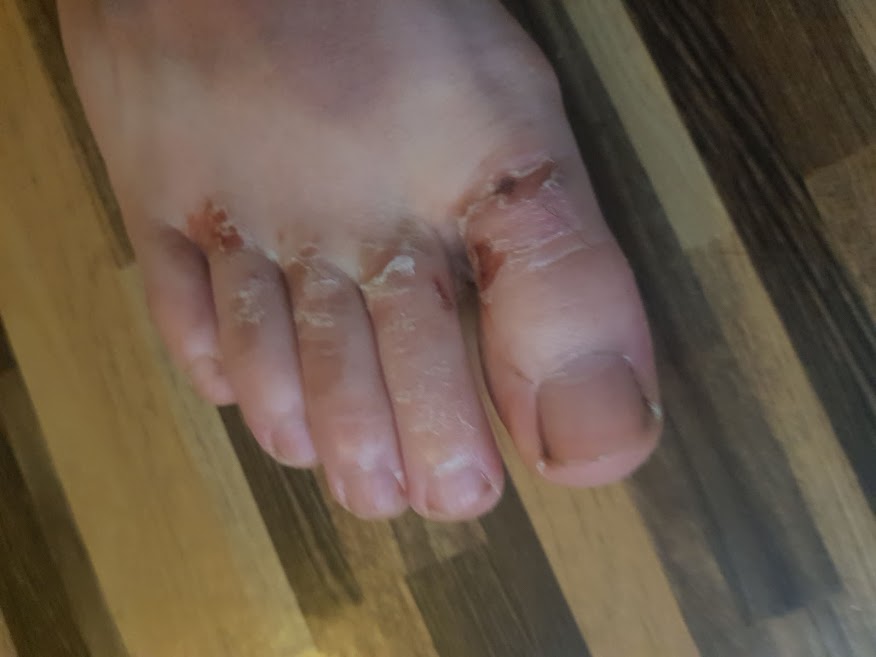
The trick here, obviously, is to get the right shoes. I splashed out on some £70 hiking boots before I went, which has been a godsend in tricky terrain. Some light, breathable trainers have been enough to accompany me around the city. But the lesson I’ve learned is that flip-flops are a flipping flop when it comes to anything but walking around a bathroom. I’ve had so many near misses trying to walk down muddy ramps and uneven paths that I prefer to go barefoot than use my floppy flips. And unless you’ve worn flappy flops enough to build up some hard skin in between your first and second toes, prepare for some very open sores in that region – sores you don’t want to get exposed to the unclean water in Asia.
Take my advice – get some proper sandals – the more straps they have, the better. As soon as I can find a pair I don’t have to pay tourist-money for, I’m buying them.
To round off this topic, here’s a picture of my foot after wearing crap-flops for too long, cutting them on some rocks in a waterfall, and getting them mildly sunburnt. I apologise in advance.
Deet
“Tuk tuks” said the first person we spoke to in Thailand, “are like mosquitoes. You can find them everywhere.” Until I discovered Grab (the Uber of Asia), I would’ve said tuk tuks are more annoying than mosquitoes. But although neither take no for an answer, at least tuk tuk drivers don’t bite.
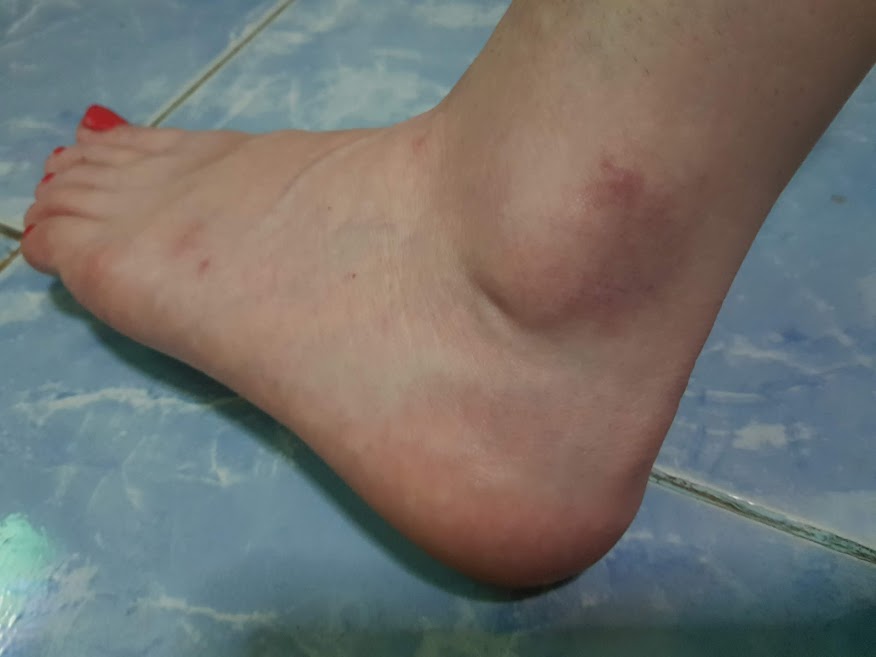
I’ve never noticed being bitten by a mosquito, but I certainly have noticed the unsightly bite marks they’ve left on my skin – usually one or two new ones per day. As your body attacks these sites, them become itchier and itchier. And if the bite was a bad one, it can rupture your capillaries, leading to even more unsightly bruises.
There are remedies of course. First, is to fight back, quite literally. I thought mosquitoes would be as fast as flies, and as unpredictable as moths. The opposite is true – they’re actually fairly slow, predictable insects that are pretty easy to clap between your hands or smush against a nearby wall. I was getting into a groove of doing this for a while until I realised: there’s no point. If there’s one mosquito around, then there’s more. Like the endless armies of the horde, they won’t stop coming.
Second, are mosquito nets. These are usually built into windows in Asia – but that won’t stop mosquitoes squeezing through the little (or big…) cracks between the walls. To be extra sure, you’ll need one to put over your bed (make sure to buy an ‘impregnated’ one – apparently after 9 months, it gives birth to a smaller mosquito net that cries a lot). But unless you’re my girlfriend, you probably won’t want to spend all day in bed.
That’s where mosquito bands and sprays come in. Bands are advertised as providing a protective ‘halo’ of mosquito repellent around you for up to 2 weeks – which is essentially true – until you get them wet, and their magic potion of repel-insect is washed away.
Sprays are the only effective method I’ve found to reliably keep mosquitoes away. Whenever I go out, I spray my legs, arms and necks with the stuff, coughing uncontrollably as the foul-tasting gas inevitably gets in my mouth and up my nose.
The thing is, if you add up the layers of sunscreen, bite cream, sweat and deet (the magic ingredient in mosquito spray), it’s like covering your body in oil. As if you’re about to engage in some homoerotic Turkish wrestling. Or a spring roll being deep-fried in a wok of vegetable oil.
Heat
The great thing about holidays is sunshine. The great thing about sunshine is getting a nice nut-brown tan. And whilst I’m allergic to nuts, my girlfriend, being as white as a porcelain plate, is basically allergic to sunlight.
I’m sure you’ve experienced it or at least seen it before, so I won’t go into too much detail. Although it’s the rainy season in Thailand, it didn’t stop Alice being horrendously sunburnt during the one hour of direct sunlight we had during our elephant sanctuary day. And as I found out in California a few years ago, sunburn can getcha even when its cloudy.
Having sunburn is itchy, irritating and painful, and is usually accompanied by at least a smidgeon of dehydration and sunstroke, which is a combination that does wonders for your mood. But probably the worst thing about it is that it can stop you sleeping, especially when it’s on your chest, back and arms – there’s just nowhere to lie where it doesn’t hurt.
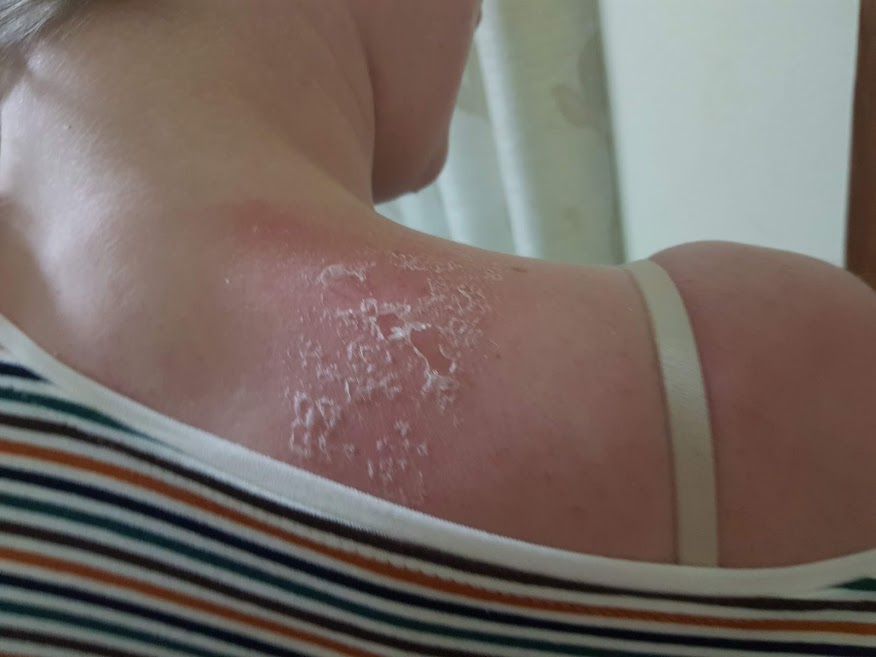
Possibly the only good thing about sunburn is that peeling it off is a semi-orgasmic experience. Peeling off the thin layer of red, raw skin is like peeling off a layer of PVA glue, just like you did in art class at Primary school. Just don’t do it all over the floor when your girlfriend is looking straight at you. She’ll get mad.
Hostels
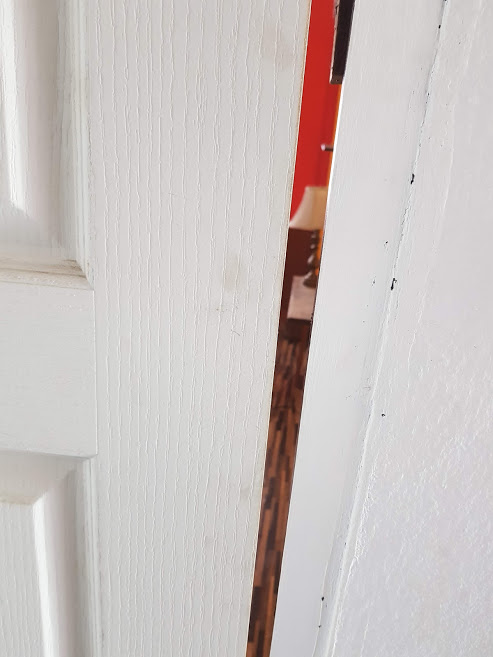
This topic is probably best illustrated using pictures. Here are some prime examples from the latest hostel we stayed at, which shall remain nameless:

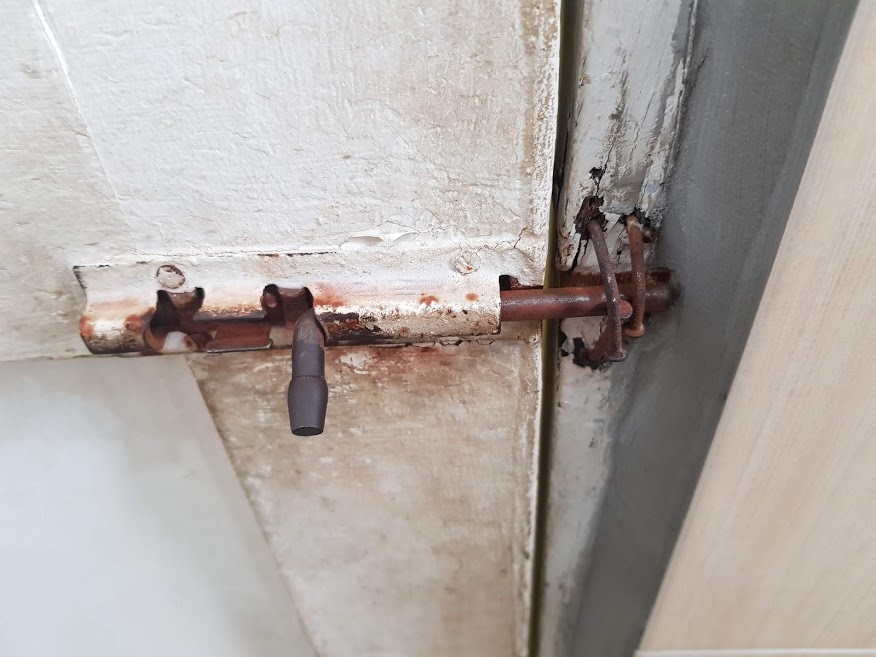
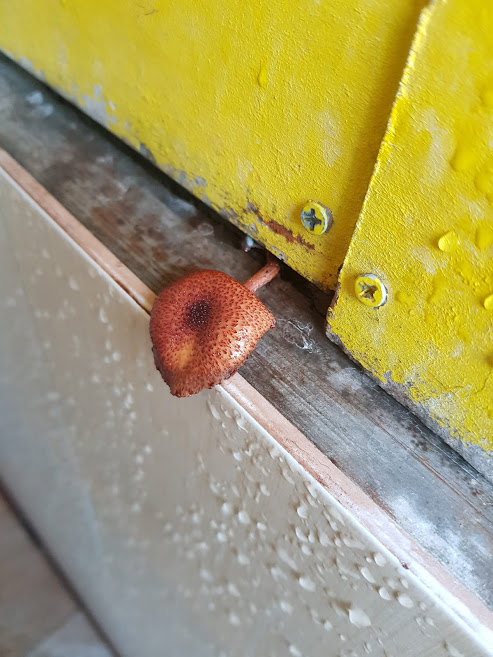
The interesting thing is that hostels are not an essential part of the travelling experience. For a few extra quid per night (with prices starting at around £6 per night for a private double room in the rainy season), you can stay in a hotel, often with air-con, and sometimes with a pool. Hotels and hostels essentially provide difference experiences – hotels will allow you to live in comfort and peace, whilst hostels will allow you to mingle and make friends with the dozens of other backpackers crossing your path that day. But in reality, hostels are only marginally cheaper – and in our experience, far less comfortable!
You should have expected all that!
Don’t worry, I’m not so naïve as to think I’d escape all of the above minor irritations. But I thought it would make a more interesting topic than ‘Look at all the amazing things I’ve done! Isn’t travelling just wonderful?’ And somehow, talking about these things makes me feel ever so slightly better.

 The Burnout Blog
“Presumably it was paying rent as the staff allowed it to stay there” 😂😂😂👌
LikeLike